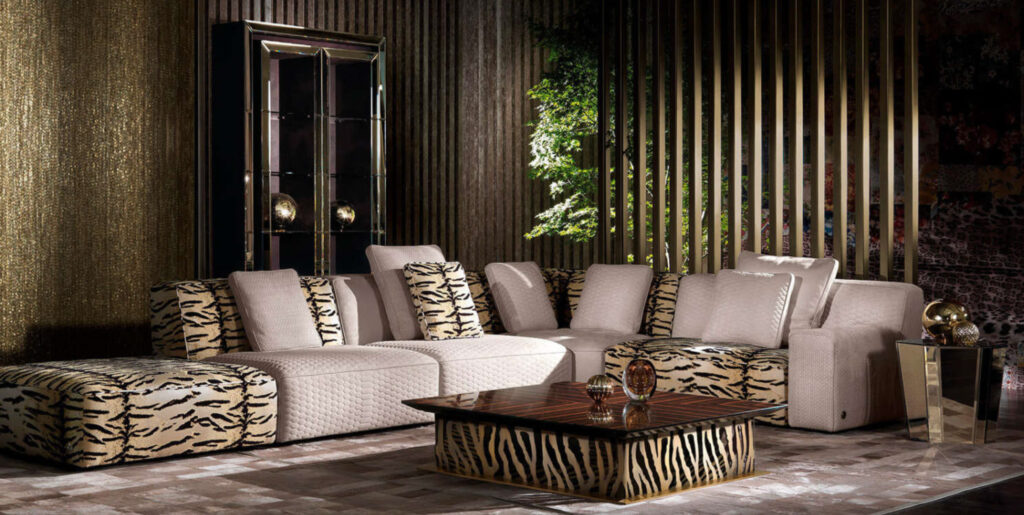
Home styling is a highly visual business, but customers rarely choose a stylist based on appearance alone.
They may discover a business through Instagram, Google, Pinterest, a recommendation or a project photograph. But before making contact, many will visit the website to decide whether the business appears credible, experienced and suitable for their project.
That makes the website an important part of the trust-building process.
For a home stylist or interior styling business, trust is particularly important because customers are often making decisions involving their home, personal taste and a meaningful financial investment. They may be inviting a professional into their home, relying on their judgement and expecting them to understand how to translate an idea into a finished space.
A professional website cannot create trust on its own. It must reflect genuine expertise and a real business. However, it can make that expertise easier to understand and provide evidence that helps potential clients make an informed decision.
The strongest home styling websites therefore do more than look attractive. They answer practical questions, demonstrate capability, explain the process, show real work and make it easy for prospective clients to take the next step.
Why Trust Matters Before a Customer Makes Contact
A prospective styling client often has unanswered questions before sending an enquiry.
They may be wondering:
- Does this stylist understand the type of home I have?
- Do their projects reflect the style I want?
- Have they worked on projects similar to mine?
- What exactly does the service include?
- How does the process work?
- What happens during the consultation?
- Will they understand my budget?
- Where do they work?
- Can I trust their recommendations?
- What happens after I make an enquiry?
A website that answers these questions reduces uncertainty.
This is especially important because home styling is not always an immediate purchase. A customer may spend considerable time looking at projects, comparing businesses, discussing ideas with a partner or family member and researching possible approaches before making contact.
The website therefore has to support the research process.
It should give prospective customers enough useful information to move from:
“This looks interesting.”
to:
“This business appears relevant to my project, and I understand what I can expect from them.”
That is a more meaningful form of website conversion than simply encouraging someone to click a button.
Professional Design Creates the First Impression
The visual quality of a home styling website matters because the website itself becomes part of the brand experience.
A stylist does not necessarily need an elaborate or expensive website. But the design should feel intentional.
Poor photography, inconsistent typography, cluttered layouts, broken links, awkward mobile navigation or outdated information can undermine confidence even when the business itself provides an excellent service.
A professional website should generally have:
- Clear navigation
- Consistent typography
- High-quality imagery
- Appropriate spacing
- Readable text
- Strong page hierarchy
- Obvious contact options
- Consistent branding
- Well-organised project portfolios
- Fast and usable mobile experiences
The objective is not to make the website look impressive for its own sake.
It should make the business easier to understand.
For a home stylist, this distinction is important. A visually sophisticated website that tells customers very little about the actual service may create less confidence than a simpler website containing strong project evidence, useful information and clear communication.
Professionalism comes from the combination of presentation and substance.
Photography Provides Evidence of Capability
For a styling business, photography is one of the strongest forms of evidence available.
Customers want to see what the stylist can actually achieve.
A portfolio should therefore do more than display attractive rooms.
Where appropriate, project pages can explain:
- The client’s original requirements
- The design challenge
- The styling direction
- The types of furnishings or décor selected
- Colour considerations
- How the room was transformed
- Particular constraints
- The final outcome
This turns a collection of photographs into evidence of professional thinking.
For example, a photograph of a beautifully styled living room shows the finished result.
A project case study explaining how the stylist worked within an existing layout, balanced the client’s preferred colours and introduced new furnishings demonstrates something more valuable: the ability to solve a real design problem.
That distinction can strengthen credibility.
Show Different Types of Projects
A portfolio should help prospective customers recognise themselves.
If every project photograph shows a large luxury property, a customer with a modest suburban home may not know whether the stylist’s services are suitable for them.
Similarly, a business specialising in rental property styling, family homes or property preparation should make those capabilities visible.
Useful portfolio categories might include:
- Living rooms
- Bedrooms
- Kitchens and dining areas
- Whole-home styling
- Property preparation
- Home staging
- Rental properties
- New-build homes
- Apartment styling
- Seasonal styling
The categories should reflect the actual services and project types of the business.
The principle is simple:
Show the customer evidence that is relevant to the decision they are trying to make.
This is more useful than filling a portfolio with visually similar images simply because they look attractive.
Make the Expertise Behind the Styling Visible
Customers are not only buying a finished room.
They are often buying judgement.
A professional stylist may be helping them decide:
- Which furniture is worth keeping
- What proportions work in a room
- Which colours complement existing finishes
- Where to invest more of the budget
- Which pieces should be removed
- How to create consistency between rooms
- How to prepare a property for sale
- How to create a particular atmosphere
The website should communicate this expertise.
One way to do that is through useful content.
Instead of publishing articles that simply promote the business, a stylist could explain topics such as:
- How to choose furniture proportions for a living room
- How to create a cohesive colour palette
- When to use a statement piece
- How to style an open-plan space
- How to prepare a home for professional photography
- Common mistakes when furnishing a new home
- How to mix existing furniture with new pieces
- How to make a small room feel more considered
This demonstrates knowledge without relying on exaggerated claims.
It also gives prospective clients an opportunity to understand the stylist’s approach before making contact.
The About Page Should Explain the Person Behind the Business
Home styling is a personal service.
Customers may spend several hours working with a stylist, discussing preferences, budgets, practical constraints and personal tastes.
That makes the About page important.
It should answer more than:
“Who are you?”
It should explain:
- Professional background
- Relevant experience
- Areas of specialisation
- Design philosophy
- Approach to working with clients
- Types of projects undertaken
- Geographic service area
- Relevant qualifications or professional memberships, where applicable
A professional photograph can also help.
The purpose is not to create a lengthy autobiography.
It is to give prospective customers enough information to understand who they would be working with and why that person is qualified to provide the service.
Where the business has a team, individual team members can also be introduced where their expertise is relevant.
Google supports profile-page structured data for pages whose primary focus is a specific person or organisation affiliated with the website, although structured data should support the page rather than replace useful visible information.
Explain the Styling Process Clearly
Uncertainty can prevent people from making contact.
A potential client may have never hired a stylist before. They may not know what happens during a consultation or how much involvement they will have in the decisions.
A dedicated process section can make the service easier to understand.
For example:
Initial enquiry
The client explains the project, property and broad requirements.
Consultation
The stylist discusses goals, preferences, budget and practical considerations.
Assessment
The stylist reviews the space and identifies opportunities or challenges.
Styling plan
Recommendations are developed around the agreed objectives.
Sourcing and implementation
Depending on the service, the stylist may source furnishings, accessories and other elements.
Final styling
The selected pieces are arranged and the completed space is presented.
Not every business will use this exact process.
The important point is to explain the actual process used by the business.
This can make the service feel more tangible and reduce the uncertainty that often accompanies professional services.
Be Clear About What the Service Includes
Trust can be weakened by ambiguity.
A customer should not have to contact a business simply to discover what its core service involves.
Service pages should explain what customers receive.
For example, a styling consultation may include:
- Initial discussion
- Room assessment
- Style direction
- Colour recommendations
- Furniture advice
- Product or sourcing suggestions
- Written recommendations
A full styling service may involve a much broader scope.
The website should distinguish these services rather than placing everything under one vague heading such as “Interior Styling”.
Clear service descriptions also help attract better-qualified enquiries.
Someone looking for a one-hour consultation should be able to identify that service. Someone planning a whole-home styling project should be able to understand how the more comprehensive service works.
Use Testimonials as Supporting Evidence
Testimonials can provide valuable social proof, particularly for a service where customers are evaluating the experience as well as the final result.
However, testimonials are most useful when they contain meaningful information.
A statement such as:
“Amazing service. Highly recommended!”
provides limited evidence.
A more useful genuine testimonial might explain what the customer valued about the process, the communication, the recommendations or the finished result.
Where appropriate, testimonials can be connected to relevant projects.
For example:
Whole-home styling project
Customer feedback describing the experience and outcome.
This gives the testimonial context.
Businesses should use genuine customer feedback rather than manufactured or exaggerated claims. Google explicitly prohibits fake or undisclosed incentivised reviews in the context of review structured data and requires marked-up review information to be genuinely available to users on the page.
Trust is damaged quickly when social proof appears artificial.
Let Customers See the Real Business
A polished website should not feel anonymous.
For a home styling business, customers can benefit from seeing evidence of the people and processes behind the service.
Depending on the business, this might include:
- Stylist photographs
- Studio or showroom images
- Behind-the-scenes project photographs
- Sourcing visits
- Moodboards
- Material selection
- Installation days
- Styling preparation
- Before-and-after photographs
This type of content can humanise the business while demonstrating that the finished portfolio is connected to a real working process.
It also provides an opportunity to show the level of attention involved in a project.
Make Location Clear
Home styling is often geographically relevant.
A stylist may have a defined service area or work within particular cities, suburbs or regions.
The website should make this information easy to find.
A customer should not have to search through the site to determine whether the business serves their area.
Useful information may include:
- Primary location
- Service areas
- Areas regularly covered
- Whether remote consultations are available
- Whether travel is available for larger projects
Location pages can also support local search visibility when they contain genuinely useful information about the business’s work in those areas.
They should not simply repeat the same text while changing the suburb or city name.
The website should provide real local relevance where it claims to serve a particular market.
For businesses eligible for local business markup, Google provides structured data that can communicate information such as business details and opening hours to search engines.
Structured data is not a substitute for a well-built local website, but it can form part of a broader search strategy.
Make Contact Easy Without Being Pushy
A professional website should make it easy to enquire.
That does not mean filling every section with “Book Now” buttons.
Instead, provide clear and relevant next steps.
Depending on the business, these could include:
- Enquire about a project
- Book a consultation
- Discuss your styling needs
- Request a consultation
- Call the studio
- Submit a project enquiry
The call to action should match the customer’s likely stage in the buying journey.
Someone discovering a styling business for the first time may prefer to read about the process before committing to a consultation.
A customer who has already reviewed the portfolio and service information may be ready to enquire immediately.
The website should accommodate both.
Use Forms to Start Useful Conversations
An enquiry form can do more than collect a name and email address.
For home styling, useful fields may include:
- Name
- Contact details
- Location
- Property type
- Rooms involved
- Approximate project scope
- Desired timeframe
- Type of service required
- Brief description of the project
The form should not become unnecessarily long.
The objective is to collect enough information to begin a useful conversation without making the customer complete an application form before speaking to the business.
For higher-value projects, a few additional questions can help the stylist determine whether the enquiry is relevant and prepare for the initial conversation.
This is an example of how website design and commercial strategy overlap.
A website is not simply collecting contact details. It is helping create better-quality enquiries.
Show What Working With the Stylist Feels Like
A portfolio demonstrates the result.
The process demonstrates how the business works.
But prospective clients may also want to know what the experience feels like.
Does the stylist listen?
Is the process collaborative?
Does the client have to make every decision?
Does the stylist work within an agreed budget?
How are disagreements handled?
How much communication is involved?
These questions can be addressed through the website’s copy, FAQs, testimonials and project stories.
This is particularly important because home styling involves personal preferences.
A customer may be concerned that a professional stylist will impose a particular aesthetic on their home.
A website can address this directly by explaining the business’s approach to collaboration and client preferences.
Be Transparent About Budgets Where Appropriate
Pricing can be difficult for professional styling businesses because project scope varies.
That does not mean pricing should be avoided completely.
Where possible, the website can explain:
- How services are priced
- Whether consultations have a fixed fee
- Whether project fees depend on scope
- Whether sourcing is included
- Whether purchasing is handled by the client or stylist
- Whether additional services are charged separately
- What factors influence project costs
If exact prices are not appropriate, explaining the pricing structure still gives customers useful information.
It can also discourage poorly matched enquiries.
A customer who understands that a full-home styling project requires a different level of investment from a single consultation can make a more informed decision.
Transparency is part of professionalism.
Make Policies Easy to Find
Trust also comes from practical information.
Depending on the business model, the website may need clear information about:
- Consultation cancellations
- Deposits
- Payment terms
- Project changes
- Purchasing arrangements
- Sourcing fees
- Travel charges
- Intellectual property
- Photography permissions
- Privacy
- Terms and conditions
Not every policy needs to dominate the website.
But important conditions should not be hidden.
Customers are more comfortable when they can understand how the professional relationship works before committing.
The Website Should Work Well on Mobile
A significant part of website discovery can happen on mobile devices.
For home styling businesses, this is especially relevant because customers may discover a project photograph on social media and immediately visit the website.
The transition needs to be smooth.
On mobile, users should be able to:
- View project photographs clearly
- Navigate between services
- Read project descriptions
- Find the location
- Understand the process
- Call the business
- Submit an enquiry
- Review testimonials
- Access important policies
Large image galleries should not make the website painfully slow or difficult to navigate.
Similarly, text should remain readable without excessive zooming or horizontal scrolling.
A professional website needs to feel professional across the devices customers actually use.
Connect Social Media With the Website
Home styling businesses often have a strong presence on visually oriented social platforms.
That can be valuable for discovery and inspiration.
But social media should not have to carry the entire burden of explaining the business.
A potential customer might discover a room photograph through Instagram and then visit the website to:
- See the complete project
- Learn about the stylist
- Understand services
- Read testimonials
- Review the process
- Find contact details
The website becomes the deeper trust environment.
Social media can demonstrate ongoing activity and visual creativity, while the website provides more structured information about the business.
The two channels therefore have different but complementary roles.
Use Search to Reinforce Credibility
A professional website can also contribute to how a business is discovered through search.
Pages should be structured around genuine customer needs rather than written purely to insert keywords.
For example, a home styling business might have dedicated pages for:
- Home styling
- Interior styling
- Property styling
- Home staging
- Styling consultations
- Room styling
- New-home styling
The actual structure should reflect the business’s real services.
Supporting content can then answer questions potential customers ask before hiring a stylist.
Search visibility does not itself prove that a business is trustworthy.
But when someone discovers a business through search and then encounters a well-structured website with strong project evidence, clear service information and useful expertise, the overall digital experience can reinforce confidence.
Google’s search documentation notes that structured data can help Google understand page content and make pages eligible for certain richer search appearances. It should be viewed as a technical support for clear content, not as a replacement for useful information.
Avoid Designing a Website That Looks Better Than the Business Can Support
There is an important distinction between presentation and proof.
A beautiful website can create an initial impression, but customers will eventually look for evidence.
If the site uses elaborate language about exceptional expertise but provides:
- Very few projects
- Generic photographs
- No information about the stylist
- No clear process
- No meaningful testimonials
- Little service detail
then the design cannot compensate for the lack of evidence.
The opposite problem can also occur.
A highly experienced stylist may have years of strong work but present it through an outdated website with weak photography and limited information.
In that situation, the website may fail to communicate the quality of the underlying business.
The objective is therefore alignment.
The website should present the business at the same professional standard that the business aims to deliver.
Avoid Generic Claims
Words such as:
- Bespoke
- Exceptional
- Luxury
- Unique
- Passionate
- Award-winning
- Transformative
can have value when supported by specific evidence.
Used repeatedly without explanation, they become background noise.
Instead of saying:
“We create exceptional interiors.”
Explain what the business actually does.
For example:
“We help homeowners create cohesive, practical rooms by combining existing furniture with carefully selected new pieces, colour recommendations and finishing details.”
The second statement gives the reader something concrete to understand.
Specificity is often more persuasive than superlatives.
Use Project Case Studies to Demonstrate Problem-Solving
Case studies can be one of the strongest website assets for home styling businesses.
A useful case study can follow a straightforward structure:
The brief
What did the client want to achieve?
The challenge
What constraints existed?
The approach
How did the stylist respond?
The decisions
What changed and why?
The result
What did the finished space achieve?
Photography can support each stage where available.
This demonstrates professional judgement rather than simply aesthetic taste.
It also helps potential customers imagine how their own project might be approached.
For example, a project involving an awkward living room layout can demonstrate spatial problem-solving. A rental property project can demonstrate how to improve presentation without permanent changes. A family home can demonstrate how to balance aesthetics with everyday use.
The more relevant the case study is to the prospective customer’s situation, the more useful it becomes.
Trust Should Continue After the Enquiry
The website’s role does not necessarily end when a customer submits a form.
The information collected through the website can help the business begin the relationship professionally.
For example, an enquiry confirmation can explain:
- When the customer should expect a response
- What happens next
- Whether any additional information is required
- How consultations are arranged
The customer should not be left wondering whether their enquiry was received.
This small part of the experience can reinforce the same professionalism communicated by the website.
Measure Whether the Website Is Building Better Enquiries
Website performance should not be judged solely by visitor numbers.
For a home styling business, more useful measures may include:
- Enquiry volume
- Qualified enquiry volume
- Consultation bookings
- Phone enquiries
- Enquiry conversion rate
- Enquiries by service
- Enquiries by location
- Enquiries by traffic source
- Project value
- Consultation-to-client conversion
- Cost per qualified enquiry where paid advertising is used
A website could receive thousands of visitors and generate very little commercially useful activity.
Another website might receive substantially fewer visitors but generate enquiries from customers looking for exactly the services the business provides.
The second situation may be commercially more meaningful.
This is why website performance needs to be connected to business outcomes rather than vanity metrics.
A Practical Website Trust Checklist for Home Stylists
A home styling business can use the following checklist when reviewing its website.
Brand and presentation
- Does the website look current and professional?
- Is the branding consistent?
- Is the photography high quality?
- Does the visual style reflect the business’s positioning?
Expertise
- Is the stylist clearly introduced?
- Is relevant experience explained?
- Is the design approach clear?
- Does the website demonstrate knowledge?
Portfolio
- Are there enough genuine projects?
- Are projects explained rather than simply displayed?
- Can potential customers see different types of work?
- Are before-and-after images used where appropriate?
Services
- Are services clearly defined?
- Does each service explain what is included?
- Are pricing or pricing structures explained where appropriate?
- Is the process easy to understand?
Trust
- Are genuine testimonials available?
- Are customer experiences specific and credible?
- Are policies accessible?
- Are qualifications or professional memberships shown where relevant?
Local relevance
- Is the service area clear?
- Are relevant locations explained naturally?
- Does the website demonstrate local project experience where applicable?
Conversion
- Is it obvious how to make an enquiry?
- Are contact details easy to find?
- Is the enquiry form simple enough to complete?
- Does the next step feel clear?
Technical experience
- Does the website work properly on mobile?
- Do images load efficiently?
- Are there broken links?
- Is navigation straightforward?
- Are important pages easy to reach?
The Professional Website Should Reflect the Professional Service
For home styling businesses, trust is built through evidence.
A customer needs to see that the business understands its craft, has completed relevant work, communicates clearly and has a professional process for taking a project from initial conversation to finished space.
The website is where much of that evidence can be brought together.
Professional design creates the right environment. Strong photography demonstrates capability. Case studies show problem-solving. Testimonials provide customer perspective. Service pages explain what is actually being purchased. The About page establishes the people behind the business. Clear policies reduce uncertainty. Useful content demonstrates expertise.
None of these elements needs to be exaggerated.
In fact, credibility often comes from being specific and transparent.
A strong home styling website does not need to convince every visitor that the business is right for them. It needs to help the right potential customers recognise the business’s expertise, understand the service and feel sufficiently confident to begin a conversation.
That makes the website more than an online portfolio.
It becomes part of the business’s professional reputation and a practical tool for turning interest into qualified enquiries.
If your business operates in the home and lifestyle sector and you would like to improve the trust, clarity and commercial performance of your website, Home & Lifestyle Marketing Co can help assess how your website, content, SEO and conversion journey work together.
To learn more, please visit www.hlmco.com.au