Selling premium furniture online requires more than putting products on a website and adding an “Add to Cart” button.
Furniture is different from many other e-commerce categories because customers are not simply buying an object. They are often buying a combination of design, materials, craftsmanship, comfort, functionality and the way a piece will change their home.
A customer considering a premium sofa may want to understand its dimensions, upholstery, construction, comfort, delivery requirements and how it looks within a finished room. Someone considering a designer dining table may want to compare materials, finishes, sizes and proportions before making a decision.
That creates a challenge for furniture brands.
The website needs to make purchasing convenient without stripping away the context that gives the product its value.
For mass-market products, e-commerce can often focus heavily on price, availability and speed. Premium furniture requires a different balance. The customer needs an efficient buying experience, but also enough information and visual evidence to understand why the product deserves its price.
This means successful furniture e-commerce sits somewhere between retail, visual merchandising, editorial content and digital customer service.
The strongest brands do not simply move a catalogue online. They create an environment where customers can discover products, understand their design qualities, assess whether they suit their space and purchase with confidence.
Premium Furniture Needs Context
A product photograph on a white background can show what a sofa looks like.
It does not necessarily show what it feels like in a living room.
This distinction is important.
Furniture is spatial. Customers need to understand proportion, scale, colour and relationships between objects.
A dining table can look impressive in isolation but feel oversized in a small dining area.
A lounge chair may appear compact in a photograph but occupy more visual space than a customer expects.
A large sofa may be exactly what works in a substantial open-plan room but unsuitable for a smaller apartment.
This is why premium furniture websites should combine different forms of product presentation.
A strong product page might include:
- clean product photography
- lifestyle photography
- multiple viewing angles
- close-up detail shots
- dimensions
- material information
- finish options
- room imagery
- configuration options
- delivery information
- care instructions
- warranty details
Each element answers a different customer question.
The objective is not to overwhelm visitors with information. It is to remove the uncertainties that prevent them from purchasing.
The Product Page Should Do More Than Display a Price
For premium furniture, the product page is effectively a digital showroom.
It should communicate the product’s physical characteristics while also explaining its value.
A useful product page can answer several questions quickly.
What is it?
The product name and description should make its purpose clear.
What does it look like?
Photography should provide an accurate representation from useful angles.
How is it made?
Materials, construction and craftsmanship should be explained where relevant.
Will it fit?
Dimensions and configuration information should be easy to find.
Can I customise it?
If multiple fabrics, finishes, sizes or configurations are available, those options should be clear.
How much does it cost?
The customer should understand the price or how pricing is determined.
When can I receive it?
Availability and lead-time information should be transparent.
What happens after I buy it?
Delivery, installation, warranty, care and returns information should be accessible.
A product page that answers these questions reduces the need for the customer to leave the website to find answers elsewhere.
Premium E-Commerce Should Preserve the Brand
One risk for furniture brands moving into e-commerce is allowing the transactional elements of the website to dominate the brand experience.
The website can gradually begin to resemble a generic online catalogue:
Product image.
Product name.
Price.
Button.
Next product.
That structure may be functional, but it can weaken the distinction between a premium furniture brand and a lower-priced retailer.
The digital experience should instead preserve the characteristics that make the brand valuable.
This may include:
- design philosophy
- craftsmanship
- material expertise
- manufacturing heritage
- designer collaborations
- distinctive aesthetic
- sustainability information where relevant
- customisation
- attention to detail
- project experience
These elements should not be treated as decorative brand statements.
They help customers understand why a particular piece is different.
The commercial objective is not simply to make the website look luxurious. It is to give the customer enough evidence to understand the product’s value.
Use Interior Photography to Demonstrate Possibility
Premium furniture is often purchased because customers can imagine it in their own home.
Lifestyle photography can help create that mental connection.
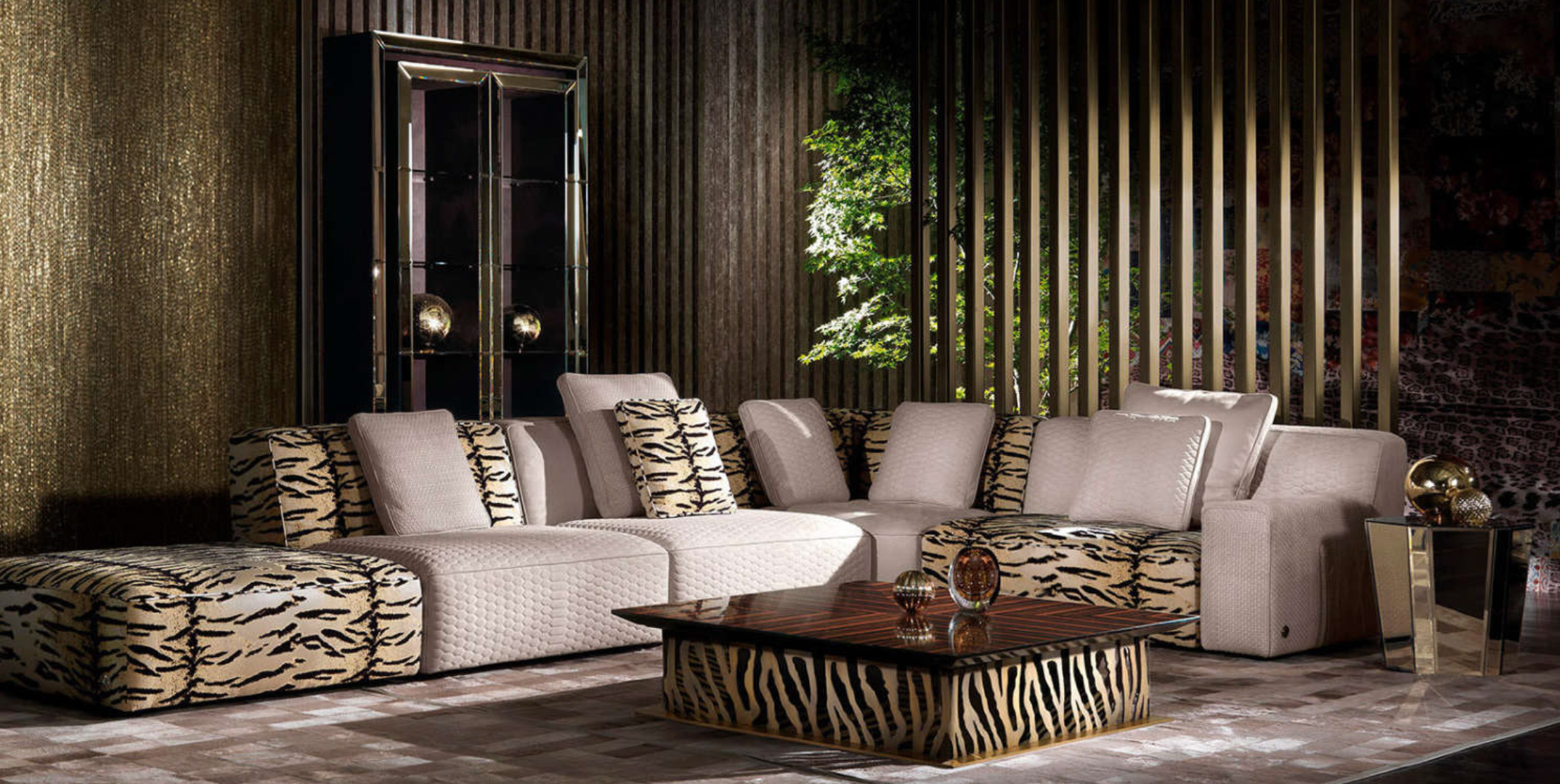
Instead of showing a sofa only against a plain background, show it within a carefully considered living space.
Instead of showing a dining table alone, demonstrate how it works with lighting, chairs, flooring and surrounding architecture.
Instead of showing an armchair as an isolated product, show its scale within the room.
This type of photography communicates several things simultaneously:
- scale
- proportion
- styling
- colour relationships
- texture
- atmosphere
- design compatibility
It also gives the customer an idea of what the furniture could help them achieve.
That makes photography part of the sales process rather than simply a visual enhancement.
Give Customers Confidence About Dimensions
Furniture is one of the categories where size can directly determine whether a purchase works.
A customer cannot physically test the product through a screen.
They therefore need reliable measurements.
Product pages should clearly communicate:
- overall width
- height
- depth
- seat height where relevant
- clearance requirements
- package dimensions where useful
- weight where relevant
- recommended room size where appropriate
Diagrams can be particularly useful.
For larger pieces, businesses can also explain practical considerations such as:
- doorway access
- stair access
- lift requirements
- assembly
- wall clearance
- delivery access
This is especially important for premium furniture because delivery can be considerably more complicated than sending a small parcel.
The customer should not have to discover these limitations after placing an order.
Make Material and Finish Options Easy to Compare
Premium furniture frequently comes with a wider range of options than standard retail furniture.
A sofa might be available in dozens of fabrics.
A dining table might be available in several timber finishes.
A cabinet could have different handles, finishes or configurations.
A product page needs to make these options understandable.
Customers should be able to see:
- what the standard option is
- which alternatives are available
- whether alternatives change the price
- whether the product is made to order
- whether colours vary between materials
- whether samples are available
Where possible, high-quality close-up photography can help.
For fabric, timber, stone and other natural materials, the business should also explain that physical characteristics may vary.
The purpose is not to eliminate every possible uncertainty. That is impossible with many natural products.
It is to give customers enough information to make an informed decision.
Product Variants Need Careful E-Commerce Structure
Furniture is particularly relevant to product variants because the same design may be sold in different sizes, colours, materials or configurations.
Google specifically identifies furniture as a product category that commonly has variants and provides ProductGroup structured data guidance for grouping related products.
From the customer’s perspective, the website should make the relationship between variants obvious.
A customer should not feel as though they are navigating several unrelated products when they are simply choosing between finishes of the same design.
From a technical perspective, the business also needs accurate product information across its website and product data feeds.
Google recommends keeping product data aligned with landing pages, including matching product titles, descriptions, variants and colour names.
This matters because inconsistencies can create confusion before the customer even reaches checkout.
Create Collections Based on How Customers Shop
Traditional furniture navigation usually starts with categories:
- Sofas
- Chairs
- Tables
- Beds
- Storage
- Lighting
These categories are useful.
But premium customers may also shop according to design objectives.
They may be looking for:
- contemporary living room furniture
- statement dining furniture
- minimalist bedroom furniture
- natural timber furniture
- outdoor entertaining furniture
- neutral interiors
- sculptural seating
- compact apartment furniture
Creating carefully curated collections around these needs can make the shopping experience more intuitive.
For example, a “Contemporary Living Room” collection could combine sofas, occasional chairs, coffee tables, rugs and lighting.
The customer begins with the room rather than a product category.
This approach can also increase opportunities for complementary sales.
Build “Shop the Room” Experiences
One of the most effective ways to connect inspiration with e-commerce is to allow customers to shop complete interiors.
Consider a finished living room containing:
- a sofa
- two armchairs
- a coffee table
- a floor lamp
- a rug
- cushions
- decorative objects
Instead of treating each product independently, the website can present the room as a complete design.
Customers can then explore the individual pieces.
This approach changes the question from:
“Do I want this sofa?”
to:
“Could my living room look like this?”
That is a much more powerful proposition for design-led furniture brands.
It also allows the business to introduce products that customers might not have searched for independently.
Use Editorial Content to Help Customers Make Decisions
E-commerce should not rely entirely on product pages.
Customers often have questions before they know exactly what they want to purchase.
Useful content might cover:
- how to choose a sofa
- how to select the right dining table size
- how to combine different furniture styles
- how to choose upholstery
- how to arrange furniture in an open-plan room
- how to choose furniture for a small living space
- how to care for natural timber furniture
- how to select outdoor furniture
- how to combine different materials
This type of content can attract customers earlier in the buying process.
It can also demonstrate expertise.
A furniture company that explains how to choose the right product can build more confidence than one that simply says its products are “beautiful” or “premium”.
The content should ultimately connect naturally to relevant products.
An article about choosing a dining table should make it easy to explore suitable dining tables.
An article about living room layouts should connect to sofas, chairs and tables.
This creates a useful bridge between education and commerce.
Search Visibility Starts With Product Data
A premium furniture website can have excellent products and still struggle to attract organic shopping traffic if its product information is incomplete or poorly structured.
Google states that high-quality product data influences how Shopping ads and free listings behave and perform. It recommends providing accurate, comprehensive and current product information.
For eligible products, Google free listings can provide unpaid visibility across surfaces including Google Search, Shopping, Images, Lens, YouTube and other Google experiences.
This does not mean every furniture product will automatically appear.
Google makes clear that free-listing eligibility does not guarantee that products will be shown. Product information is used to determine how products match relevant searches.
For furniture brands, that makes product data an important part of the broader e-commerce strategy.
Relevant information can include:
- product title
- brand
- description
- price
- availability
- images
- product identifiers
- colour
- material
- size
- variant information
- shipping
- returns
The more accurately the product is represented, the easier it becomes to maintain consistency between the website and shopping platforms.
Product Titles Should Be Clear Rather Than Clever
Luxury brands sometimes use highly creative product names.
That may be appropriate for the brand.
But customers also need to understand what the product actually is.
A title such as “The Atelier Collection No. 7” may work as a collection identity, but it may not communicate that the product is a three-seat linen sofa.
The product page can preserve the branded name while providing descriptive information that clarifies the product.
This is particularly important for search visibility and shopping feeds.
Google recommends providing descriptive product information and using relevant terms that customers actually use when searching.
The principle is straightforward:
Brand language can create distinction. Descriptive language creates clarity.
A strong e-commerce strategy needs both.
Keep Product Data Consistent Across the Website and Google
Imagine a product is listed on the website as:
Natural Oak
But the shopping feed calls it:
Light Timber
The customer clicks the listing expecting one option and arrives at a page presenting something different.
That inconsistency can create uncertainty.
Google specifically recommends matching product data to landing pages and using the same product title, description and variant information.
Furniture businesses with large catalogues should therefore have processes for maintaining product information.
This becomes especially important when:
- prices change
- products are discontinued
- stock levels change
- finishes change
- new variants are introduced
- delivery times change
- product specifications are updated
E-commerce data management is not simply an administrative task.
It affects the customer experience.
Use Google Shopping as Part of the Acquisition Strategy
Search engine optimisation can help furniture brands build long-term visibility.
Google Shopping and other product discovery surfaces can provide another route into the catalogue.
Eligible free listings can show products across Google’s shopping ecosystem, while paid Shopping campaigns can provide additional visibility for selected products.
For premium furniture, product selection matters.
Not every item necessarily deserves the same marketing investment.
A business might prioritise:
- high-margin products
- hero products
- best-selling designs
- products with strong imagery
- products with reliable stock
- products with strong conversion rates
- products that represent the brand particularly well
This is more commercially useful than simply promoting the entire catalogue without distinction.
Connect Google Ads to Commercial Product Economics
Paid advertising should be evaluated according to the economics of the furniture business.
A £2,000 sofa and a £150 side table should not necessarily receive identical treatment.
The business needs to understand:
- average order value
- gross margin
- customer acquisition cost
- conversion rate
- return rate
- delivery costs
- lead time
- repeat purchase potential
A product that generates substantial revenue but very little margin may not be as valuable as its sales volume suggests.
Likewise, a high-priced product may justify greater acquisition investment if the economics support it.
Google’s own Merchant Center guidance recommends mapping the customer journey from search through to checkout and prioritising valuable products when allocating resources.
This is consistent with a broader HLM principle: marketing should ultimately be evaluated against commercial outcomes rather than traffic alone.
Make Delivery Part of the Sales Proposition
Furniture customers often worry about delivery.
Premium furniture may be:
- heavy
- fragile
- oversized
- made to order
- imported
- custom finished
- assembled on site
A customer may hesitate to buy if they cannot understand how the product will reach their home.
The website should therefore explain:
- delivery areas
- estimated lead times
- delivery charges
- room-of-choice delivery where offered
- assembly
- installation
- packaging removal where offered
- delivery restrictions
- what happens if access is difficult
Google’s Merchant Center guidance also identifies shipping information as important product data for eligible listings.
For premium furniture brands, this information is not merely a technical shopping requirement.
It is part of the service proposition.
Returns Need Special Attention
Furniture returns can be more complicated than returns for small consumer goods.
A large sofa cannot simply be placed into a postal package.
Custom-made products may have different return arrangements from standard-stock products.
Customers should therefore understand the policy before buying.
The website should clearly distinguish between:
- standard products
- made-to-order products
- customised products
- clearance or final-sale products
- damaged goods
- delivery-related issues
Clear policies reduce the risk of unpleasant surprises.
They also demonstrate that the business has thought through the customer experience beyond the initial sale.
Use Samples to Bridge the Digital and Physical Experience
Some furniture decisions are difficult to make entirely online.
This is especially true for materials and finishes.
A customer may want to see:
- upholstery
- timber
- stone
- leather
- paint
- metal finishes
Where practical, offering material samples can help.
The customer can then experience the finish in their own home and compare it with existing flooring, walls and other furniture.
This creates an important bridge between e-commerce and physical retail.
The online store remains the primary discovery and purchasing environment, while physical samples provide reassurance for decisions that are difficult to make through a screen.
Make Human Assistance Available
Premium e-commerce does not have to mean removing people from the sales process.
In fact, human assistance can be one of the strongest advantages of a specialist furniture business.
Customers may have questions about:
- comfort
- dimensions
- configuration
- materials
- delivery
- installation
- styling
- customisation
A visible contact option can make a significant difference.
This could include:
- telephone support
- live chat
- video consultation
- showroom appointments
- design consultations
The key is to make the assistance proportionate to the product.
A simple accessory may require little support.
A large bespoke sectional sofa may justify a consultation.
Mobile E-Commerce Cannot Be an Afterthought
Customers increasingly research products through mobile devices.
For furniture brands, mobile presentation creates particular challenges because products depend heavily on large, detailed imagery.
The mobile experience therefore needs to balance:
- image quality
- loading speed
- readable specifications
- easy variant selection
- visible pricing
- clear calls to action
- simple navigation
- straightforward checkout
Customers should not have to scroll through a huge collection of decorative content before finding the information needed to purchase.
Premium does not mean complicated.
A well-designed e-commerce site can feel sophisticated while remaining easy to use.
Use Social Media to Feed the E-Commerce Journey
Furniture is highly suited to visual platforms.
Social media can introduce:
- new collections
- room settings
- product details
- design advice
- behind-the-scenes manufacturing
- styling ideas
- completed projects
- customer interiors
- designer collaborations
But the commercial opportunity comes from connecting that content to the website.
A post showing a new sofa should give an interested customer a clear route to the relevant product.
A room image can link to a collection.
A styling video can lead to the products demonstrated.
A manufacturing story can lead to the relevant range.
The social post creates interest.
The website handles deeper consideration.
The product page supports the purchase.
Each channel has a role.
Build Content Around Real Furniture Buying Questions
Furniture customers often need practical guidance.
This creates a large opportunity for content marketing.
Consider topics such as:
“How to Choose the Right Sofa Size”
This can explain room dimensions, circulation space, seating requirements and proportions before linking to relevant sofas.
“What Upholstery Is Best for a Busy Family Home?”
This can compare materials, durability, maintenance and appearance.
“How to Choose a Dining Table for Entertaining”
This can discuss table dimensions, seating capacity and room proportions.
“How to Mix Timber Furniture Without Making a Room Feel Disjointed”
This can provide design advice while introducing relevant collections.
“What to Consider When Buying a Large Sofa Online”
This can cover dimensions, access, delivery, configuration, materials and returns.
These articles can capture customers who have not yet decided which product to buy.
They also give the furniture brand an opportunity to demonstrate genuine expertise.
Use Reviews and Customer Homes as Social Proof
Premium furniture customers want evidence that products look good outside the brand’s own photography.
Customer photography can provide that evidence.
A well-designed customer home can demonstrate how a product performs in a real environment.
Where customers provide permission, businesses can use:
- customer photographs
- testimonials
- room transformations
- styling examples
- case studies
This creates a useful combination of brand photography and real-world evidence.
The distinction should remain clear.
Professional photography demonstrates how the brand presents its products.
Customer imagery demonstrates how those products exist in real homes.
Both have value.
Encourage Customers to Think Beyond the Individual Product
Cross-selling should feel relevant rather than forced.
If someone is buying a sofa, useful recommendations could include:
- coffee tables
- side tables
- floor lamps
- rugs
- occasional chairs
If someone is buying a dining table, relevant suggestions might include:
- dining chairs
- pendant lighting
- sideboards
- tableware
The recommendations should be based on design compatibility and practical relevance.
Premium customers generally do not need an endless stream of suggested products.
They need thoughtful recommendations.
A smaller number of well-matched products can create a stronger experience than a large collection of irrelevant items.
Measure the Entire E-Commerce Funnel
A furniture brand should not judge e-commerce performance by website traffic alone.
A more useful measurement framework follows the customer journey.
Acquisition
Measure:
- organic search traffic
- Shopping traffic
- paid search
- social traffic
- referral traffic
Product engagement
Measure:
- product-page visits
- collection views
- image engagement
- configuration interactions
- sample requests
Purchase intent
Measure:
- add-to-cart rate
- checkout initiation
- product enquiries
- consultation bookings
- wishlist activity where available
Transaction
Measure:
- conversion rate
- completed orders
- average order value
- revenue
Commercial performance
Measure:
- gross margin
- acquisition cost
- return rate
- fulfilment costs
- repeat purchases
- customer lifetime value where meaningful
This distinction matters because more traffic is not automatically better.
A furniture brand could double website visitors without materially improving profitability.
Conversely, improving the conversion rate among existing qualified visitors may create significant commercial value without increasing traffic.
Consider the Role of the Showroom
For furniture brands with physical locations, e-commerce does not necessarily compete with the showroom.
The two can reinforce each other.
A customer may:
- Discover a product online.
- View photographs and specifications.
- Check whether it is available locally.
- Visit the showroom.
- Experience the product physically.
- Return to the website.
- Purchase online.
The reverse can happen as well.
A customer may discover a product in the showroom and later purchase it online.
Google supports free local product listings for eligible retailers, allowing products and store information to appear across local Google surfaces.
This creates another opportunity for furniture businesses with physical retail locations.
The showroom and website should therefore be treated as connected customer experiences rather than separate businesses.
Premium Does Not Mean Hiding the Practical Details
Luxury brands sometimes concentrate heavily on visual presentation while treating practical information as secondary.
That can be a mistake.
A premium customer may be willing to spend more, but that does not mean they want uncertainty.
They still want to know:
- How big is it?
- What is it made from?
- How long will it take?
- How much does delivery cost?
- Can I customise it?
- What happens if there is a problem?
- Can I return it?
- How do I care for it?
Providing these answers does not make the brand less luxurious.
It demonstrates professionalism.
In fact, clear information can strengthen premium positioning because it shows that the business understands the complete customer experience.
Common E-Commerce Mistakes Furniture Brands Should Avoid
Treating the website as an online catalogue
A catalogue lists products. A strong e-commerce experience helps customers choose between them.
Relying on one product photograph
Furniture needs context, detail and scale.
Using vague descriptions
Premium customers need specific information about materials, construction and dimensions.
Hiding delivery information
Delivery is part of the purchase decision for large furniture.
Ignoring product variants
Different sizes, fabrics and finishes need to be presented clearly.
Overloading the website with luxury language
Specific evidence is more useful than repeated claims about exclusivity or sophistication.
Making the checkout difficult
Once the customer is ready to purchase, unnecessary friction can cause abandonment.
Treating every product identically
A £100 accessory and a £5,000 sofa may require very different customer journeys.
Ignoring product data
Incomplete or inconsistent data can affect shopping visibility and create a poor customer experience.
Measuring only revenue
Revenue without margin and acquisition context does not provide a complete picture of commercial performance.
A Practical Framework for Selling Premium Furniture Online
Furniture brands can structure their e-commerce strategy around eight connected areas.
1. Build a strong digital showroom
Use professional photography, project imagery, video and clear brand presentation.
2. Strengthen product pages
Provide the information customers need to understand the product and make a decision.
3. Organise products around customer intent
Combine traditional product categories with room-based and design-led collections.
4. Connect inspiration to products
Use projects, articles and social content to create direct routes into relevant products.
5. Improve shopping visibility
Maintain accurate product data and use appropriate Merchant Center and structured-data implementations.
6. Reduce purchase uncertainty
Make dimensions, materials, delivery, returns, lead times and installation information easy to find.
7. Connect digital and physical experiences
Where showrooms exist, allow customers to move naturally between online research and physical product experiences.
8. Measure commercial performance
Track the journey from traffic through to qualified demand, transactions, margin and customer value.
This turns e-commerce from a website project into a broader commercial system.
Final Thoughts
Premium furniture can be sold successfully online, but the strongest e-commerce strategies do not attempt to make furniture behave like a low-consideration consumer product.
Customers need to understand the design, see the product in context, assess its dimensions and materials, consider the available options and feel confident about delivery and after-sales support.
That means a premium furniture website needs to do several jobs at once.
It should inspire customers through strong visual presentation. It should educate them through useful content. It should provide detailed product information. It should make products discoverable through search and shopping platforms. It should remove practical uncertainty. And when the customer is ready, it should make purchasing straightforward.
The role of e-commerce is therefore not simply to put a “Buy Now” button beneath a beautiful photograph.
It is to create a complete digital buying environment around the product.
For furniture brands, that environment can connect inspiration, product discovery, design expertise, search visibility, customer service and transactions in a way that extends the reach of the physical showroom.
When those elements work together, premium furniture does not have to lose its sense of design or craftsmanship simply because it is being sold online.
The objective is to make the online experience worthy of the product itself.
If your business operates in the home and lifestyle sector and you would like to improve the connection between e-commerce, digital marketing and furniture sales, Home & Lifestyle Marketing Co can help assess where the strongest opportunities may lie.
To learn more, please visit www.hlmco.com.au