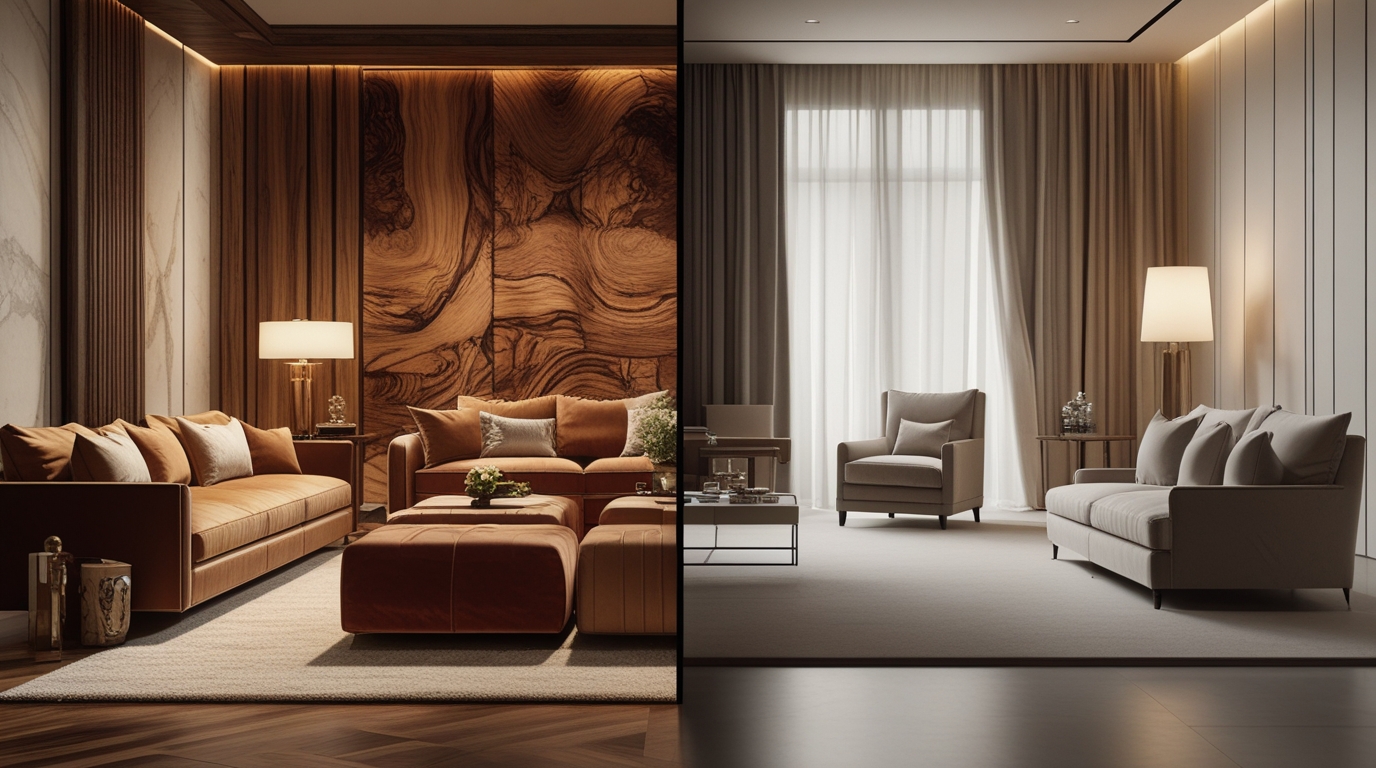

Personalised home décor sits between retail and design.
Customers may be buying cushions, wall art, lamps, textiles, prints, furniture accessories or other decorative products, but personalisation changes the buying decision.
A customer may need to choose a colour, material, size, finish, wording, photograph, pattern or configuration before placing an order.
That makes the website more than a digital catalogue.
It becomes part of the product itself.
For a personalised home décor business in New Zealand, an effective e-commerce website needs to help customers understand what they are buying, visualise the result, select the right options, understand the price and delivery process, and feel confident enough to complete the purchase.
This is especially important when customers cannot physically touch, inspect or compare the product before ordering.
New Zealand consumer law applies to online purchases made from businesses trading in New Zealand. The Consumer Guarantees Act provides guarantees around matters including acceptable quality, description, fitness for purpose and delivery, while the Fair Trading Act prohibits misleading or deceptive conduct.
The commercial implication is straightforward.
An e-commerce website needs to make the buying process clear as well as attractive.
Personalised Products Create More Buying Questions
A standard product can often be understood from a relatively small amount of information.
A customer might see a lamp, select a quantity and purchase it.
Personalised décor introduces more decisions.
The customer may ask:
- What can I customise?
- What colours are available?
- Can I change the dimensions?
- How will the finished product look?
- What materials are used?
- Is every item made to order?
- How long will production take?
- Can I see a preview?
- What happens if I enter the wrong information?
- Can I return a personalised item?
- How much does delivery cost?
- Will the colours look the same on my screen?
- Is the product suitable for the room where I intend to use it?
If the website does not answer these questions, customers may hesitate.
Some will leave and search elsewhere.
Others may contact the business with questions that could have been answered directly on the product page.
A strong e-commerce experience reduces unnecessary uncertainty.
Your Website Should Help Customers Visualise the Finished Product
Personalisation creates a visualisation problem.
The customer may be choosing a colour combination or configuration that does not currently exist as a finished product photograph.
A standard product image may therefore be insufficient.
Depending on the product, the website could use:
- Multiple product photographs
- Lifestyle photography
- Colour swatches
- Material samples
- Size diagrams
- Configuration examples
- Digital previews
- Interactive product customisation
- Room-context photography
- Close-up images of textures and finishes
The objective is to help the customer mentally move from:
“This looks interesting”
to:
“I can see this working in my home.”
That transition can be particularly important for décor because the purchase is closely connected to personal taste and the appearance of an existing room.
Product Pages Need More Than Beautiful Photography
Good photography remains essential.
But photography should be supported by practical information.
A personalised product page may need to explain:
Dimensions
Give measurements in familiar New Zealand metric units and make it clear whether dimensions refer to the overall product, individual components or packaging where relevant.
Materials
Identify the actual material rather than relying on broad descriptions such as “premium finish”.
Colour
Explain the available colour options and note where screen displays may affect how colours appear.
Personalisation
Clearly show which parts of the product can be changed.
Production
Explain whether the item is made to order, customised after purchase or selected from existing stock.
Lead Time
Give realistic production and dispatch information.
Delivery
Explain delivery areas, charges and any relevant restrictions.
Care
Provide useful instructions for maintaining the product.
Returns
Explain the applicable policy clearly, including any distinctions relevant to personalised products.
New Zealand Consumer Protection advises online shoppers to check product descriptions, size, materials, delivery timeframes and refund or return policies before purchasing.
That is a useful reminder for businesses as well.
If customers need this information before purchasing, the website should make it easy to find.
Make Personalisation Easy to Understand
One of the biggest risks in personalised e-commerce is making the configuration process complicated.
Imagine a customer ordering a personalised cushion.
They may need to select:
- Cushion size
- Fabric
- Colour
- Pattern
- Personalised wording
- Font
- Trim
- Quantity
If all of these options appear at once without structure, the customer can become overwhelmed.
A better experience groups decisions logically.
For example:
Choose Your Size
Select the dimensions.
Choose Your Fabric
Show visual swatches with names.
Choose Your Colour
Present clear options.
Add Personalisation
Provide the text field and explain character limits.
Preview Your Design
Where technically possible, show the expected result.
Review Your Order
Summarise the choices before checkout.
The objective is not simply to provide more options.
It is to make those options understandable.
Show the Price as Customers Configure the Product
Price uncertainty can create unnecessary friction.
If personalisation changes the price, customers should be able to understand that relationship.
For example:
Base price: NZ$120
Large size: +NZ$25
Premium fabric: +NZ$30
Personalised embroidery: +NZ$20
Total: NZ$195
The exact structure will vary by business, but the principle is the same.
Customers should not have to reach the final checkout stage to discover what their choices cost.
The Fair Trading Act covers pricing, promotions, hidden costs and misleading representations. New Zealand Consumer Protection states that businesses must provide accurate information and not omit important information that could affect a customer’s decision.
Transparent pricing therefore supports both customer experience and compliance.
Delivery Information Is Part of the Product Experience
A beautiful product page can still lose a sale if delivery information is unclear.
This is particularly relevant for New Zealand e-commerce businesses because delivery requirements can vary between urban centres, rural addresses, islands and larger or fragile products.
The customer may want to know:
- How long before the item is dispatched?
- How long does delivery normally take?
- Is rural delivery available?
- Is delivery included?
- Are there oversized-item charges?
- Is signature required?
- What happens if the item arrives damaged?
- Is installation available?
- Can customers collect from a workshop or showroom?
These details should be available before checkout.
New Zealand Consumer Protection advises online shoppers to check the full cost of a purchase, including delivery and fees, before paying.
For a business, clear delivery information can reduce abandoned purchases and avoid unnecessary customer service enquiries.
Personalised Products Need Stronger Trust Signals
Customers take a greater perceived risk when purchasing something they cannot see in its final personalised form.
Trust can be built through evidence.
Useful trust signals include:
- Genuine customer reviews
- Real product photography
- Examples of completed personalised orders
- Clear contact information
- Business location
- Secure checkout
- Transparent delivery information
- Clear returns information
- Detailed product descriptions
- Frequently asked questions
- Information about the people or business behind the products
A new visitor should not have to investigate several pages to determine whether the business is legitimate.
New Zealand Consumer Protection recommends checking seller details, reviews, total pricing, delivery and refund terms when shopping online.
Your website should make those signals easy to verify.
Use Customer Photography Carefully
Personalised home décor is naturally suited to user-generated content.
A customer may photograph a personalised print in their nursery.
Another might show a customised cushion in a living room.
Someone else may share a monogrammed gift or personalised artwork.
With the customer’s permission, these images can become useful commercial content.
They demonstrate something stock photography cannot:
What the product actually looks like in a real home.
They can also show different décor styles, room sizes and colour schemes.
However, businesses should obtain appropriate permission before using customer photographs or testimonials in marketing.
Authenticity matters.
A carefully selected collection of genuine customer examples can be more persuasive than an endless sequence of heavily staged product photographs.
Build Product Pages Around Search Behaviour
E-commerce SEO is not simply about placing keywords into product descriptions.
The website should make individual products understandable to search engines as well as customers.
Google’s current guidance says Product structured data can make individual product pages eligible for enhanced search appearances containing information such as price, availability and review information. Google also recommends product markup for pages focused on individual products rather than generic category pages.
For personalised décor brands, this can become particularly useful when products have multiple variants.
Google specifically documents ProductGroup and Product structured data for products with variations such as size, colour and material, and explicitly includes furniture among the types of products where this approach can apply.
The technical implementation should be handled correctly rather than added simply because a business wants richer search results.
Structured data does not guarantee a particular search appearance.
But it can help Google understand what the page represents.
Create Useful Category Pages
Individual product pages should not carry the entire SEO burden.
A personalised home décor store may have categories such as:
- Personalised cushions
- Custom wall art
- Personalised prints
- Custom textiles
- Personalised gifts
- Bespoke home accessories
- Custom artwork
- Personalised children’s décor
These category pages can introduce the product range and help visitors navigate according to their needs.
A category page should provide useful context rather than simply displaying a grid of products.
For example, a Personalised Wall Art page could explain:
- Available styles
- Personalisation options
- Common sizes
- Materials
- Framing
- Suitable rooms
- Typical ordering process
Then individual products can provide the detailed information required to purchase.
This creates a logical hierarchy:
Category → Product → Personalisation → Checkout
Don’t Let Product Variations Create a Confusing Website
Personalisation can create hundreds of possible combinations.
A single product might have:
- 4 sizes
- 8 colours
- 3 materials
- 2 finishes
That is already 192 potential combinations.
The website does not necessarily need 192 separate pages.
In many cases, variants can be handled within a well-structured product page.
Google’s documentation recognises both single-page and multi-page approaches to product variants, with the technical implementation depending on how the ecommerce system handles individual variants.
The important business consideration is usability.
Customers should be able to understand what they are choosing without navigating through unnecessary duplicate pages.
Make Mobile Shopping a First-Class Experience
Home décor is highly visual, and customers may discover products through social media on mobile devices.
A website that looks excellent on desktop but becomes awkward on a phone can lose the customer before checkout.
Test the complete journey on a mobile screen:
Discovery → Product → Personalisation → Cart → Checkout → Confirmation
Check:
- Product images
- Variant selectors
- Text fields
- Price changes
- Image galleries
- Add-to-cart buttons
- Delivery information
- Checkout forms
- Payment options
- Error messages
Personalisation fields deserve particular attention.
If entering a long custom message on a phone is frustrating, customers may abandon the purchase.
The technical experience needs to match the visual brand.
Reduce Checkout Friction
The checkout should be as straightforward as possible.
Avoid asking customers for information that is not necessary.
Clearly identify:
- Product
- Personalisation
- Quantity
- Delivery
- GST where applicable
- Other charges
- Total price
- Payment method
- Expected delivery or dispatch timing
The customer should know exactly what they are agreeing to before payment.
New Zealand’s Consumer Guarantees Act applies to businesses selling products for personal or household use and requires goods to meet guarantees including acceptable quality, fitness for purpose and matching their description.
The product and checkout information therefore need to accurately reflect what the business is actually supplying.
Be Clear About Returns for Personalised Products
Returns can become more complicated when products are made specifically for a customer.
A business may have different processes for standard products, made-to-order products and genuinely personalised goods.
The important point is clarity.
Do not hide important information in a difficult-to-find policy page.
Explain relevant conditions before the customer purchases.
Also distinguish between a customer’s change of mind and a product that does not meet its legal guarantees.
New Zealand Consumer Protection notes that the Consumer Guarantees Act provides protections for online purchases and that goods must meet requirements including acceptable quality and matching their description.
A returns policy cannot simply remove statutory consumer rights.
Use Content to Support Product Discovery
An ecommerce website should not consist only of product grids.
Content can introduce customers to products before they know exactly what they want.
For example:
How to Choose Personalised Wall Art for a Living Room
Discuss scale, colour, composition and framing.
What Size Artwork Works Best Above a Sofa?
Provide practical guidance around proportion and placement.
How to Mix Personalised Décor With Existing Furniture
Help customers avoid creating a room where every item competes for attention.
Choosing Colours for a Children’s Bedroom
Discuss palettes, longevity and how personalised pieces can work with changing tastes.
How to Style a Personalised Gallery Wall
Show different approaches and link naturally to relevant products.
This type of content creates an opportunity to connect search, inspiration and ecommerce.
The customer may discover an article first, then move into the relevant product collection.
Build Around New Zealand Homes
The website should feel relevant to its market.
New Zealand homes vary considerably.
A personalised décor brand may sell to customers living in:
- Auckland apartments
- Wellington villas
- Christchurch homes
- Tauranga properties
- Dunedin houses
- New-build subdivisions
- Lifestyle properties
- Coastal homes
- Holiday homes and baches
The objective is not to mention every location.
Instead, use genuine local imagery and examples.
A photograph of personalised artwork in a compact apartment communicates something different from an image of the same product in a large rural home.
Showing variety can help customers imagine the products within their own environment.
Use New Zealand Dollars and Local Delivery Language
If the business primarily sells to New Zealand customers, the commercial experience should feel local.
That includes:
- NZ$
- Metric measurements
- New Zealand delivery information
- Local contact details
- New Zealand spelling
- Relevant payment and delivery options
- Clear GST treatment where applicable
The website should not leave customers wondering whether prices are in another currency or whether products are being shipped internationally.
Local clarity reduces friction.
It also strengthens the overall impression that the business understands its market.
Build an E-Commerce Brand, Not Just an Online Catalogue
A catalogue says:
Here are our products.
A brand-led ecommerce website says:
Here is what we make, why we make it, how it works in your home and why buying from us is straightforward.
That distinction matters for personalised décor.
Customers may have alternatives.
They could purchase a generic product from a large retailer.
They could find a similar product through a marketplace.
They could commission something from another maker.
Your website therefore needs to communicate the value of the experience.
That may involve:
- Design
- Personalisation
- Materials
- Craftsmanship
- Local production
- Customer service
- Product flexibility
- Packaging
- Delivery
- Brand story
Not every business needs to compete on all of these.
The website should communicate the genuine strengths of the business.
Tell the Story Behind the Products
Personalisation often has an emotional component.
A customised print may commemorate a home.
A personalised piece may celebrate a child’s arrival.
A customised textile may complement a newly renovated room.
A piece of personalised artwork may be purchased as a gift.
The website can communicate these use cases without becoming overly sentimental.
Product stories can explain why the product exists and how customers commonly use it.
That gives the customer context.
It also helps search engines understand the broader subject matter of the website.
Use Reviews at the Right Points
Reviews are useful throughout an ecommerce site, but their placement matters.
A homepage review can establish general trust.
A product-specific review can help someone evaluating that particular item.
A review mentioning the personalisation process can address uncertainty about custom ordering.
A review discussing delivery can provide reassurance around fulfilment.
Where reviews are genuine and relevant, integrate them into the buying journey rather than hiding them on a separate testimonials page.
Use Email After the First Purchase
The customer journey does not necessarily end after checkout.
A personalised home décor customer may buy again.
They may purchase a second product for another room.
They may buy a gift.
They may return when they move house.
Email can support that relationship through:
- Order updates
- Care information
- Product recommendations
- New collections
- Seasonal ideas
- Complementary products
- Early access where genuinely offered
- Useful styling content
The objective should be relevance rather than constant promotion.
A customer who bought personalised wall art does not necessarily need daily marketing emails.
They may appreciate practical suggestions about framing, styling or complementary pieces.
Use Analytics to Identify Where Customers Drop Out
A well-designed ecommerce website should generate data that helps the business identify friction.
For example:
- Many visitors view a product but do not select a variant.
- Customers select personalisation but abandon before adding to cart.
- Customers add products to cart but leave during delivery selection.
- Mobile users abandon more frequently than desktop users.
- One product category generates significantly more sales than another.
These patterns can guide improvements.
Perhaps the product photographs are insufficient.
Perhaps the personalisation tool is confusing.
Perhaps delivery costs appear too late.
Perhaps the checkout is too long.
Perhaps customers need more information before committing.
The answer should come from evidence rather than assumptions.
Don’t Use Artificial Urgency to Force Purchases
E-commerce businesses sometimes use countdown timers, “only one left” messages or permanent sale prices to create urgency.
These tactics can undermine trust, particularly when they do not represent genuine circumstances.
New Zealand Consumer Protection specifically warns consumers about misleading practices including fake discounts, hidden fees and countdown timers designed to create pressure when the offer is not genuinely limited.
If an offer really is time-limited, communicate the terms accurately.
If stock is genuinely limited, explain the actual availability.
Trust is more valuable than a short-term conversion tactic that creates doubt.
A Practical E-Commerce Framework for Personalised Décor Brands
A personalised home décor business can use the following framework when reviewing its website.
1. Make the Proposition Obvious
A visitor should understand what is personalised and what makes the brand different.
2. Simplify Product Configuration
Group choices logically and explain each option.
3. Show the Finished Product
Use lifestyle images, examples and previews wherever practical.
4. Explain the Details
Cover materials, sizes, finishes, care, production and delivery.
5. Make Pricing Transparent
Show how personalisation affects the final price.
6. Build Trust Before Checkout
Use genuine reviews, contact details, project examples and clear policies.
7. Optimise the Product Pages
Use unique descriptions, useful imagery, appropriate internal links and relevant structured data.
8. Make Mobile Purchasing Easy
Test the complete shopping journey on real mobile devices.
9. Measure the Customer Journey
Track product views, configuration, add-to-cart activity, checkout progression and purchases.
10. Improve From Evidence
Use customer questions, analytics and sales data to identify friction.
What a Strong Personalised Home Décor Website Should Achieve
By the time a customer reaches checkout, they should have a clear understanding of:
What they are buying.
What they can customise.
What the final product is expected to look like.
How much it costs.
When it will be produced or dispatched.
How it will be delivered.
What happens if something goes wrong.
How to contact the business if they need assistance.
That is the foundation of a confident ecommerce experience.
The website does not need to remove every possible question.
It needs to answer the important ones before they become obstacles.
Conclusion
For personalised home décor businesses in New Zealand, an ecommerce website is not simply a place to display products.
It is the environment in which customers evaluate the product, understand their options, assess the business and decide whether to buy.
That makes website quality directly connected to the commercial performance of the brand.
A strong ecommerce experience should make personalisation intuitive, product information comprehensive, pricing transparent and delivery expectations clear. It should also make the brand credible through real photography, reviews, project examples and accessible business information.
Behind the scenes, the site should provide a sound foundation for SEO, structured product information, analytics and ongoing optimisation.
Google’s current ecommerce guidance supports using product structured data to help search engines understand products, while its documentation specifically recognises product variants such as different sizes, colours and materials.
For the customer, however, the priority remains simpler.
They need to understand what they are buying and feel confident placing the order.
For a New Zealand personalised home décor brand, the best ecommerce website is therefore not necessarily the one with the most features.
It is the one that makes a potentially complicated purchase feel clear, credible and straightforward.
HLM helps home and lifestyle businesses develop websites and ecommerce experiences designed around visibility, usability and commercial performance. For personalised home décor brands, that means creating an online store that does more than display products. It should help customers discover, understand, trust and purchase them.
To learn more, please visit www.hlmco.com.au