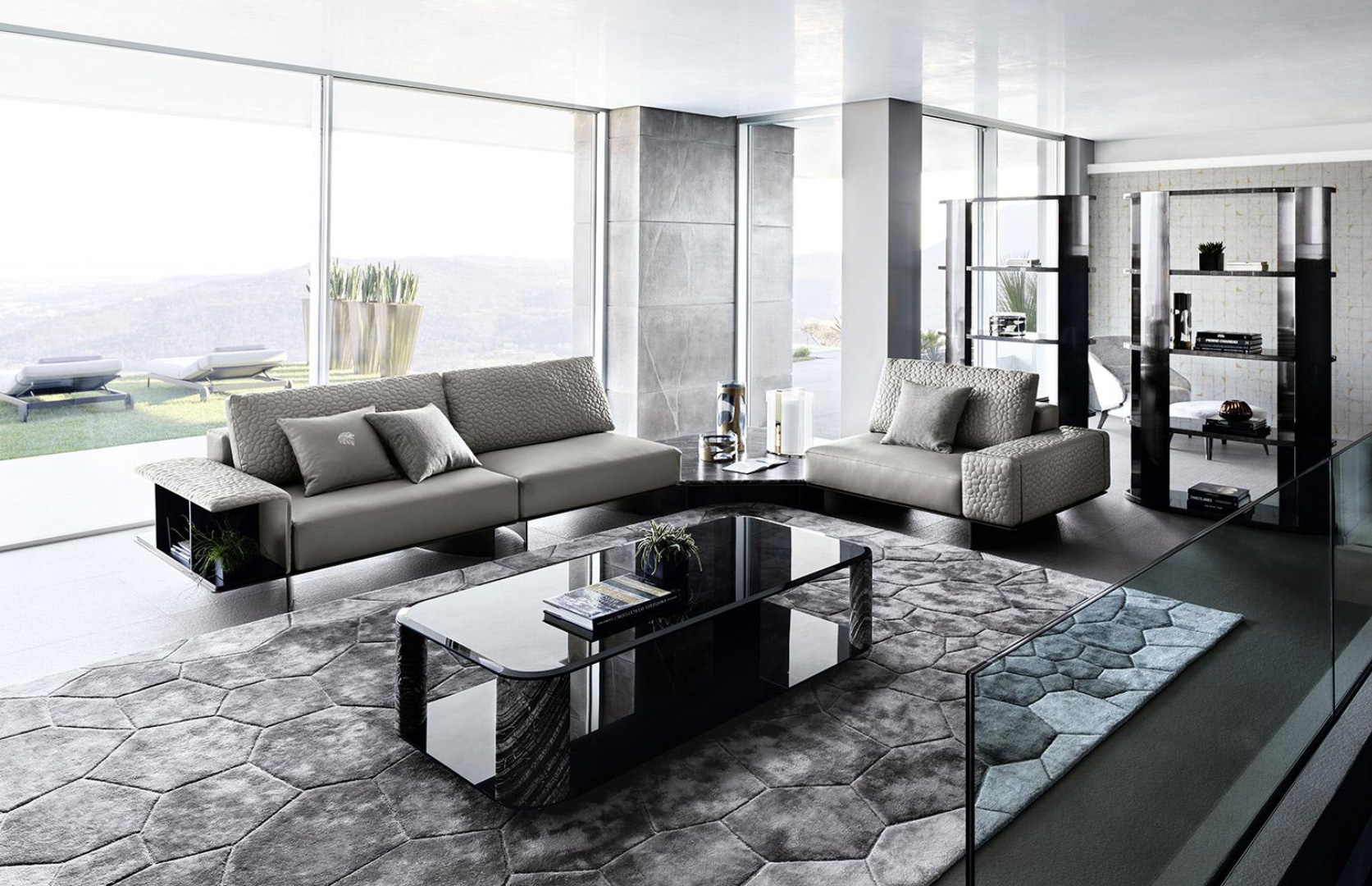

A customer looking for a high-end kitchen, bespoke furniture, architectural interiors, premium landscaping or a major home renovation is rarely making an impulse purchase.
They may spend weeks researching products, comparing suppliers, reviewing project photographs and deciding which businesses appear capable of delivering the standard they expect. In many cases, the eventual purchase may be worth thousands or tens of thousands of dollars.
That makes Google Ads particularly relevant to businesses operating in the high-end home design market. It can place a business in front of people actively searching for products and services, rather than relying entirely on customers discovering the brand through social media or organic search.
But simply paying for clicks does not make a Google Ads campaign commercially successful.
For premium home and lifestyle businesses, the important questions are whether the campaign reaches the right audience, whether the search intent is commercially relevant, whether the website builds enough confidence to generate enquiries, and whether those enquiries eventually turn into profitable projects.
A high-end furniture retailer, interior designer, kitchen company or custom builder therefore needs a more considered approach to Google Ads than simply selecting a list of popular keywords and increasing the budget.
Why Google Ads Can Be Valuable for High-End Home Businesses
One of the main advantages of Google Search advertising is that it can respond to existing demand.
Someone searching for “custom kitchen designer near me” has already demonstrated a degree of interest in the service. Someone searching for “bespoke walnut dining table” may be considerably closer to purchasing than someone who simply encounters a furniture advertisement while browsing social media.
This distinction matters.
High-end home products and services often have relatively long customer journeys. A prospective customer might begin with general research, move towards comparing styles and materials, investigate individual suppliers and eventually request a consultation or quotation.
Google Ads can potentially support several points in that journey, but Search campaigns are particularly useful when customers are already expressing a clear commercial need.
The objective should therefore not be to generate the largest possible number of visitors.
It should be to attract relevant prospective customers with commercially meaningful search intent.
For example, a premium kitchen business may have little interest in paying for thousands of searches from people looking for free kitchen plans or inexpensive flat-pack products. A smaller number of searches from people looking for a custom kitchen designer, luxury kitchen renovation or bespoke cabinetry may be considerably more valuable.
This is why keyword selection, targeting, advertising messages and landing pages all need to work together.
Start With the Customer and the Product, Not the Google Ads Account
Before creating campaigns, a high-end home business should understand exactly what it is trying to sell.
This sounds obvious, but it is an important distinction.
A business may offer several products or services with very different:
- price points
- margins
- locations
- customer profiles
- buying cycles
- levels of competition
- conversion rates
A luxury furniture retailer, for example, might sell individual products ranging from relatively accessible pieces to completely bespoke commissions.
An interior designer might offer initial consultations, full design services and project management.
A kitchen company may generate revenue from design, cabinetry, benchtops, appliances and installation.
Treating all of these as one generic advertising proposition can make it difficult to understand which parts of the campaign are actually generating worthwhile business.
The first stage should therefore be commercial rather than technical.
Ask:
- Which products or services have the strongest margins?
- Which projects does the business actually want more of?
- What geographical areas can it service profitably?
- What is the typical project value?
- How long does a customer usually take to make a decision?
- What constitutes a genuinely qualified enquiry?
- Which products or services are unsuitable for paid advertising?
- Does the business have capacity to handle additional work?
These questions help determine what Google Ads should be designed to achieve.
High-End Products Require More Than Generic Keyword Targeting
Keyword research remains important, but the goal should not be to identify the largest possible search volumes.
The more useful question is:
Which searches indicate a realistic commercial opportunity?
Consider a hypothetical premium outdoor living company.
It may offer custom outdoor kitchens, pergolas and architectural shade structures.
Broad searches such as:
- outdoor ideas
- backyard ideas
- garden design
- outdoor living
- patio ideas
could attract people who are still at the inspiration stage.
Those searches are not necessarily useless, but they represent a different level of intent from searches such as:
- custom outdoor kitchen
- outdoor kitchen designer
- bespoke pergola builder
- premium pergola installation
- outdoor kitchen company near me
The second group provides stronger evidence that the person is considering a purchase or project.
This does not mean every broad keyword should automatically be excluded. Search intent exists on a spectrum, and businesses with suitable landing pages and sufficient budgets may deliberately target customers earlier in the buying journey.
However, high-value businesses need to understand the difference.
A click from someone researching ideas is not equivalent to a click from someone preparing to request a quotation.
Use Search Terms to Understand What Customers Actually Want
Keyword research provides an initial framework. Actual search behaviour provides additional information.
Google Ads provides a Search Terms Report showing searches that resulted in ads being shown on the Search Network. This information can be used to identify relevant searches, discover new opportunities and exclude searches that are unsuitable for the business.
This is particularly important for high-end home businesses because a single keyword can represent very different intentions.
For example, a business targeting “custom furniture” could potentially encounter searches relating to:
- DIY furniture
- furniture plans
- cheap furniture
- furniture repairs
- used furniture
- furniture courses
- commercial furniture
- custom residential furniture
Some may be relevant.
Others may have little commercial value.
Negative keywords can help prevent advertising spend being directed towards clearly unsuitable searches. However, negative keyword management should be approached carefully rather than turning every unexpected search into an exclusion.
The objective is to continually improve the relationship between what customers search for and what the business actually sells.
Build Campaigns Around Commercially Meaningful Services
A high-end home business should generally avoid putting every product and service into one undifferentiated campaign.
Consider a hypothetical interior design company offering:
- residential interior design
- kitchen design
- bathroom design
- furniture selection
- full-home design
- project management
These services may involve different searches and different customer expectations.
Separate campaign or ad group structures can make it easier to align:
Search → Ad → Landing Page → Enquiry
A customer searching for “luxury kitchen designer” should ideally encounter an advertisement specifically relevant to kitchen design rather than a generic message about interior design.
The resulting landing page should then continue that conversation.
This alignment helps the prospective customer understand immediately that they have reached a business offering the service they were looking for.
Write Ads That Communicate Value Without Empty Luxury Language
Premium positioning creates a particular advertising challenge.
Simply describing something as “luxury”, “premium” or “high-end” does not necessarily persuade a customer.
The advertisement needs to communicate what makes the business worth considering.
Depending on the company, that might involve:
- bespoke design
- locally delivered service
- specialist materials
- custom manufacturing
- experienced designers
- complete project management
- tailored consultations
- professional installation
- architectural integration
- established expertise
- extensive project experience
The wording should reflect genuine characteristics of the business.
A company should not claim “award-winning” unless it genuinely holds relevant awards. It should not claim “Australia’s leading” or similar superlatives without a defensible basis.
Google’s responsive search ads allow advertisers to provide multiple headlines and descriptions, with combinations tested over time to show more relevant messaging. Google recommends using multiple responsive search ads within ad groups and maintaining relevant final URLs.
The practical lesson for a high-end business is that advertising messages should give Google useful variations while ensuring every combination still makes sense independently.
The Landing Page Is Part of the Advertisement
A strong advertisement cannot compensate indefinitely for a poor website.
This is particularly important when selling expensive home products and services.
Imagine someone clicks an advertisement for a bespoke kitchen company and lands on a page containing:
- a generic headline
- several paragraphs of vague marketing copy
- no project photographs
- no information about the design process
- no obvious service area
- no testimonials
- no useful call to action
The visitor has little reason to continue.
Compare that with a dedicated kitchen design page showing:
- completed projects
- different kitchen styles
- materials and finishes
- design process
- installation information
- relevant customer reviews
- service locations
- consultation information
- clear contact options
The second experience gives the customer considerably more evidence to evaluate.
For high-value purchases, this evidence matters because the website often forms part of the customer’s due diligence.
Google Ads should therefore be considered alongside website development and conversion optimisation rather than as an isolated service.
Use Dedicated Landing Pages for Important Services
One of the common weaknesses in paid advertising is sending every visitor to the homepage.
The homepage may be appropriate for some searches, but it is not always the strongest destination.
A person searching for a custom wardrobe should ideally reach information about custom wardrobes.
A person searching for luxury outdoor kitchens should reach information about outdoor kitchens.
A person searching for a high-end renovation company should reach a relevant renovation service page.
This creates continuity.
The visitor searched for one thing.
The advertisement addressed that subject.
The landing page continues the same subject.
The call to action provides the next logical step.
For high-value services, that next step may be:
- request a consultation
- arrange a showroom visit
- request a design appointment
- discuss a project
- request a quotation
- call the business
- submit project details
The correct conversion depends on the business and the buying process.
Geographic Targeting Matters
High-end home businesses are often geographically constrained.
A kitchen designer may serve a particular metropolitan area.
A landscape construction company may have a defined service radius.
A custom builder may work only within selected regions.
A furniture business with a showroom may be willing to sell nationally, while its installation service may be restricted to particular locations.
Google Ads allows advertisers to select geographic locations, including countries, areas within countries, radii and other location groupings. Location targeting can also be refined through advanced settings.
This needs to be considered carefully.
There is little value in generating enquiries from locations the business cannot service.
For a local installation business, the campaign may need much tighter geographic control than a premium furniture retailer selling products nationally.
Location targeting is not perfectly precise, so campaign performance should still be monitored rather than assuming that geographic settings eliminate every irrelevant impression or click. Google itself notes that location targeting relies on multiple signals and cannot guarantee 100% accuracy.
Consider the Difference Between Product and Service Advertising
Google Ads strategy should reflect whether the business sells a product, a service or a combination of both.
A premium furniture retailer may have identifiable products and categories.
Its advertising may therefore focus on searches relating to specific products, materials, styles or collections.
A custom home builder operates differently.
The customer is not simply purchasing a product from a catalogue. They are assessing:
- design capability
- experience
- process
- reputation
- location
- project suitability
- communication
- budget compatibility
The advertising therefore needs to support a more consultative customer journey.
The same applies to interior designers, architects, kitchen designers and high-end landscapers.
The campaign should not be judged solely on how many immediate online purchases occur.
A completed consultation may be the more meaningful conversion.
Track the Enquiries That Actually Matter
This is one of the most important aspects of Google Ads for high-value businesses.
A campaign can generate many conversions while producing very little commercial value.
Suppose a business receives 30 form submissions.
That sounds positive until the business discovers that:
- 12 were outside the service area
- 8 were looking for a cheaper service
- 5 were unsuitable projects
- 3 were genuine prospects
- 2 became quotations
- 1 became a sale
The original figure of 30 enquiries does not tell the full story.
HLM’s approach should therefore distinguish between:
Clicks → Leads → Qualified Leads → Quotes → Sales → Revenue → Profit
Google’s own guidance emphasises conversion measurement and notes that conversion values can help advertisers understand the business value generated by campaigns rather than simply counting conversions.
For high-end businesses, this distinction can materially change campaign decisions.
Connect Google Ads With the Sales Process
A customer may click an advertisement in March, request a consultation in April, receive a quotation in May and approve a project in June.
If the business only measures the initial form submission, it has limited information about the eventual commercial outcome.
Where appropriate, businesses should consider connecting advertising data with their CRM or sales process so that qualified leads and eventual outcomes can inform marketing decisions.
Google’s current enhanced conversions for leads documentation supports the use of first-party customer data and offline conversion information to improve measurement and attribution. Google also updated its enhanced conversions framework during 2026, including changes to how web and lead conversions are handled.
The technical implementation will vary between businesses, websites and CRM systems, but the underlying principle is straightforward:
Marketing should eventually be evaluated against business outcomes, not merely website activity.
Calculate What a Qualified Lead Can Be Worth
High-end businesses have an important advantage when evaluating lead economics: the value of a successful customer can be substantial.
Imagine a hypothetical landscaping business where a typical completed project produces $30,000 in revenue.
Suppose the business knows its average gross profit and has historical data showing approximately how many qualified enquiries become paying customers.
It can then work backwards to estimate what a qualified lead may reasonably be worth.
For example:
Average gross profit per sale × qualified-lead-to-sale conversion rate = indicative gross-profit value per qualified lead
This is not a universal formula for setting an advertising budget. Actual economics are more complicated, and businesses should account for sales costs, capacity, repeat business and other factors.
But the principle is useful.
A business should not automatically reject a $150 qualified lead because it appears expensive compared with a $30 lead generated by another campaign.
If the $150 lead has a significantly higher probability of producing a profitable project, the comparison is incomplete.
Do Not Optimise for Cheap Clicks
Cheap traffic can be misleading.
A premium interior designer might discover that one keyword produces clicks at a relatively low cost.
That sounds attractive.
But if those visitors rarely enquire, the low cost per click means very little.
Another keyword may produce fewer clicks at a higher cost, but those visitors may be much more likely to become serious prospects.
The relevant question is therefore not:
“How cheaply can we buy traffic?”
It is:
“How efficiently can we acquire commercially valuable opportunities?”
This is one of the most important mindset shifts for high-end home businesses.
The objective is not to win a spreadsheet contest based on click volume.
The objective is to build a sustainable source of suitable business.
Use the Website to Establish Trust Before the Enquiry
High-value customers often need evidence before making contact.
A premium home design website should therefore make effective use of visual and factual proof.
Depending on the business, useful trust signals may include:
Project Photography
High-quality photographs can demonstrate the standard of work far more effectively than generic claims.
For interior designers, builders, landscapers and kitchen companies, completed projects are particularly valuable.
Testimonials and Reviews
Genuine customer feedback can help prospective customers understand the experience of working with the business.
Reviews should be authentic and should never be manufactured.
Process Information
Customers often want to know what happens after they enquire.
Explaining the process can reduce uncertainty.
Experience and Credentials
Where relevant, include genuine qualifications, memberships, awards, certifications and years of experience.
Product Information
High-end customers may want detailed information about materials, finishes, construction, warranties or customisation.
Clear Contact Options
A customer should not have to search through several pages to discover how to begin a conversation.
Trust and conversion are closely connected.
Remarketing Can Support Longer Buying Journeys
Not every prospective customer will enquire after their first visit.
This is normal for expensive purchases.
Someone may visit a kitchen website, examine several projects and leave to discuss the idea with their partner.
Another visitor may compare several furniture businesses before returning weeks later.
Remarketing can be useful in supporting these longer journeys, depending on the campaign type, audience availability, privacy requirements and business objectives.
The important point is that remarketing should not simply repeat the same advertisement indefinitely.
Different stages of the customer journey may require different messages.
For example, someone who has viewed a particular service page might respond to content showing completed projects, design expertise or an invitation to arrange a consultation.
The objective is to remain relevant rather than become intrusive.
Google Ads Should Work Alongside SEO and Local SEO
Paid advertising and organic search are often discussed as competing channels.
For a high-end home business, they can be complementary.
Google Ads can provide immediate paid visibility for selected searches.
SEO can build organic visibility over time.
Local SEO can strengthen visibility for geographically relevant searches.
A strong website can support all three.
Consider a hypothetical premium kitchen business.
Its Google Ads campaign might target searches relating to custom kitchens.
Its SEO strategy might build useful organic content around:
- kitchen design
- kitchen materials
- renovation planning
- cabinetry
- kitchen layouts
- benchtop selection
- design costs
- common renovation mistakes
Its Local SEO strategy might strengthen visibility around the areas it services.
Its website can then bring these channels together through project pages, service information, reviews and consultation pathways.
This integrated approach can be considerably stronger than treating each channel as a completely separate activity.
Use Social Media to Reinforce the Click
Social media has a different role from Search advertising, but the channels can support each other.
A customer may first encounter a premium furniture business through Instagram.
They may later search the business name on Google.
They might then visit the website, read reviews and eventually submit an enquiry after seeing a Google advertisement.
The journey is rarely as simple as:
Google Ad → Sale
For high-end home businesses, multiple exposures can contribute to confidence.
Social content can therefore reinforce paid search by demonstrating:
- finished projects
- product details
- craftsmanship
- installations
- design processes
- staff expertise
- customer outcomes
- new products
- behind-the-scenes work
This does not mean every social post needs to sell.
The purpose is to create useful evidence around the brand.
Common Google Ads Mistakes in the High-End Home Sector
Several problems appear repeatedly when businesses approach paid advertising without a sufficiently commercial strategy.
1. Targeting Too Broadly
Large search volumes can look attractive, but broad searches may bring large amounts of unsuitable traffic.
2. Sending Every Visitor to the Homepage
A generic destination can weaken the connection between the search, advertisement and landing page.
3. Ignoring Search Terms
Without regularly reviewing actual searches, businesses can continue paying for irrelevant traffic.
4. Measuring Clicks Instead of Business Outcomes
Clicks are an input.
They are not a sale.
5. Using Generic Luxury Claims
Words such as “premium” and “luxury” are weak substitutes for explaining what genuinely differentiates the business.
6. Failing to Exclude Poor-Fit Customers
A campaign should reflect the company’s actual service area, project types and commercial position.
7. Neglecting Mobile Users
A large proportion of search activity occurs on mobile devices. The landing page therefore needs to provide a practical mobile experience rather than simply looking acceptable on a desktop screen.
8. Treating the Campaign as Set-and-Forget
Search behaviour, competition, budgets, landing pages and business priorities change.
Campaigns require ongoing review.
How to Judge Whether a Campaign Is Working
A high-end home business should build a measurement framework around its commercial objectives.
Useful measures can include:
- qualified enquiries
- consultation bookings
- quotation requests
- phone calls
- qualified lead rate
- cost per qualified lead
- quotation rate
- lead-to-sale conversion rate
- average project value
- revenue generated
- gross profit
- return on advertising spend
Supporting metrics such as impressions, click-through rate, cost per click and conversion rate can still provide useful diagnostic information.
They simply should not become the final measure of success.
For example, a falling click-through rate may require investigation.
But if qualified enquiries and profitable sales are increasing, the business needs to understand the whole picture before making a decision.
Conversely, a campaign with excellent click-through rates but poor lead quality may need substantial restructuring.
When Should a High-End Business Increase Its Google Ads Budget?
Increasing the budget should not be the automatic response to good performance.
Before spending more, ask whether the business can actually handle additional demand.
A premium builder may already have projects booked for months.
An interior designer may have limited design capacity.
A custom furniture manufacturer may have a long production queue.
A successful campaign can therefore create an operational problem if the business is unable to fulfil additional work.
Budget decisions should also consider:
- lead quality
- sales conversion
- project profitability
- geographic opportunity
- search demand
- available capacity
- landing-page performance
- campaign efficiency
- seasonality
Scaling should follow commercial capacity rather than advertising enthusiasm.
A Practical Google Ads Framework for High-End Home Businesses
A sensible process can be broken into several stages.
Step 1: Define the Commercial Objective
Determine which products, services, projects or customer types the business actually wants.
Step 2: Establish the Geographic Market
Define where profitable customers can realistically be served.
Step 3: Research Search Intent
Identify searches associated with genuine commercial demand and separate them from informational or unsuitable searches.
Step 4: Structure Campaigns Around Meaningful Themes
Keep related products and services logically organised so that advertisements and landing pages remain relevant.
Step 5: Create Strong Landing Pages
Provide enough information for a high-value customer to understand the offering and gain confidence.
Step 6: Write Specific Advertising Messages
Use genuine differentiators rather than empty claims.
Step 7: Establish Conversion Tracking
Track meaningful actions such as enquiries, calls and consultations, not simply page visits.
Step 8: Review Actual Search Behaviour
Use search-term data to identify opportunities and irrelevant traffic.
Step 9: Measure Lead Quality
Determine which enquiries are genuinely commercially useful.
Step 10: Connect Marketing With Sales
Where possible, establish which leads become quotations and which quotations become customers.
Step 11: Improve Continuously
Use the data to refine keywords, advertising, landing pages, targeting and budget allocation.
This process turns Google Ads from a traffic-generation exercise into a commercial marketing system.
The Role of a Specialist Marketing Partner
High-end home and lifestyle businesses often have considerable expertise in their own industries.
A kitchen designer understands kitchens.
A builder understands construction.
An interior designer understands design.
A premium furniture retailer understands products, materials and customers.
They do not necessarily need to become Google Ads specialists as well.
The value of specialist digital marketing support is therefore not simply knowing where to click inside an advertising platform.
It is understanding how paid search connects with the broader commercial operation.
That includes:
- identifying valuable search intent
- structuring campaigns
- controlling wasted spend
- improving landing pages
- measuring enquiries
- analysing lead quality
- connecting advertising with SEO
- supporting Local SEO
- improving website conversion
- interpreting results in commercial terms
For businesses selling expensive home products and services, these details matter because the value of a successful customer can be substantial.
Final Thoughts
Google Ads can be a valuable acquisition channel for high-end home design businesses, but it should not be treated as a simple mechanism for buying website traffic.
The strongest approach begins with the business itself.
What does it sell?
Where does it operate?
Which customers does it want?
Which projects are commercially attractive?
What constitutes a qualified enquiry?
How much is a successful customer worth?
Once these questions are understood, Google Ads can be structured around genuine commercial opportunities rather than arbitrary traffic targets.
Keyword selection, search intent, geographic targeting, advertising messages and landing pages all play important roles. So does ongoing management. Google’s own advertising guidance places considerable emphasis on conversion measurement and business value, while its current tools provide increasingly sophisticated ways to improve the accuracy of conversion data.
For high-end home and lifestyle businesses, the wider marketing system matters just as much. Google Ads may generate the initial visit, but the website must build confidence, the content must answer questions, reviews must reinforce credibility and the sales process must turn suitable enquiries into profitable customers.
That is why Google Ads should generally be considered alongside website development, SEO, Local SEO and social media rather than as a standalone activity.
Home & Lifestyle Marketing Co specialises in digital marketing for businesses operating across the home and lifestyle sector. For businesses selling high-value design products or services, the focus should be on building a marketing system that attracts the right prospects, demonstrates credibility and measures genuine commercial outcomes rather than simply producing more clicks.
To learn more, please visit www.hlmco.com.au