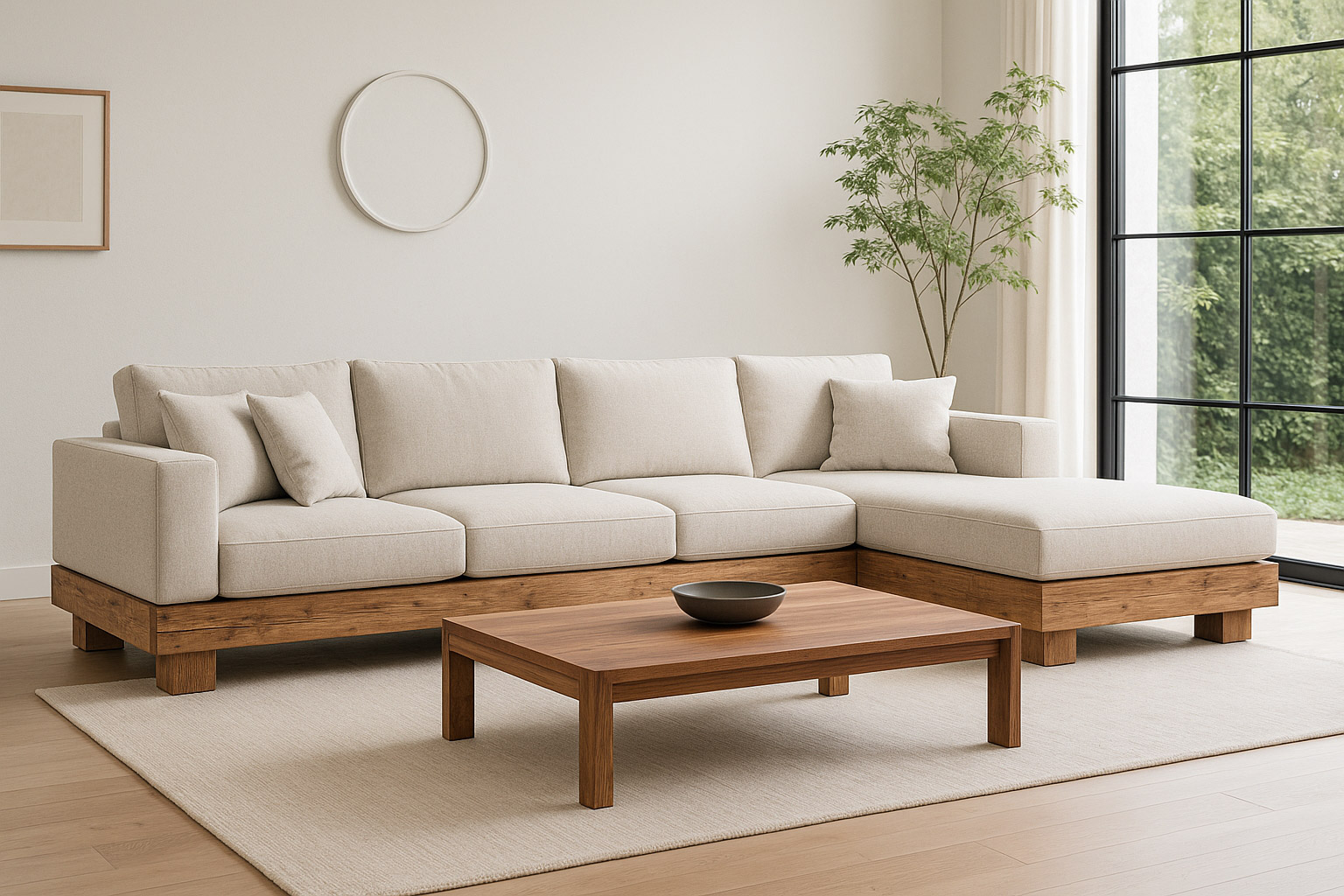

Premium home design businesses operate in a market where customers expect more than a product catalogue and a checkout button.
Whether a business sells designer furniture, lighting, homewares, outdoor furniture, décor, bathroom products, kitchen fittings or other high-end home products, customers often want to understand the product thoroughly before committing to a purchase.
They want to see how it looks, understand its materials and dimensions, compare options, assess quality and determine whether the product is appropriate for their home.
For premium businesses, e-commerce therefore needs to do more than process transactions.
It needs to communicate the value of the products, support the customer’s research process and create an online experience that reflects the quality of the brand.
This is particularly important because a customer’s first interaction with a premium home design business may happen online. They might discover a product through Google, see it on social media, visit the website, compare it with alternatives and return several times before purchasing.
A strong e-commerce strategy connects these different interactions.
It makes products easier to discover, easier to evaluate and easier to buy while maintaining the positioning expected from a premium brand.
E-Commerce Is More Than an Online Catalogue
One of the most common mistakes premium home businesses make is treating e-commerce as an online version of a printed catalogue.
A catalogue tells customers what products exist.
A strong e-commerce website helps customers decide whether those products are right for them.
This distinction matters.
A premium dining table, designer light fitting or outdoor furniture collection may require considerably more consideration than a standard commodity purchase.
Customers may want to know:
- What materials are used?
- What are the dimensions?
- How is the product made?
- Where is it manufactured?
- What finishes are available?
- How should it be maintained?
- Is it suitable for indoor or outdoor use?
- How long will delivery take?
- What happens if the product arrives damaged?
- Is professional installation available?
- Does the product work with other items in the range?
The more expensive or specialised the product, the more important this information becomes.
A strong e-commerce strategy recognises that product pages are part of the sales process.
They should help remove uncertainty rather than simply display a photograph, product name and price.
Premium Customers Still Expect Convenience
There is sometimes an assumption that luxury and convenience are incompatible.
They are not.
A premium customer may expect a high level of service while still wanting the convenience of researching and purchasing online.
A well-designed e-commerce experience can provide both.
Customers can browse outside normal business hours, compare products, save information, check specifications and make purchasing decisions at their own pace.
This is particularly useful for home design products because customers may be planning a room, renovation or larger project over an extended period.
A customer might initially discover a product while researching design ideas.
They may not be ready to purchase immediately.
Several days later, they may return to the website to examine the dimensions.
Later still, they may compare finishes or related products before placing an order.
The website needs to support this behaviour.
The objective is not simply to make the checkout process fast.
It is to make the entire decision-making process easier.
Product Pages Need to Sell the Product Without Overselling It
For premium home design businesses, product-page quality can have a direct effect on customer confidence.
A weak product page might contain:
- One photograph
- A short description
- A price
- An “Add to Cart” button
That may be sufficient for a simple commodity product.
It is often inadequate for a premium purchase.
A stronger product page can include:
High-quality photography
Customers need to see the product clearly.
Where appropriate, include multiple angles, close-up details and photographs showing the product in a realistic interior setting.
For furniture and décor products, lifestyle photography can help customers understand scale, proportion and appearance.
Detailed specifications
Provide useful information about:
- Dimensions
- Materials
- Finishes
- Weight
- Colours
- Care requirements
- Assembly
- Installation
- Warranty information
The exact information will depend on the product.
Clear descriptions
Descriptions should explain what makes the product useful or distinctive.
Avoid filling descriptions with vague claims such as “exceptional quality” unless there is evidence supporting the statement.
Instead, explain the construction, materials, design characteristics and practical benefits.
Delivery information
Delivery can be an important consideration for large or fragile home products.
Customers should be able to understand relevant delivery areas, expected timeframes, costs and any special requirements.
Related products
A customer viewing a dining table may also need dining chairs.
Someone purchasing outdoor furniture may need covers, cushions or complementary pieces.
Useful related-product recommendations can improve the shopping experience while increasing opportunities to purchase additional products.
Make Premium Products Easy to Find
A beautiful e-commerce website is of limited commercial value if potential customers cannot find it.
This is where SEO becomes important.
Search engine optimisation can help premium home design businesses appear when customers are actively researching relevant products.
The strategy should extend beyond individual product names.
Potential search behaviour may include:
- Product categories
- Specific product types
- Materials
- Design styles
- Room-specific products
- Brand names
- Product comparisons
- Buying questions
- Care information
- Installation questions
For example, a customer may search for a particular type of outdoor dining setting rather than the name of a specific retailer.
Another customer may search for information about choosing lighting for a particular room.
A strong e-commerce strategy considers both product searches and informational searches.
Category Pages Are Important SEO Assets
Premium businesses sometimes focus heavily on product pages while neglecting category pages.
That can be a mistake.
A well-structured category page can provide a useful overview of a product group while helping search engines understand the relationship between products.
Instead of simply displaying a grid of products, a category page can include a concise introduction explaining:
- What products are included
- Who they are suitable for
- Important buying considerations
- Relevant materials or styles
- Differences between product types
- Links to useful supporting content
For example, a premium outdoor furniture category could explain the differences between dining settings, lounges, occasional furniture and modular seating.
The content should remain useful to customers rather than becoming a block of keyword-heavy text.
E-Commerce and Google Ads Should Work Together
Google Ads can provide immediate visibility for products and categories with commercial search demand.
But premium e-commerce advertising requires careful targeting.
The objective should not be to generate the maximum number of clicks.
It should be to attract people who are genuinely interested in the products being sold.
Consider a business selling premium outdoor furniture.
Advertising broad searches without sufficient control could attract people looking for inexpensive furniture, second-hand products, repairs or unrelated services.
A carefully structured campaign can use relevant keywords, negative keywords, geographic targeting and appropriate landing pages to improve the quality of traffic.
The product page or category page then needs to deliver on the promise made by the advertisement.
If an advertisement promotes a particular product range but takes the customer to a generic homepage, unnecessary friction is introduced.
A relevant landing page gives the customer a much clearer path forward.
Don’t Judge E-Commerce Advertising by Clicks Alone
A premium e-commerce business needs to understand what happens after a visitor clicks an advertisement.
Useful measurements can include:
- Product views
- Add-to-cart activity
- Checkout initiation
- Completed purchases
- Average order value
- Conversion rate
- Cost per acquisition
- Revenue generated
- Return on advertising spend
- Repeat purchases
The appropriate metrics depend on the business model.
For example, a business selling high-value furniture may have a different purchase cycle from a business selling premium home accessories.
The important principle is to connect marketing activity with commercial outcomes.
A campaign producing thousands of clicks but very few purchases requires investigation.
Likewise, a campaign with relatively modest traffic may be valuable if it consistently generates profitable sales.
Local SEO Still Matters for E-Commerce Businesses
E-commerce does not necessarily mean a business has no local customers.
Many premium home design businesses operate through a combination of online sales and physical locations.
They may have:
- Showrooms
- Retail stores
- Warehouses
- Design studios
- Consultation spaces
- Installation teams
Customers may discover a product online and then want to see it in person.
This makes Local SEO important.
A strong Google Business Profile can help customers find the business, understand where it is located, view photographs, read genuine reviews and access relevant business information.
Local search visibility can also support showroom visits.
A customer searching for premium furniture or designer home products in their area may discover the business online before deciding to visit.
The online and offline experiences should therefore reinforce one another.
Social Media Can Drive Product Discovery
Premium home design products are highly visual.
That creates strong opportunities for social media marketing.
Instagram, Facebook, Pinterest, YouTube and other platforms can introduce customers to products before they actively search for them.
Useful content can include:
- Product photography
- Room styling
- Completed interiors
- New collections
- Product demonstrations
- Material close-ups
- Design advice
- Styling ideas
- Customer projects
- Before-and-after content
- Care advice
- Short videos
- Designer or staff insights
The objective should not simply be to publish product photographs every day.
A feed consisting entirely of product advertisements can become repetitive.
Instead, social content can help customers understand how products fit into real homes and design decisions.
For example, rather than simply showing a premium sofa, a business could demonstrate how different sofa configurations work in large and small living spaces.
That gives the customer useful information while naturally presenting the product.
Use Content to Answer the Questions Customers Ask Before Buying
Content marketing can support e-commerce by answering questions that customers may have before they are ready to purchase.
A premium furniture retailer might publish articles about:
- How to choose the right dining table size
- How to select furniture for an open-plan living space
- What to consider when buying outdoor furniture
- How to care for natural timber furniture
- How to choose lighting for different rooms
- What makes one material more suitable than another
- How to combine different furniture styles
This content can attract organic search traffic while helping customers make better purchasing decisions.
It can also link naturally to relevant product and category pages.
For example, an article discussing outdoor dining could link to an appropriate outdoor dining collection.
This creates a useful relationship between SEO content and e-commerce.
Build an E-Commerce Journey Around Customer Confidence
A premium online store should answer the questions that prevent customers from buying.
These questions may be practical.
“What are the dimensions?”
“How much does delivery cost?”
“When will it arrive?”
They may also be about quality.
“What is it made from?”
“How durable is it?”
“Where was it manufactured?”
And they may concern risk.
“What happens if I change my mind?”
“What happens if the item is damaged during delivery?”
“Is there a warranty?”
“Can I speak to someone before purchasing?”
Providing this information clearly can reduce uncertainty.
For higher-value products, businesses may also benefit from offering additional contact options.
A customer may be able to purchase a product directly but still want to speak with someone before doing so.
This could involve:
- Phone support
- Online enquiry forms
- Showroom appointments
- Design consultations
- Product advice
E-commerce does not have to eliminate human interaction.
For premium businesses, it can provide a digital starting point for a more personalised sales process.
Reviews Are Particularly Valuable for Premium Products
Customers taking a significant financial risk often want evidence that other people have had a positive experience.
Genuine customer reviews can therefore contribute to trust.
Reviews may address:
- Product quality
- Delivery
- Customer service
- Communication
- Installation
- Overall buying experience
The business should make it easy for genuine customers to provide feedback and should respond professionally to reviews where appropriate.
Artificially generated or manipulated reviews should not form part of the strategy.
The objective is to build a credible reputation over time.
For premium businesses, reputation can be particularly important because customers may be committing substantial amounts of money to products they have not physically inspected.
Use Email Marketing to Bring Customers Back
Not every visitor will purchase during their first visit.
This is particularly relevant for premium products.
Email marketing can provide a way to maintain communication with customers who have chosen to subscribe or otherwise consented to receive marketing communications.
Useful email content can include:
- New collections
- Product launches
- Design inspiration
- Buying guides
- Seasonal collections
- Product care advice
- Showroom events
- Relevant promotions
- Educational content
The emphasis should remain on relevance.
A premium brand can damage its positioning if customers receive an endless stream of low-value promotional messages.
Email should provide a reason to remain subscribed.
The Mobile Experience Cannot Be an Afterthought
Many customers will encounter an e-commerce business using a mobile device.
That means the mobile shopping experience needs to be considered from the beginning of the website development process.
Customers should be able to:
- Browse products easily
- View photographs clearly
- Read descriptions
- Navigate categories
- Add products to their cart
- Complete checkout
- Contact the business
Large product photographs should load efficiently.
Buttons need to be easy to use.
Navigation should not become unnecessarily complicated.
Forms should be straightforward.
And the website needs to perform well.
A premium visual design loses much of its value if the site is slow, difficult to navigate or frustrating to use.
Personalisation Can Improve the Shopping Experience
As an e-commerce business grows, there may be opportunities to make product discovery more relevant.
For example, the website might recommend related products based on what the customer is viewing.
A customer browsing outdoor dining furniture could be shown:
- Matching chairs
- Outdoor lighting
- Covers
- Accessories
- Complementary products
Similarly, someone exploring a particular interior style could be directed towards related collections.
The principle is simple.
Help customers discover products that are genuinely relevant to their interests.
Personalisation should improve navigation rather than make the website feel intrusive.
Make the Checkout Process Simple
After investing heavily in product presentation and marketing, a business can still lose sales at the final stage.
Checkout should therefore be as straightforward as practical.
Customers should understand:
- What they are buying
- The total cost
- Delivery charges
- Expected delivery timeframe
- Payment options
- Relevant terms
- What happens after purchase
Unnecessary form fields and complicated processes can create friction.
For expensive purchases, customers may also need reassurance immediately before completing the order.
Clear contact information, secure payment options, delivery details and relevant policies can help provide that reassurance.
Measure the Entire E-Commerce Funnel
A strong e-commerce strategy requires more than looking at total revenue.
Businesses should understand how customers move through the website.
For example:
Traffic → Product View → Add to Cart → Checkout → Purchase
If a large number of people view products but very few add them to the cart, product presentation or pricing may need investigation.
If customers add products to carts but abandon checkout, there may be issues with delivery costs, payment options, website usability or other forms of friction.
If advertising generates substantial traffic but few purchases, the targeting or landing-page experience may need attention.
The exact cause should be established through appropriate data rather than assumed.
This is where analytics and conversion tracking become important.
Premium E-Commerce Is About the Entire Brand Experience
A premium customer does not necessarily separate the e-commerce website from the rest of the brand.
They experience the business as a whole.
They may discover the company through Google.
They may see its products on Instagram.
They may read an article.
They may look at its Google Business Profile.
They may visit a showroom.
They may speak with a staff member.
They may return to the website.
Each interaction contributes to their perception of the business.
This is why website development, e-commerce, SEO, Local SEO, Google Ads and social media marketing should not be treated as completely separate activities.
They have different functions, but they should support the same commercial objectives.
How Home and Lifestyle Marketing Co Can Support Premium E-Commerce Businesses
Premium home design businesses need digital marketing that understands both their products and the way customers make higher-value purchasing decisions.
Home and Lifestyle Marketing Co specialises in digital marketing for home and lifestyle businesses, including services across website development, e-commerce, Google Ads, Local SEO, regular SEO and social media marketing.
For an e-commerce business, these services can support different parts of the customer journey.
Website development provides the foundation for the digital shopping experience.
E-commerce functionality allows customers to research and purchase suitable products online.
SEO helps the business build long-term organic visibility.
Local SEO can support showrooms, stores and regional customer acquisition.
Google Ads can target relevant commercial searches.
Social media can create product discovery and reinforce brand credibility.
The right combination depends on the business.
A premium furniture retailer with an established showroom may have different requirements from an online-only homewares business.
Likewise, a business selling high-value bespoke products may need a stronger consultation and enquiry process than a retailer selling products that customers can purchase immediately.
The strategy should therefore be built around the products, customers, buying journey, geographic market and commercial objectives of the individual business.
Conclusion
For premium home design businesses, e-commerce is no longer simply a convenient way of adding an online checkout to an existing catalogue.
It can become a central part of the customer journey.
A strong e-commerce strategy helps customers discover products, understand their value, compare options, assess quality, overcome uncertainty and ultimately make a purchase.
But the technology itself is only one part of the equation.
The website needs to reflect the quality of the brand.
Product pages need to provide useful information.
SEO needs to make products and categories discoverable.
Google Ads needs to attract commercially relevant traffic.
Local SEO can support showrooms and regional visibility.
Social media can create product discovery and demonstrate how products work in real homes.
Content can answer customer questions before they buy.
Reviews can strengthen trust.
Analytics can reveal where customers are leaving the purchasing journey.
When these elements work together, e-commerce becomes more than a sales channel. It becomes an important part of the brand experience.
For premium home design businesses, that distinction matters.
Customers spending significant amounts on furniture, interiors, outdoor living products and other home investments expect a level of presentation, information and service that matches the product they are considering.
A well-planned e-commerce strategy gives businesses the opportunity to meet that expectation while creating a more measurable and commercially effective digital marketing system.
To learn more, please visit www.hlmco.com.au