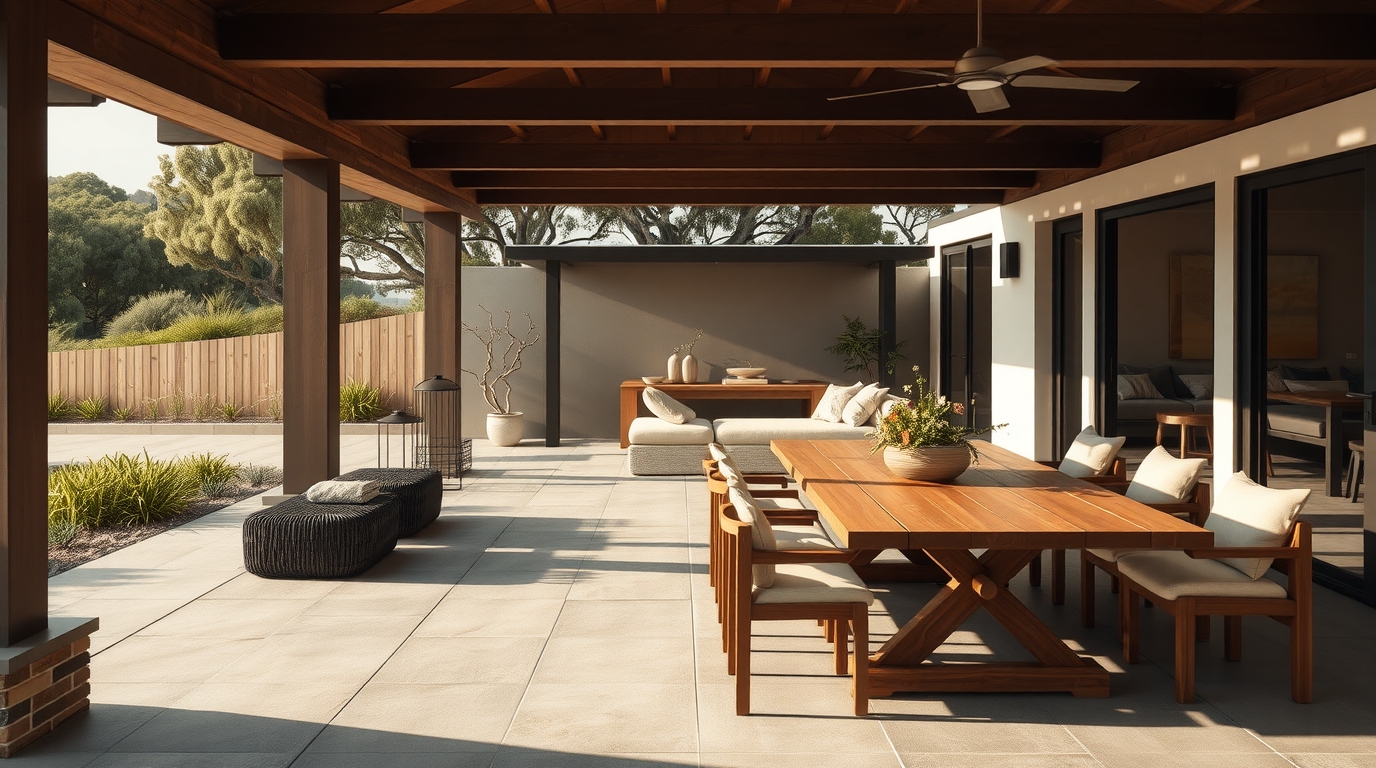

Outdoor living businesses often operate within defined geographic markets. A contractor may install outdoor kitchens, patios, decks, pergolas or entertaining areas within a practical service radius. A supplier may serve customers through a showroom, warehouse, delivery network or local sales team.
That makes local visibility particularly important.
When someone searches for an outdoor kitchen installer, patio supplier, outdoor furniture showroom or landscaping contractor, they are often looking for a business they can actually contact, visit or hire. Being visible for those searches can put a business in front of potential customers at a point when location and availability matter.
Local SEO helps outdoor living businesses build that visibility.
It is not simply about adding suburb names to a website. Effective local SEO combines an accurate Google Business Profile, useful location-specific website content, genuine customer reviews, relevant project information, strong local signals and a clear path from search to enquiry.
Google states that local results are primarily influenced by relevance, distance and prominence. Complete business information can help Google understand what a business does and match it with relevant local searches.
For outdoor living businesses, this creates an opportunity to compete for customers based not only on what they sell, but also on where they operate, what projects they specialise in and the local experience they can provide.
Outdoor Living Is Naturally Local
Many outdoor living purchases begin online, but the final transaction often has a strong local element.
A customer considering an outdoor kitchen may want to visit a showroom, discuss the design, inspect materials and arrange an installation. Someone planning a pergola may need an installer who understands the local property, access requirements and practical conditions. A customer buying premium outdoor furniture may want to see products in person before committing to a significant purchase.
Even when a product can be purchased online, delivery costs, installation, servicing and after-sales support can make location relevant.
This is why searches such as:
- outdoor kitchen installers near me
- outdoor furniture showroom
- pergola builders
- patio suppliers
- outdoor blinds near me
- poolside furniture
- alfresco living products
- decking contractors
- outdoor entertaining specialists
can have significant commercial value.
The objective is not to attract every person searching for outdoor living ideas. The objective is to become visible to people whose location, requirements and buying intent make them realistic prospects.
That distinction is central to effective local SEO.
Local SEO Connects Search Intent with Service Areas
One of the strongest advantages of local SEO is its ability to connect what a business offers with where it operates.
Google’s local search systems consider relevance and distance alongside prominence. Relevance concerns how closely a business matches the search, while distance considers how far the business is from the searcher’s location or specified location.
For an outdoor living contractor, this means the business needs to communicate clearly what it actually does.
A website that simply says “Outdoor Living Specialists” provides limited information.
A stronger website might clearly explain that the business designs and installs outdoor kitchens, pergolas and entertaining areas across specific regions.
The same principle applies to suppliers.
A supplier should make it clear whether it operates a physical showroom, delivers to particular regions, offers trade supply, provides installation or supports customers with product selection.
Local SEO therefore starts with clarity.
Google needs to understand the business. Customers need to understand the business. The website and Business Profile should communicate the same underlying information.
A Well-Managed Google Business Profile Is Essential
For many local businesses, Google Business Profile is one of the most important components of local search visibility.
A Business Profile can appear across Google Search and Google Maps and can provide customers with information such as the business name, location, opening hours, website, photographs and reviews.
For outdoor living businesses, this profile should accurately represent the real business.
Important information includes:
- Business category
- Address, where applicable
- Service area
- Opening hours
- Telephone number
- Website
- Services
- Relevant business information
- High-quality photographs
- Genuine customer reviews
Accuracy matters because customers may use the information immediately.
A customer searching for an outdoor furniture showroom may want to know whether the business is open before making a trip. Someone looking for a contractor may want to call directly. A customer researching an outdoor kitchen supplier may move from the Business Profile to the website to investigate products and services.
The profile is therefore more than a directory listing. It can become an important entry point into the customer journey.
Google specifically recommends keeping Business Profile information complete and accurate and adding photos and videos that show what the business offers.
Local SEO Helps Contractors Target Valuable Service Areas
Outdoor living contractors rarely serve an unlimited geographic area.
Travel time, installation logistics, project size and workforce availability all affect which locations make commercial sense.
Local SEO allows a contractor to build visibility around the areas it genuinely serves.
For example, a contractor might specialise in outdoor kitchens across several surrounding cities and regional areas. Its website can explain those service areas while also creating useful pages around the actual services provided.
A useful location page should not simply repeat the same paragraph with a different suburb name.
Instead, it can explain:
- Which services are available in the area
- What types of outdoor projects the contractor handles
- Relevant project considerations
- Typical customer requirements
- Areas covered
- How consultations work
- How customers can request a quote
The content should reflect the real business.
Creating dozens of nearly identical location pages simply to capture search terms can produce a poor user experience and does little to demonstrate genuine local expertise.
The strongest location content provides information a prospective customer would actually find useful.
Suppliers Can Benefit from Local Search Visibility Too
Local SEO is not limited to contractors.
Outdoor living suppliers can also benefit significantly, particularly when they operate showrooms, retail locations or defined delivery areas.
Consider a customer searching for premium outdoor furniture in a particular city.
That customer may be comparing:
- Outdoor dining settings
- Lounge furniture
- Umbrellas
- Fire pits
- Outdoor kitchens
- BBQs
- Lighting
- Accessories
- Shade products
The customer may also want to visit a showroom before purchasing.
A well-optimised local presence can help connect that search with the supplier.
The website should make practical information easy to find. This might include showroom location, opening hours, product categories, delivery information, brands carried, project services and contact details.
For businesses with a physical location, this information should align with the Google Business Profile.
Google also explains that Business Profile information can be combined with information from other sources, including the business website, users and third parties. Maintaining consistent, accurate information across the business’s digital presence therefore matters.
Project Photography Can Strengthen Local Relevance
Outdoor living is highly visual.
Customers want to see finished spaces before deciding whether a contractor, designer or supplier is suitable for their project.
Project photography can therefore serve several purposes simultaneously.
It demonstrates workmanship.
It helps customers understand the types of projects the business undertakes.
It provides inspiration.
It gives the website original material.
And when properly associated with relevant project information, it can reinforce the connection between the business and the areas it serves.
A project page might explain that an outdoor kitchen was designed and installed for a particular type of property in a particular service area.
Another page might showcase a pergola installation, covered entertaining area or outdoor furniture project.
The emphasis should remain on genuine work.
There is little value in presenting generic stock photographs as though they represent completed projects.
For a high-value outdoor living business, original photography can be one of the strongest forms of evidence available.
Reviews Matter for Both Visibility and Trust
Outdoor living projects often involve considerable customer commitment.
A prospective customer may be spending thousands of dollars on a new outdoor area, furniture collection or installation.
Before contacting a business, they may want reassurance that other customers have had a positive experience.
Reviews provide one source of that reassurance.
Google states that reviews and positive ratings can contribute to local prominence, while responses to reviews can also help businesses engage with customers.
The objective should not be to manufacture reviews or manipulate customers into leaving a particular type of feedback.
Genuine reviews are more useful.
An outdoor living business can also respond professionally to reviews, including less positive feedback where appropriate.
For contractors, detailed reviews can be particularly valuable when customers mention aspects such as:
- Communication
- Design assistance
- Installation
- Workmanship
- Reliability
- Product quality
- Project management
- After-sales service
These details can help prospective customers understand what working with the business is actually like.
The Website Must Support Local Search
Local SEO does not end with Google Business Profile.
The business website needs to provide enough information for both search engines and potential customers to understand the company.
A strong outdoor living website should normally have dedicated pages for important services.
For example:
Outdoor Kitchens
Explain design, products, installation, materials, appliances and the process.
Pergolas and Outdoor Structures
Explain available options, design considerations, installation and suitable applications.
Outdoor Furniture
Show product categories, materials, styles, use cases and relevant delivery information.
Outdoor Entertaining Areas
Demonstrate how different products and services can work together to create a complete space.
The site can then incorporate relevant geographic information naturally.
Instead of repeatedly inserting a suburb into every paragraph, the business can demonstrate local relevance through genuine project examples, service-area information, customer questions and practical location details.
Create Location Pages with a Genuine Purpose
Location pages can be useful when a business genuinely serves multiple geographic areas.
However, quality matters more than quantity.
A useful location page might explain:
- Services available in that area
- Typical outdoor living projects
- Relevant property considerations
- Examples of work
- Service boundaries
- Consultation arrangements
- Contact options
The content should answer a customer’s question:
“Can this business actually help me with my project here?”
That is far more useful than a page designed solely around repeating a keyword.
For example, a contractor serving several regional areas might explain differences in access, project planning, consultation or installation arrangements where those differences genuinely exist.
This creates a more credible resource and gives the customer a reason to visit the page.
Local Content Can Capture Customers Before They Are Ready to Buy
Not every valuable local search is transactional.
A prospective customer may begin with a question such as:
- How much does an outdoor kitchen cost?
- What size pergola do I need?
- What outdoor furniture works best for entertaining?
- What should I consider before building an outdoor entertaining area?
- How do I choose outdoor furniture for a coastal property?
- What should I ask an outdoor kitchen installer?
- How long does an outdoor living project take?
Some of these searches may eventually lead to a local supplier or contractor.
Useful content allows a business to enter that research process earlier.
The key is to connect educational content with relevant commercial services.
An article about planning an outdoor kitchen can naturally link to an outdoor kitchen design or installation service.
A guide to choosing outdoor furniture can connect to relevant product categories.
A planning guide for entertaining areas can point customers towards the business’s design and installation services.
This creates a useful relationship between SEO content and commercial pages.
Local SEO Should Reflect the Outdoor Living Buying Journey
Outdoor living purchases often involve a longer decision process than an ordinary low-cost purchase.
A customer might:
- See an outdoor space they like.
- Search for ideas.
- Research products and materials.
- Compare suppliers.
- Investigate contractors.
- Read reviews.
- Visit a showroom or request a consultation.
- Compare quotes.
- Make a purchasing decision.
Local SEO can contribute at several stages.
Early-stage content can answer planning questions.
Project pages can demonstrate expertise.
Service pages can explain what the company offers.
Google Business Profile can provide local visibility and essential business information.
Reviews can provide social proof.
The website can then convert that interest into a phone call, enquiry, showroom visit or consultation.
This is why local SEO should not be treated as a standalone technical exercise.
It is part of the customer’s route from discovery to commercial action.
Local Authority Comes from More Than One Website Page
Google’s local ranking guidance refers to prominence, which includes how well-known a business is and information about the business from across the web. Google specifically notes that links, articles, directories and reviews can contribute to this broader picture.
For an outdoor living business, local authority can therefore be supported by legitimate relationships and activity such as:
- Local industry associations
- Relevant supplier relationships
- Local project features
- Industry publications
- Community organisations
- Property or design publications
- Local business directories where appropriate
- Partnerships with complementary businesses
The objective is not to acquire hundreds of low-quality directory links.
Relevant recognition is more useful.
An outdoor kitchen installer featured in a genuine local home design publication, for example, has a stronger connection between its expertise and local market than a collection of unrelated directory listings.
Structured Data Can Help Search Engines Understand the Business
Technical SEO also has a role in local search.
Google supports LocalBusiness structured data, which allows businesses to provide structured information about details such as business name, address, opening hours and other properties.
Structured data does not guarantee better rankings.
It is better understood as a way of helping search engines interpret information that already exists on the page.
For a local outdoor living business, this should form part of a broader technical SEO strategy rather than being treated as a shortcut.
The fundamentals still matter:
- Accessible pages
- Clear website structure
- Useful content
- Accurate business information
- Mobile usability
- Strong service pages
- Relevant internal linking
- Appropriate structured data
- Search-friendly page titles and headings
Google’s search systems consider factors including relevance, usability, expertise and location depending on the query.
Make the Enquiry Process Obvious
Local SEO can generate visibility, but visibility has limited commercial value if customers struggle to contact the business.
An outdoor living website should make the next step obvious.
Depending on the business, that might be:
Request a Quote
Book a Design Consultation
Visit the Showroom
Speak to a Specialist
Enquire About Installation
View Our Outdoor Furniture Range
The call to action should match the customer’s buying stage.
Someone researching a large outdoor kitchen project may not be ready to “Buy Now”.
They may be ready to discuss the project.
A supplier selling readily available products may have a more direct e-commerce journey.
The conversion process should reflect the actual business model.
Measure Local SEO by Commercial Outcomes
Traffic is useful, but it is not the final objective.
An outdoor living business should try to understand what happens after local visibility generates interest.
Useful measures can include:
- Calls from local prospects
- Quote requests
- Consultation bookings
- Showroom visits
- Product enquiries
- Qualified leads
- Quotes issued
- Sales generated
- Average project value
- Lead-to-sale rate
This distinction matters.
Twenty highly relevant enquiries from customers looking for outdoor kitchens may be commercially more useful than hundreds of visitors searching for general outdoor inspiration.
Similarly, a supplier should distinguish between people browsing products and customers who actually enquire, visit a showroom or purchase.
Local SEO should therefore be connected to the wider measurement system of the business.
Common Local SEO Mistakes for Outdoor Living Businesses
Several mistakes can weaken an otherwise good local SEO strategy.
Treating Google Business Profile as a Set-and-Forget Listing
A profile should remain accurate and representative of the current business.
Using Generic Stock Photography
Outdoor living customers want evidence of real products and completed projects.
Creating Thin Location Pages
Changing a suburb name while keeping almost identical content does not create meaningful local expertise.
Targeting Every Nearby Area
A business should focus on locations it can genuinely serve profitably.
Ignoring Reviews
Reviews are part of both customer trust and local visibility.
Sending Every Local Searcher to the Homepage
Someone searching for an outdoor kitchen installer should ideally arrive at an outdoor kitchen service page or relevant project resource.
Measuring Only Rankings
Search visibility matters, but enquiries, qualified leads and sales matter more commercially.
Ignoring Mobile Users
Local searches frequently happen when people are away from their desks. Contact information and navigation should therefore be easy to use on smaller screens.
A Practical Local SEO Framework for Outdoor Living Businesses
A practical programme can be built around seven areas.
1. Define the Commercial Service Area
Identify the locations the business genuinely wants to serve.
2. Optimise the Google Business Profile
Verify the profile and maintain accurate business information, relevant categories, services, photographs and genuine reviews. Google recommends complete and accurate Business Profile information for improving local visibility.
3. Strengthen Core Service Pages
Create detailed pages for the services and product categories that matter commercially.
4. Build Genuine Local Evidence
Use real projects, photographs, testimonials, service-area information and locally relevant examples.
5. Develop Useful Local Content
Answer questions customers ask before they request a quote or visit a showroom.
6. Improve the Conversion Journey
Make calls, quote requests, consultations and showroom visits easy to initiate.
7. Measure Business Results
Connect local search activity with qualified enquiries, quotes and sales wherever possible.
This creates a more sustainable approach than chasing individual keywords.
Local SEO Works Best as Part of a Wider Digital Strategy
Local SEO should not operate independently from the rest of the marketing system.
Google Ads can provide immediate visibility for high-intent searches.
SEO can build longer-term organic visibility.
Social media can showcase completed outdoor spaces and provide inspiration.
Video can demonstrate products, installation processes and project transformations.
The website can bring these channels together and turn attention into enquiries.
Reviews can strengthen trust.
Email can maintain relationships with existing prospects and customers.
Each channel has a different role.
For an outdoor living business, the strongest digital strategy is often not about choosing one channel. It is about creating a connected customer journey.
Someone may discover an outdoor kitchen project through social media, search for the company on Google, review its Business Profile, visit the website, read a project case study and eventually request a consultation.
Local SEO helps ensure that the business remains visible during that journey.
Local Visibility Should Reflect Real Expertise
The strongest local SEO strategies do not attempt to make a business appear relevant to an area where it has no meaningful presence.
They make genuine expertise easier to discover.
An outdoor living contractor should demonstrate the projects it understands and the locations it serves.
A supplier should demonstrate the products it carries, the customers it serves and the support it provides.
A designer should demonstrate its approach through real work.
This produces a useful alignment between search visibility, customer expectations and commercial reality.
It also makes the website more persuasive because the same evidence that helps search engines understand the business can help customers decide whether they should make contact.
Conclusion
Local SEO is particularly important for outdoor living contractors and suppliers because location often forms part of the buying decision.
Customers may need installation, delivery, showroom access, design advice, project management or ongoing support. They are therefore not simply looking for an outdoor living business. They are looking for a business that can serve their particular needs in their area.
A strong local SEO strategy brings together an accurate Google Business Profile, useful service pages, genuine project evidence, local content, customer reviews, technically sound website information and a straightforward enquiry process.
The objective is not simply to generate more website visitors.
It is to become easier to discover when relevant local customers are researching outdoor living products and services, and then give those customers enough information and confidence to take the next step.
For contractors and suppliers operating in competitive outdoor living markets, that connection between local visibility and commercial intent can make local SEO an important part of a broader digital marketing strategy.
If your business operates in the outdoor living sector and you would like to improve the quality and commercial performance of your digital marketing, Home & Lifestyle Marketing Co can help you assess where the strongest opportunities may lie.
To learn more, please visit www.hlmco.com.au