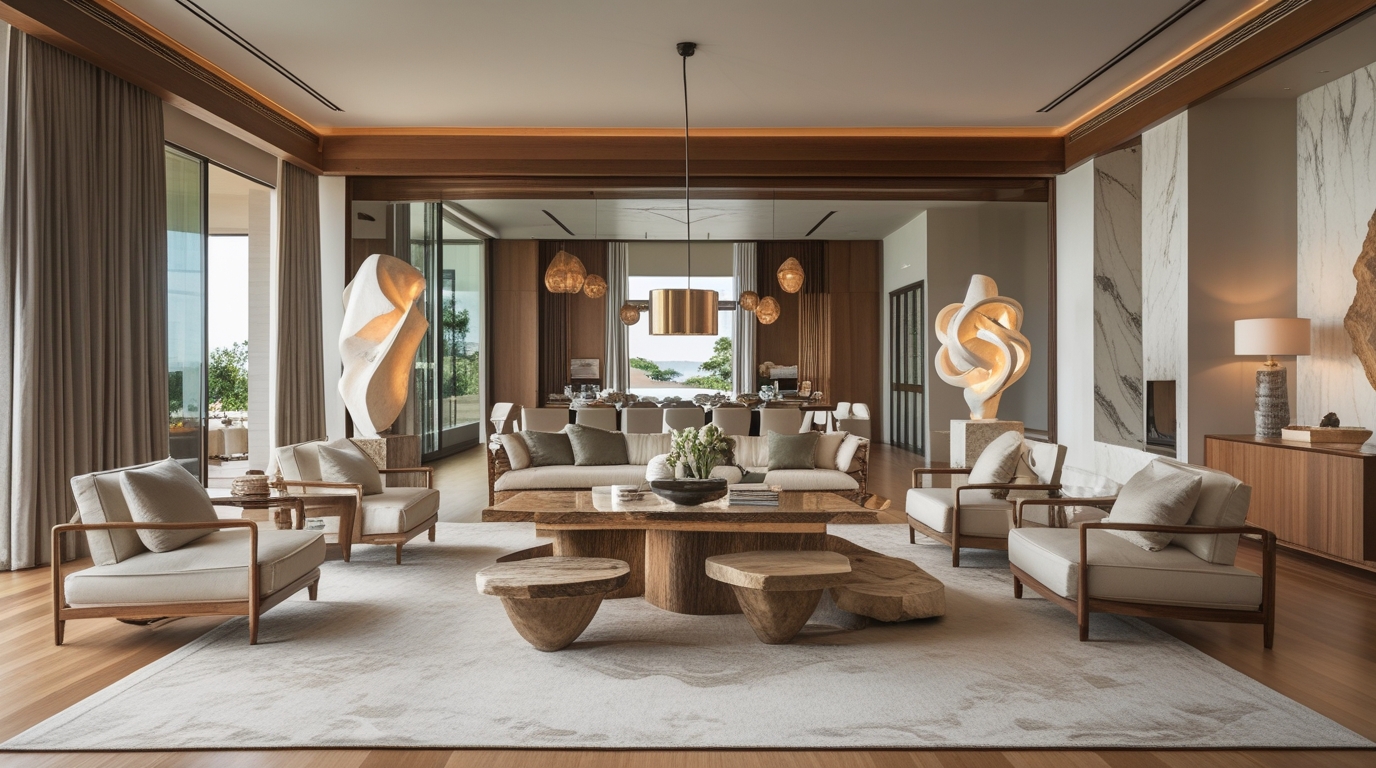
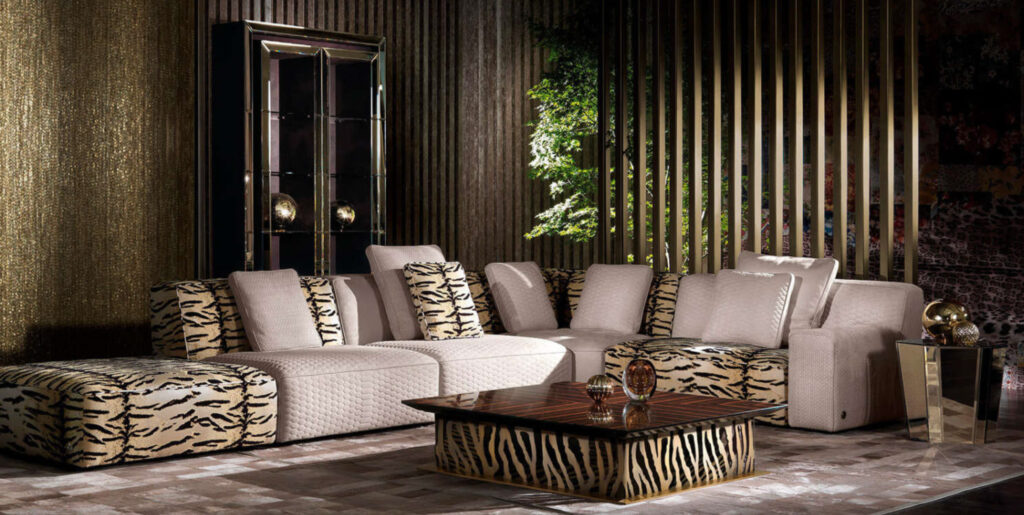
A customer looking for a premium sofa rarely begins by visiting a furniture showroom website.
They may begin with a Google search.
They might search for a particular style, material, product category or design idea. They may compare several businesses, look at images, read product information, check reviews and return to the same websites several times before making contact or placing an order.
That makes search visibility particularly important for high-end furniture businesses.
The challenge, however, is not simply getting more people to a website.
Premium furniture has a different commercial dynamic from low-cost, high-volume products. Customers may spend considerable time researching a purchase, and the business needs to attract people whose needs, budget and expectations are aligned with what it offers.
SEO can help create that connection.
For a New Zealand furniture business, an effective SEO strategy can help the brand appear when customers are researching furniture, comparing options, looking for specific products and seeking businesses they can trust.
This matters in a market where online purchasing is already well established. MBIE’s New Zealand Consumer Survey found that 91% of respondents had purchased a product or service online during the previous six months in 2024, with 19% shopping online at least weekly.
The opportunity for premium furniture businesses is therefore not simply to have an online presence.
It is to make that presence discoverable at the moments when potential customers are actively looking.
SEO Is About More Than Rankings
SEO is often reduced to one question:
“What position does my website have on Google?”
That is only part of the picture.
For a high-end furniture business, more useful questions include:
- Are potential customers finding the right product categories?
- Are people discovering the brand while researching furniture?
- Are visitors arriving with genuine purchasing intent?
- Are product pages generating enquiries?
- Are local customers finding the showroom?
- Are important products indexed correctly?
- Is the website attracting customers outside the immediate local area?
- Are visitors moving from informational content to products?
- Is organic search contributing to revenue or qualified enquiries?
A website can rank for thousands of searches and still attract the wrong audience.
Conversely, a smaller number of highly relevant searches can be commercially valuable if they consistently bring people who are genuinely interested in the products.
For premium furniture, traffic quality matters at least as much as traffic volume.
Why High-End Furniture Has a Distinct SEO Challenge
Furniture is highly visual.
Customers want to see products in real rooms, understand their proportions and imagine how they might look in their own homes.
At the same time, furniture is often a considered purchase.
A customer may need to understand:
- dimensions
- materials
- finishes
- construction
- comfort
- maintenance
- delivery
- availability
- pricing
- returns
- warranty
- suitability for their home
This creates a search journey with multiple stages.
A potential customer might first search:
“modern living room ideas NZ”
Then:
“best sofa for a large living room”
Then:
“linen sofa New Zealand”
Then:
“premium linen sofa Auckland”
Finally, they may search for the exact brand or product.
Each search demonstrates a different level of intent.
A strong SEO strategy recognises that these searches can belong to the same customer at different stages of the decision-making process.
SEO Helps Customers Discover a Brand Before They Know the Brand
Established furniture brands benefit from direct searches.
Customers already know the company and search for its name.
SEO becomes particularly valuable when the customer does not know the brand yet.
Imagine someone searching for:
“solid timber dining table NZ”
The customer is expressing a product need, but has not necessarily decided which retailer to use.
This is an important opportunity.
If a furniture brand’s relevant category or product page appears prominently, the business can enter the customer’s consideration set before a competitor has been selected.
The same principle applies to searches involving:
- sofas
- modular furniture
- dining tables
- bedroom furniture
- outdoor furniture
- designer chairs
- timber furniture
- luxury furniture
- custom furniture
- New Zealand-made furniture
The objective is not to rank for every possible variation.
It is to identify the searches that genuinely align with the business’s products, market and commercial priorities.
Build SEO Around Commercial Search Intent
Not every search has the same value.
Consider these examples:
“living room ideas”
This may be primarily informational.
“how to choose a sofa”
This indicates research.
“linen sofa NZ”
This is more product-focused.
“linen sofa Auckland”
This adds local intent.
“linen sofa price NZ”
This suggests stronger commercial consideration.
A premium furniture SEO strategy should account for this progression.
Informational content can introduce the brand to potential customers.
Category pages can capture product-related searches.
Product pages can target specific products.
Local pages can capture location-related intent.
The website then gives customers somewhere relevant to continue their research.
This creates a connected search journey rather than a collection of isolated keywords.
Product Pages Are SEO Assets
For e-commerce furniture businesses, product pages should not be treated purely as transactional pages.
They can also become important organic search assets.
A strong product page can provide Google and customers with detailed information about:
- product name
- product type
- materials
- dimensions
- colour
- finish
- variations
- availability
- pricing
- delivery
- reviews
- care requirements
Google’s current documentation explains that product structured data can make eligible product pages capable of appearing with additional information such as price, availability, ratings and reviews.
This does not guarantee enhanced search visibility.
Google explicitly notes that structured data does not guarantee that a particular search feature will appear.
The point is that accurate technical implementation gives search engines clearer information about the product.
For furniture businesses with multiple sizes, colours or materials, Google’s documentation also specifically addresses product variants such as different sizes, colours, materials and patterns. Furniture is included among the examples of product types that can use product-variant structured data.
That makes technical SEO particularly relevant to furniture e-commerce.
Avoid Creating Thin Product Pages
A common SEO problem occurs when every product page contains almost identical information.
Changing the product name and colour is not enough.
Each important product page should provide useful information that genuinely helps a customer understand that product.
For example, a premium sofa page might explain:
- frame construction
- upholstery options
- seat configuration
- dimensions
- available fabrics
- cushion composition
- care requirements
- delivery
- warranty
- styling considerations
This creates a much more useful page for both the customer and search engines.
The objective is not to write long descriptions merely to increase word count.
It is to make the page genuinely informative.
Build Strong Category Pages
Category pages are often overlooked.
A furniture business may have excellent product pages but weak category pages containing little more than a grid of products.
That can limit the website’s ability to establish topical relevance.
A strong category page can explain:
- what the category contains
- how customers can choose between products
- relevant materials and styles
- key buying considerations
- available variations
- related categories
For example, a Sofas category could include useful information about:
- sofa sizes
- configurations
- upholstery
- room proportions
- modular options
- fabric selection
- delivery considerations
This makes the category page useful beyond simply displaying products.
Create Content Around the Questions Customers Actually Ask
Premium furniture customers have questions.
Those questions create SEO opportunities.
For example:
How big should a dining table be?
What sofa size works in a small living room?
How do I choose upholstery for a busy household?
What is the difference between solid timber and veneer?
How should outdoor furniture be maintained in New Zealand?
What should I consider before buying a modular sofa?
These are more valuable than generic content created simply because a keyword has search volume.
The best content strategy begins with customer problems.
Then it connects the answers to the products or services the business actually provides.
Make the Content Specifically Useful to New Zealand Customers
New Zealand relevance should go beyond adding “NZ” to page titles.
Local context should influence the advice where appropriate.
A furniture business might create content around:
- furnishing compact urban homes
- selecting furniture for coastal properties
- outdoor furniture for NZ conditions
- furnishing villas and bungalows
- furniture for contemporary new-build homes
- furnishing holiday homes and baches
- selecting furniture for colder southern conditions
The important point is relevance.
Not every article needs to mention Auckland, Wellington or Christchurch.
Locations should be used where geography genuinely affects the customer’s decision.
Local SEO Matters Even for Premium Furniture Brands
A high-end furniture business may sell nationally while still relying heavily on physical locations.
Customers often want to visit a showroom before buying expensive furniture.
That creates two overlapping SEO objectives:
National visibility
and
local discovery.
A customer might search:
“designer furniture NZ”
while another searches:
“designer furniture Auckland”
The first search suggests broader commercial intent.
The second has a clear geographic component.
The business needs an SEO structure capable of supporting both.
Optimise the Showroom Experience for Search
For businesses with physical showrooms, the local search presence should accurately communicate:
- business name
- address
- phone number
- opening hours
- website
- products or services
- photographs
- customer reviews
The website should also make the physical showroom easy to understand.
A dedicated showroom page can include:
- location
- parking or access information where useful
- opening hours
- available collections
- appointment information
- showroom photography
- directions
- contact options
This helps connect the online search experience with the physical buying experience.
Use Local SEO Without Turning the Website Into a List of Cities
A common mistake is creating pages such as:
Furniture Auckland
Furniture Wellington
Furniture Christchurch
Furniture Hamilton
without providing genuinely different information.
That can create a poor user experience.
Location pages should exist because they serve a real customer need.
A meaningful Auckland showroom page might explain the showroom experience.
A page for national delivery might explain how the business serves customers outside its physical location.
The principle is simple:
Create location content because customers need it, not because the business wants another keyword page.
Build Authority Through Useful Content
High-end furniture businesses have an advantage that many generic e-commerce retailers do not.
They often have genuine expertise.
They understand:
- materials
- furniture construction
- interior proportions
- design
- styling
- maintenance
- product sourcing
- craftsmanship
- spatial planning
SEO content can turn that knowledge into evidence of expertise.
For example, instead of publishing generic articles about “home trends”, a furniture business could explain:
How to Choose Timber Furniture for a Contemporary NZ Home
or:
How to Compare Upholstery Fabrics Before Buying a Sofa
or:
What to Look for in a Well-Constructed Dining Chair
This type of content demonstrates useful knowledge while naturally supporting relevant product categories.
Use Project Content to Connect Inspiration and Search
Project pages can be especially valuable for premium furniture brands.
A completed room can demonstrate:
- products
- styling
- materials
- scale
- combinations
- design approach
A well-structured project page can then link directly to the products featured.
For example:
A Contemporary Christchurch Dining Space
could showcase the table, chairs and lighting used in the room.
The page becomes both inspirational and commercially useful.
It also creates an opportunity to target searches related to the type of project rather than just individual products.
Furniture SEO Should Support Visual Search Behaviour
Furniture is unusually dependent on visual discovery.
Customers may see a chair or sofa online before they know its name.
That makes image optimisation important.
Images should have:
- descriptive filenames
- appropriate alternative text
- relevant surrounding copy
- suitable dimensions
- good technical performance
- crawlable URLs
Google’s product documentation also recommends multiple high-resolution product images for merchant listing information and explains how product imagery can be included in structured product data.
This does not mean adding keywords to image attributes indiscriminately.
Descriptions should accurately describe the image.
The goal is to make visual content understandable to both users and search engines.
Technical SEO Matters More as the Catalogue Grows
Furniture websites can become technically complicated.
A business might have:
- hundreds of products
- multiple colours
- multiple sizes
- fabric variations
- filters
- sorting parameters
- product search
- product reviews
- discontinued products
- seasonal collections
- out-of-stock products
Without careful technical SEO, this can create problems such as:
- duplicate URLs
- poor indexing
- incorrect canonicalisation
- thin filter pages
- broken internal links
- slow page performance
- outdated product pages
- inconsistent structured data
Technical SEO therefore becomes increasingly important as the website grows.
The objective is not technical complexity for its own sake.
It is to make the site’s important pages easier for search engines to discover, understand and maintain.
Site Architecture Should Reflect the Furniture Business
A logical structure might look something like:
Home
→ Furniture
→ Living Room
→ Sofas
→ Modular Sofas
→ Specific Product
Or:
Home
→ Furniture
→ Dining
→ Dining Tables
→ Timber Dining Tables
→ Specific Product
This hierarchy helps users understand where they are.
It can also help search engines understand the relationship between pages.
Internal linking should reinforce those relationships.
A buying guide about sofa sizing can link to relevant sofa categories.
A sofa category can link to individual products.
A project page can link back to featured products.
The website gradually becomes a connected information system.
Internal Linking Can Move Customers Through the Buying Journey
Internal links are not only an SEO technique.
They are navigation.
Consider a customer reading:
How to Choose the Right Sofa Size
The article could link naturally to:
Sofas
then:
Modular Sofas
then:
Specific Product
The customer has moved from information to product discovery without having to start a new search.
This is exactly the type of journey a furniture website should facilitate.
The same approach can work in reverse.
Product pages can link to:
- buying guides
- care guides
- related products
- complementary collections
- project pages
SEO and conversion strategy therefore overlap.
Earn Links Through Expertise Rather Than Link Quantity
Backlinks remain part of how search engines understand websites, but premium furniture brands should think about relevance and authority rather than chasing large numbers of low-quality links.
Useful opportunities can come from:
- interior design publications
- architecture websites
- home and lifestyle publications
- design organisations
- relevant industry associations
- supplier relationships
- project collaborations
- local publications
- credible interviews
- genuinely useful resources
For example, a detailed furniture material guide could be referenced by an interior design publication.
A well-documented project might attract attention from a design publication.
The goal is to create something worth referencing.
Reviews Strengthen Both Trust and Commercial Confidence
Search visibility gets the customer to the website.
Trust can determine what happens next.
MBIE’s current consumer research states that consumers continue to rely on independent information sources such as reviews and ratings when making purchasing decisions.
For high-end furniture businesses, reviews can be particularly useful because they provide evidence about the real customer experience.
Potential buyers may want to know:
- Was the product as expected?
- Was the quality good?
- Was delivery straightforward?
- Was the business responsive?
- Did the furniture look like the photographs?
Reviews should therefore be treated as part of the broader conversion strategy.
SEO may bring the visitor.
Trust helps the visitor evaluate the business.
Make Claims Carefully
Premium brands sometimes use strong language to communicate positioning.
Words such as:
- finest
- exclusive
- best
- superior
- handcrafted
- sustainable
- heirloom
- lifetime
can have commercial and legal implications depending on how they are used.
New Zealand’s Fair Trading Act prohibits businesses from misleading consumers about products or services, including through misleading representations. MBIE announced further proposed Fair Trading Act changes in May 2026, including measures concerning misleading conduct and pricing.
SEO content should therefore not become an excuse for making exaggerated claims.
Good SEO writing is accurate.
If a business describes something as solid timber, handcrafted or sustainably produced, the claim should be supportable.
That is important for both search quality and brand credibility.
SEO Can Reduce Dependence on Paid Traffic
Paid advertising can be valuable for furniture businesses.
Google Ads can capture customers who are actively searching for particular products.
But every paid click carries a cost.
Organic search can provide another source of qualified discovery over time.
This does not mean SEO replaces Google Ads.
The two can work together.
Paid search can provide immediate visibility for commercially important searches.
SEO can build broader organic coverage across:
- products
- categories
- buying guides
- informational searches
- local searches
- brand searches
The right balance depends on the business, its margins, competition and commercial objectives.
SEO Should Connect With E-Commerce Conversion
Ranking is not the end of the process.
Imagine a customer clicks an organic result for:
“premium modular sofas NZ”
They arrive on a category page.
What happens next?
Can they:
- understand the range?
- compare models?
- see dimensions?
- understand fabric options?
- view prices?
- check delivery?
- read reviews?
- request assistance?
- buy or enquire?
If not, the SEO strategy may be generating visits without fully supporting the commercial objective.
That is why SEO should be connected to website performance.
Visibility → Relevant landing page → Product understanding → Trust → Enquiry or purchase
Every stage matters.
Measure SEO Through Commercial Outcomes
SEO reporting for a premium furniture brand should go beyond rankings.
Useful metrics can include:
- organic sessions
- organic conversions
- organic revenue
- enquiries
- showroom visits generated through organic search
- product-page engagement
- non-brand organic traffic
- branded organic traffic
- conversion rate
- average order value
- assisted conversions
- visibility for commercial categories
- visibility for important products
Search Console can also provide useful information about how pages appear and perform in Google Search.
Google recommends Search Console for monitoring search performance and understanding how Google sees a website.
The important point is interpretation.
A rise in organic traffic is not automatically a commercial success.
A smaller increase in traffic that produces more qualified enquiries can be more meaningful.
The New Zealand Market Makes Local Relevance Important
New Zealand is a relatively compact market geographically, but customer needs are not identical everywhere.
A furniture business may serve:
- Auckland apartments
- Wellington homes
- Christchurch new builds
- Hamilton family homes
- Tauranga properties
- Queenstown holiday homes
- rural properties
- coastal homes
- baches
The website should reflect the actual market the business serves.
This can include relevant:
- delivery information
- showroom information
- regional service areas
- project examples
- climate considerations
- customer questions
But local SEO should remain natural.
A credible New Zealand furniture website does not need to mention every city in every article.
SEO Is Becoming Part of a Broader Digital Capability
SEO should also be viewed in the context of how New Zealand businesses are using digital tools more broadly.
MBIE’s 2026 research on New Zealand business digital capability found that 51% of businesses believe they would benefit from making greater use of digital tools or becoming more online. The research also found that businesses are particularly interested in strengthening their online presence through SEO, online advertising and digital marketing.
For a high-end furniture business, that means SEO should not operate as an isolated marketing activity.
It should connect with:
- e-commerce
- content
- Google Ads
- local search
- social media
- website development
- analytics
- customer service
The strongest results usually come when these elements reinforce one another.
Common SEO Mistakes High-End Furniture Businesses Should Avoid
1. Optimising only for the brand name
If customers already know the brand, they can find it.
SEO should also help new customers discover the business.
2. Creating hundreds of weak product pages
More indexed pages do not automatically mean more useful organic visibility.
3. Ignoring category pages
Category pages can capture important commercial searches.
4. Writing generic blog content
Content should answer genuine customer questions.
5. Using Australian or international content without NZ adaptation
New Zealand customers need relevant local terminology, delivery information and market context.
6. Stuffing city names into pages
Local SEO should reflect genuine local relevance.
7. Ignoring technical SEO
Large furniture catalogues can create significant indexing and duplication issues.
8. Treating images as decoration
Visual search is important for furniture businesses.
9. Measuring rankings alone
Commercial outcomes matter more than position reports in isolation.
10. Separating SEO from website conversion
Getting visitors to a poor product experience wastes the opportunity SEO created.
A Practical SEO Framework for a Premium Furniture Brand
A useful SEO programme can be structured around six areas.
1. Technical foundation
Ensure that search engines can efficiently crawl, understand and index the important parts of the website.
2. Commercial keyword strategy
Identify searches that reflect genuine product, category, local and purchasing intent.
3. Product and category optimisation
Make important commercial pages detailed, accurate and useful.
4. Authority content
Answer genuine questions about furniture, materials, styling, care and purchasing.
5. Local and regional relevance
Support showroom discovery and genuine New Zealand search intent.
6. Measurement and improvement
Track organic visibility alongside enquiries, sales and other meaningful commercial outcomes.
This provides a more useful framework than simply publishing a set number of blog posts every month.
What Good Furniture SEO Looks Like
Good SEO for a high-end furniture business should be almost invisible to the customer.
The customer should not feel that they are reading content written for a search engine.
They should feel that the business understands furniture and has answered their question properly.
A customer searches for a sofa.
They find a useful guide.
The guide links to the relevant sofa category.
The category helps them narrow their options.
A product page explains the materials, dimensions and variations.
Reviews provide additional confidence.
Delivery information answers the logistical questions.
The customer either purchases online or contacts the business.
That is SEO working as part of a commercial system.
Final Thoughts
For high-end furniture businesses in New Zealand, SEO is not simply a way to obtain higher rankings.
It is a way to become visible when potential customers are researching, comparing and evaluating furniture.
The strongest strategies recognise that a premium furniture purchase can involve multiple searches and multiple visits before a customer is ready to buy.
SEO can support that journey by making the right pages discoverable at the right stages.
It can help customers find:
- product categories
- individual furniture pieces
- buying guides
- design inspiration
- local showrooms
- project examples
- material information
- practical advice
But visibility is only the beginning.
The website must then provide accurate information, credible evidence, strong product presentation and a straightforward path towards enquiry or purchase.
For furniture e-commerce businesses, technical SEO also matters. Google’s current documentation specifically supports product and product-variant structured data for e-commerce products, including furniture, helping search engines understand product information such as variants, prices, availability and reviews.
The commercial objective should therefore be broader than rankings.
It is to build a search presence that attracts relevant customers, supports their research and contributes to measurable business outcomes.
For a premium furniture brand, that makes SEO less of a marketing add-on and more of a long-term digital asset.
When SEO, e-commerce, content, local search, paid advertising and website conversion are planned together, search can become an important part of how the brand is discovered and considered across New Zealand.
To learn more, please visit www.hlmco.com.au