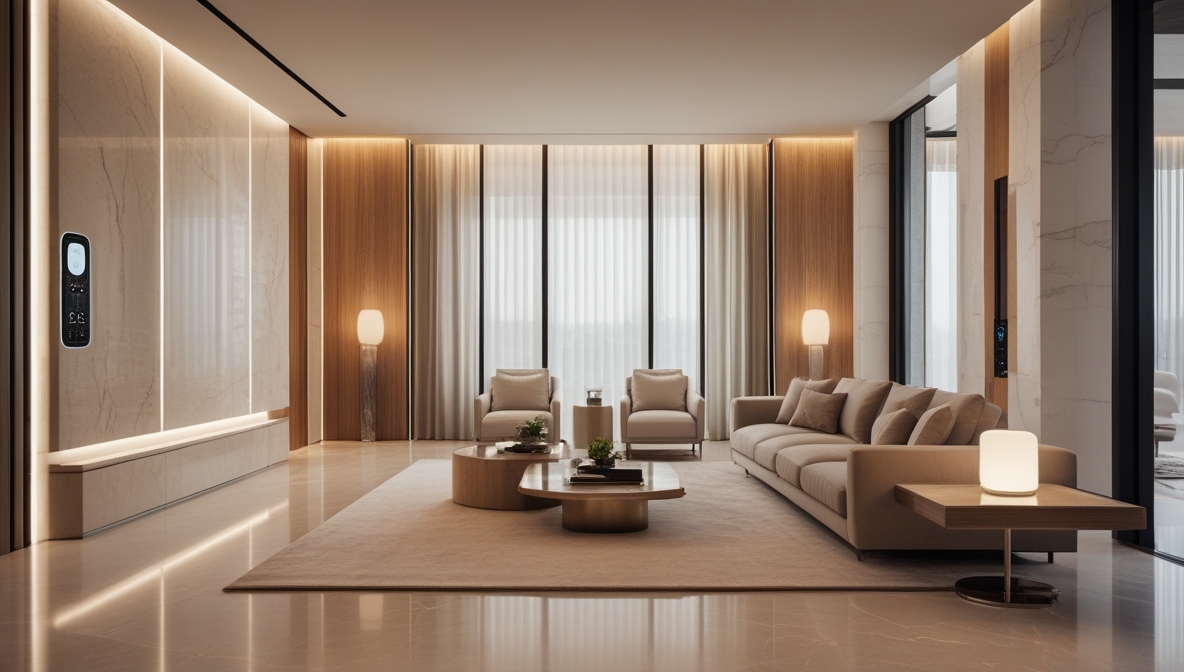

Luxury renovation is a high-consideration purchase.
Homeowners planning a substantial renovation may spend months researching design ideas, builders, architects, materials, project approaches and potential costs before deciding who to contact. They are unlikely to choose a renovation business simply because it appeared in one advertisement.
They want evidence.
They want to see relevant projects, understand the company’s capabilities, assess its experience and determine whether its approach suits the property and the scale of work they have in mind.
This makes search visibility particularly valuable for luxury renovators.
A strong SEO strategy can help a business appear when prospective customers are researching renovation services, exploring project ideas and looking for specialist expertise. More importantly, it can help the website provide the information those customers need once they arrive.
SEO should therefore be treated as more than a traffic-generation exercise.
For a luxury renovation business, it is a way to build long-term visibility around valuable services, demonstrate expertise, showcase completed work and create a credible path from search to enquiry.
Luxury Renovation Customers Research Before They Contact
The decision to renovate a high-value home is rarely impulsive.
A homeowner may start with inspiration.
They could search for:
- Luxury home renovation ideas
- High-end kitchen renovations
- Whole-home renovation inspiration
- Home extension ideas
- Bespoke renovation projects
- Architectural renovation ideas
- Premium bathroom design
- Heritage home renovation
At this stage, the customer may not have selected a renovation company.
Later, their searches can become more commercially focused:
- Luxury renovation builder
- High-end renovation company
- Home renovation contractor
- Whole-home renovation company
- Renovation builder near me
- Luxury home extension builder
Eventually, they may search for specific businesses by name.
This progression matters because SEO can support different stages of the buying journey.
A business that only optimises for its own brand name may be visible when people already know about it. A business with broader search visibility has more opportunities to be discovered while prospective customers are still researching their options.
SEO Helps Luxury Renovators Be Discovered Earlier
One of the strongest reasons to invest in SEO is that it can introduce a business before the customer has made a final decision.
Suppose a homeowner is planning a substantial renovation but has not yet chosen a builder.
They may search for information about planning, costs, design, construction processes and examples of completed work.
A useful renovation website can appear throughout that research process.
An article explaining how to plan a whole-home renovation can introduce the business.
A detailed project case study can demonstrate relevant experience.
A service page can explain the company’s renovation capabilities.
A location page can establish local relevance.
Eventually, the customer may decide that the business is worth contacting.
This is fundamentally different from relying entirely on customers who already know the company’s name.
Build SEO Around Commercially Valuable Services
Luxury renovation businesses should not make the mistake of treating every possible search as equally valuable.
The website should prioritise the services that matter commercially.
Depending on the business, these might include:
- Luxury home renovations
- Whole-home renovations
- High-end kitchen renovations
- Premium bathroom renovations
- Home extensions
- Architectural renovations
- Heritage renovations
- Custom renovation projects
- Design and build services
Each major service should have a useful, dedicated page where there is enough substance to justify it.
A strong service page should explain:
- What the service involves
- What types of projects the company undertakes
- Who the service is suitable for
- What the process looks like
- What makes the company’s approach different
- Relevant completed projects
- Areas served
- How to make an enquiry
This provides search engines with clear context while giving potential customers a much better reason to continue exploring the business.
Google’s current Search Essentials guidance recommends using the words people use to search for a topic in prominent and descriptive parts of a page, while keeping the content helpful and people-first.
The important point is that keyword targeting should support useful communication, not replace it.
Project Case Studies Are Powerful SEO Assets
Luxury renovation is an industry where experience matters.
A prospective client wants to see evidence that the business has handled projects similar to theirs.
That makes detailed project case studies particularly valuable.
A strong case study can cover:
The Property
Describe the type of property and relevant characteristics.
The Brief
Explain what the homeowner wanted to achieve.
The Challenges
Discuss structural, spatial, design, access or construction considerations where appropriate.
The Approach
Explain how the renovation was planned and delivered.
The Work
Describe the key elements of the project.
The Result
Show how the completed renovation addressed the original requirements.
The Visual Evidence
Use high-quality photography to demonstrate the finished work.
This creates much more useful content than a simple gallery.
It demonstrates first-hand experience, gives potential customers confidence and creates an opportunity for the website to appear for more specific searches related to the work.
Google’s guidance emphasises original information, first-hand expertise and substantial value rather than content created primarily to attract search traffic.
For luxury renovators, genuine project experience is therefore one of the most valuable sources of SEO content available.
Use Long-Tail Searches to Reach Specific Intent
Broad searches can be highly competitive.
A luxury renovation business may find it difficult to build visibility around broad terms such as “renovation” or “home renovation”.
More specific searches can often provide clearer commercial intent.
Examples include:
- Whole-home renovation builder
- Luxury kitchen renovation company
- Heritage home renovation specialist
- High-end home extension builder
- Custom renovation contractor
- Design and build renovation services
The exact search behaviour will vary by market.
The principle remains useful: focus on the language customers actually use and the services the business genuinely provides.
Google’s SEO guidance also notes that different users may use different terms for the same topic and that search systems can understand related queries without requiring every variation to appear verbatim on a page.
This means good SEO is not about inserting dozens of keyword variations.
It is about creating comprehensive pages around genuine customer needs.
Create Content for the Research Stage
Not every prospective customer is ready to request a quote.
Some are still trying to understand what their project involves.
This creates an opportunity for useful educational content.
Luxury renovation businesses can address questions such as:
- How should a major renovation be planned?
- What should homeowners consider before renovating an older property?
- How long can a whole-home renovation take?
- What factors influence renovation costs?
- Should design and construction be managed together?
- What should homeowners look for when choosing a renovation builder?
- How can a renovation improve the flow of an existing home?
- What should be considered before extending a property?
- How can homeowners balance design ambitions with practical construction requirements?
These articles should not be created simply because a keyword tool identifies a phrase.
They should answer genuine questions that prospective customers are likely to have.
Google explicitly advises against producing large volumes of content simply to attract search traffic and recommends content created primarily to benefit people.
For a specialist renovation company, that distinction is important.
The website should demonstrate real knowledge rather than becoming a collection of generic renovation articles.
Develop Topic Clusters Around Expertise
A luxury renovation business can build topical depth by connecting related content.
For example:
Luxury Home Renovations
→ Planning a whole-home renovation
→ Choosing renovation materials
→ Managing a complex renovation
→ Understanding renovation costs
→ Renovation project case studies
→ Whole-home renovation service page
This structure creates logical relationships between educational and commercial content.
Another cluster could focus on extensions:
Home Extensions
→ Extension planning considerations
→ Kitchen extension ideas
→ Integrating an extension with an existing home
→ Managing structural changes
→ Extension project case study
→ Home extension service page
Internal links can connect these resources.
This makes the website easier to navigate while helping search engines understand the relationship between pages.
Make Internal Linking Commercially Useful
A common problem with SEO content is that articles generate traffic but fail to create a meaningful path towards an enquiry.
Internal linking can address this.
A research article should naturally connect to relevant services.
For example:
Article: How to Plan a Whole-Home Renovation
↓
Related service: Whole-Home Renovations
↓
Project example: Completed Whole-Home Renovation
↓
Call to action: Discuss Your Renovation
This does not mean inserting a sales message into every paragraph.
The links should be useful.
A reader researching renovation planning may naturally want to see examples of completed projects or learn about the company’s renovation service.
The website should make those next steps obvious.
Local SEO Is Essential for Luxury Renovators
Luxury renovation is usually geographically constrained.
A business may specialise in particular suburbs, cities, regions or property markets.
This makes local search visibility an important part of the wider SEO strategy.
Local relevance can be supported through:
- A well-maintained Google Business Profile
- Accurate business information
- Service-area information
- Location-relevant service pages
- Genuine local project case studies
- Customer reviews
- Local photography
- Relevant local references and links
The aim is not to create dozens of thin pages with different location names.
Instead, the website should provide genuine evidence of local expertise.
A renovation project completed in a particular area can be much more valuable than a generic page simply mentioning that area.
The combination of service relevance + geographical relevance + project evidence creates a stronger local proposition.
Build Location Pages Around Real Customer Needs
Where a business genuinely services several locations, useful location pages can help prospective customers understand the company’s relevance.
A strong page might explain:
- The renovation services available
- Types of properties commonly worked on
- Relevant project examples
- The consultation process
- Areas covered
- Links to relevant services
The content should provide information that a local customer would actually find useful.
A page containing little more than a changed suburb name and duplicated text adds little value.
SEO should never become an exercise in producing pages for search engines rather than customers.
Use SEO to Showcase Expertise, Not Just Keywords
Luxury renovation is an expertise-led service.
The website should therefore demonstrate knowledge through the substance of its content.
For example, instead of publishing a generic article titled “10 Renovation Tips”, a specialist business could explain the practical considerations involved in coordinating structural changes, joinery, lighting, materials, services and finishes within a major renovation.
The latter demonstrates much more meaningful expertise.
Google’s people-first content guidance encourages creators to consider whether content demonstrates first-hand knowledge, provides substantial value and leaves the reader sufficiently informed to achieve their goal.
For luxury renovators, this creates an opportunity.
The knowledge already held by builders, project managers and renovation specialists can become a genuine digital asset.
Optimise Images as Part of the SEO Strategy
Renovation websites are highly visual.
Images are therefore an important part of the search and user experience.
High-quality project photography can help communicate:
- Craftsmanship
- Materials
- Spatial planning
- Design details
- Finishes
- Before-and-after transformation
- Construction stages
Images should be properly presented and supported by relevant descriptive information.
Google’s Search Essentials guidance notes that images and other content types have their own best-practice considerations, and that descriptive elements can help search engines understand content.
However, the primary objective should remain the customer.
Do not sacrifice image quality simply to pursue technical optimisation.
A luxury renovation website needs photography that makes the work look as good online as it does in reality.
Create a Website That Supports SEO and Conversion
SEO can bring a prospective customer to the website.
The website then needs to convince them to stay.
Important elements include:
- Clear navigation
- Strong service pages
- High-quality project photography
- Detailed case studies
- Clear contact information
- Mobile-friendly design
- Fast and usable pages
- Genuine testimonials
- Team information
- Project process
- Useful FAQs
- Clear calls to action
Google’s guidance emphasises that good page experience is part of creating useful search experiences, rather than something that should be treated as an isolated technical exercise.
For luxury renovators, this is particularly important.
The digital experience should reflect the quality and professionalism customers expect from the service itself.
Use Technical SEO to Make the Website Understandable
Good content cannot perform effectively if important pages cannot be properly discovered, crawled or indexed.
Technical SEO provides the foundation.
Areas to review include:
- Crawlability
- Indexation
- Site architecture
- Internal links
- Page titles
- Meta descriptions
- Heading structure
- Canonicalisation where relevant
- Image handling
- Mobile usability
- Page performance
- Structured data where appropriate
- XML sitemaps
- Redirects
- Broken links
Google describes SEO as helping search engines understand content and helping users find a site through search.
This is why technical SEO should not be separated completely from content and website development.
A technically sound site makes the rest of the SEO strategy easier to understand and maintain.
Make the Website Easy to Trust
Luxury renovation involves substantial financial and personal investment.
The website therefore needs to answer an underlying question:
Can I trust this business with my home?
Trust can be supported through:
- Genuine project examples
- Detailed case studies
- Customer testimonials
- Reviews
- Team profiles
- Relevant qualifications
- Industry memberships where applicable
- Clear project processes
- Professional photography
- Transparent communication
- Strong contact information
The business should avoid unsupported claims such as “the best luxury renovator” or “the number one renovation company”.
Evidence is stronger than adjectives.
A completed project, a detailed case study and a genuine customer review tell a prospective client much more than repeated claims about being the best.
Use SEO to Support Premium Positioning
SEO should reinforce the type of customer the business wants to attract.
If a company specialises in high-value, design-led renovation, its website should reflect that market.
This means publishing content around relevant subjects rather than chasing every possible renovation keyword.
The site might focus on:
- High-end renovation planning
- Bespoke design
- Architectural integration
- Premium materials
- Complex renovation management
- Whole-home transformations
- Heritage properties
- High-quality craftsmanship
This creates a more coherent digital identity.
It also helps prospective customers recognise the business as relevant to the type of project they are considering.
Connect SEO With Google Ads
SEO and Google Ads serve different purposes but can work together.
Google Ads can provide immediate visibility for commercially valuable searches.
SEO can build longer-term organic visibility around services, locations, projects and educational content.
Search data from paid campaigns can also reveal useful customer language.
For example, if paid search consistently generates relevant enquiries around a particular service, that may indicate an opportunity to strengthen the corresponding organic service page.
Similarly, SEO data can reveal search themes that could be incorporated into paid campaigns.
The website remains the common foundation.
Use Social Media to Strengthen SEO Assets
Social media is not simply another place to publish the same content.
It can help distribute and reinforce the assets created through SEO.
A completed renovation case study could become:
- A website project page
- A social carousel
- A short video
- A before-and-after post
- A project walkthrough
- A customer story
- A material-focused post
Social media can generate awareness and direct interested people back to the website.
The website then provides the depth required for serious research.
This creates greater value from each project rather than treating every channel as a separate content production exercise.
Consider the Role of Search in AI Experiences
Search behaviour continues to evolve.
Google now provides AI features within Search, and its current guidance states that the same foundational SEO principles apply to these experiences: pages need to meet technical requirements, be eligible for Search and provide helpful, reliable, people-first content.
Google’s 2026 guidance also emphasises unique, valuable content and notes that SEO best practices remain foundational as search develops further.
For luxury renovators, the practical implication is not to chase a separate collection of supposed “AI SEO tricks”.
It is to strengthen the underlying quality of the website.
Detailed expertise, original project information, useful explanations, clear structure, strong local relevance and genuine experience are valuable regardless of how a customer encounters the information.
Measure SEO by Business Outcomes
SEO reporting often focuses on:
- Rankings
- Impressions
- Clicks
- Organic traffic
These measurements are useful.
They are not sufficient for a renovation business.
The commercial journey is more likely to be:
Search visibility → Website visit → Enquiry → Qualified lead → Consultation → Quote → Project → Revenue
A luxury renovation business should therefore monitor the relationship between SEO and commercially meaningful outcomes where its systems allow.
Useful measurements can include:
- Organic enquiries
- Qualified organic enquiries
- Consultation requests
- Quote opportunities
- Projects won
- Average project value
- Revenue from organic leads
- Key service-page performance
- Local search visibility
This provides a much clearer picture than traffic alone.
Do Not Chase Rankings at the Expense of the Customer
One of the biggest SEO mistakes is treating rankings as the objective.
The objective is to help the right customers find and understand the business.
Google’s guidance is explicit that content should be created primarily for people rather than primarily to manipulate search rankings. It also warns against producing large amounts of content simply because it appears likely to attract search traffic.
This matters particularly in luxury renovation.
A high-quality customer may not be impressed by a website containing hundreds of generic articles.
They may be much more interested in:
- What projects has this business completed?
- Does it understand my type of property?
- Can it manage a complex renovation?
- Does its workmanship match what I want?
- What is the process?
- What do previous customers say?
- Can I trust the company?
SEO should help the website answer those questions.
Common SEO Mistakes Luxury Renovators Should Avoid
Publishing Generic Renovation Content
Generic articles rarely demonstrate meaningful expertise.
Creating Hundreds of Thin Location Pages
Location relevance should be genuine and useful.
Relying on Manufacturer or Stock Content
Luxury renovation websites should demonstrate their own experience rather than recycling generic material.
Neglecting Project Case Studies
Completed projects are some of the strongest evidence a renovation company possesses.
Optimising Only the Homepage
Important services need their own useful pages.
Ignoring Internal Linking
Good content should connect logically to relevant services and projects.
Focusing Only on Rankings
Traffic and rankings are indicators, not the final commercial objective.
Treating SEO as a One-Time Project
Search visibility requires ongoing maintenance, content development, technical review and adaptation.
Using AI to Mass-Produce Generic Articles
AI can assist research and content workflows, but Google continues to emphasise originality, usefulness, expertise and people-first content rather than mass-produced search-focused material.
A Practical SEO Framework for Luxury Renovators
A renovation business can build its SEO strategy systematically.
1. Define the Commercial Focus
Identify the project types, services and locations that matter most.
2. Audit the Existing Website
Review technical health, page structure, content quality, internal links and conversion paths.
3. Strengthen Core Service Pages
Create detailed pages for commercially important renovation services.
4. Build a Project Case Study Library
Turn completed projects into substantial, original resources.
5. Develop Topic Clusters
Create useful educational content around genuine customer questions.
6. Improve Local Visibility
Strengthen local business information, location relevance, reviews and local project evidence.
7. Improve Internal Linking
Connect educational content, services, locations and project pages.
8. Strengthen Technical SEO
Make important content accessible, crawlable, indexable and usable.
9. Integrate Other Channels
Use Google Ads, social media, video and email to reinforce the wider digital strategy.
10. Measure Commercial Performance
Track enquiries and the progression from qualified lead to project wherever possible.
SEO Is a Long-Term Digital Asset
Paid advertising can create visibility while a campaign is active.
SEO works differently.
A well-developed service page, detailed project case study or genuinely useful guide can continue attracting relevant visitors over an extended period.
That does not mean SEO produces automatic or permanent rankings.
Search results change, competitors improve their websites, customer behaviour evolves and Google continues to update its systems.
SEO therefore requires ongoing attention.
But the underlying assets can become increasingly valuable.
A renovation business with years of detailed project content, strong service pages, genuine local relevance and a credible body of expertise has built something more substantial than a temporary advertising campaign.
It has built a digital representation of its expertise.
Conclusion
Luxury renovators need strong SEO because their customers often research extensively before choosing who will work on their homes.
The business that appears during that research has an opportunity to become part of the customer’s consideration set before a final shortlist has been created.
But visibility alone is not enough.
The website must provide evidence.
Detailed service pages explain capability. Project case studies demonstrate experience. Educational content answers customer questions. Local SEO connects the business with relevant geographical searches. Internal linking creates clear pathways through the website. Technical SEO helps search engines discover and understand the content. Reviews, testimonials and project photography strengthen trust.
The commercial objective is ultimately straightforward: attract relevant prospective customers and help them move towards a meaningful enquiry.
For luxury renovation businesses, SEO should therefore be treated as part of the wider digital marketing system rather than as a standalone ranking exercise.
When SEO, website development, Local SEO, Google Ads, social media, content and conversion strategy work together, the business can build a stronger online presence that reflects the quality of the projects it wants to win.
If your business operates in luxury renovation, building or home improvement and you would like to strengthen its search visibility and digital marketing, Home & Lifestyle Marketing Co can help you assess where the strongest opportunities may lie.
To learn more, please visit www.hlmco.com.au