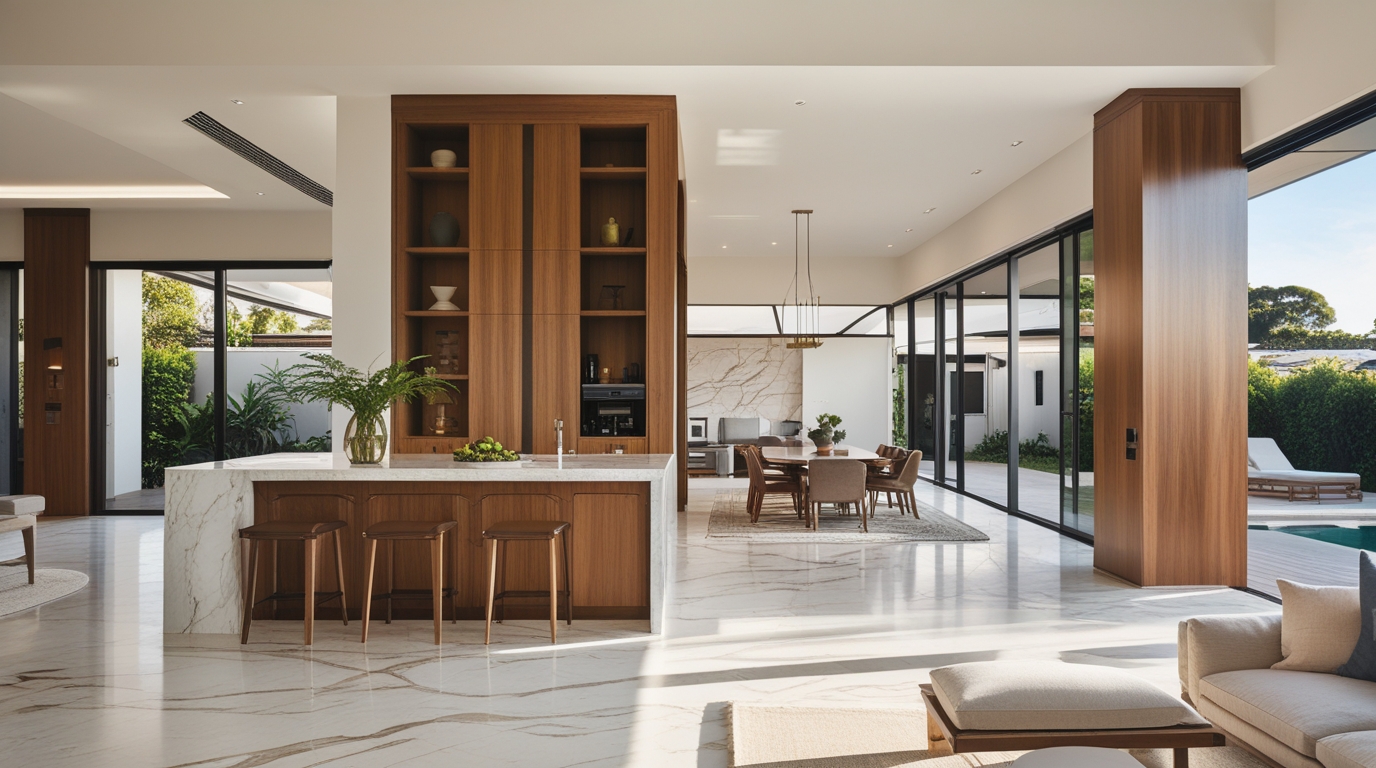

Minimalist furniture businesses operate in a highly visual market, but visual appeal alone does not guarantee that potential customers will find the products when they are ready to buy.
A customer searching for a minimalist dining table, contemporary sofa or modern timber chair is already expressing a degree of interest. Unlike someone who simply encounters a furniture brand while browsing social media, a search user is actively looking for a product, style, solution or supplier.
Google Ads can help furniture businesses appear at these moments of active demand.
The opportunity, however, is not simply to generate as many clicks as possible. A minimalist furniture brand needs to attract people who are genuinely interested in its products, price positioning, design style, delivery options and service area. The advertising needs to connect those searches with relevant product pages and a straightforward buying journey.
For e-commerce brands, this can mean turning search demand into product sales. For furniture businesses with showrooms or consultation services, it may mean generating qualified enquiries, showroom visits or product consultations.
The strategy should therefore begin with customer intent and commercial relevance.
Understand What Buyers Are Actually Searching For
The first step in a Google Ads strategy is understanding the different ways potential customers search for minimalist furniture.
A customer may search for:
- Minimalist furniture
- Modern furniture
- Contemporary furniture
- Minimalist sofa
- Modern dining table
- Minimalist dining chairs
- Contemporary timber furniture
- Modern bedroom furniture
- Minimalist furniture online
- Modern furniture Australia
- Minimalist furniture showroom
These searches do not all represent exactly the same intent.
Someone searching for “minimalist furniture” may still be exploring brands and styles.
Someone searching for “buy minimalist dining table” is expressing stronger purchase intent.
Someone searching for a particular product name may be even further along in the buying process.
Google Ads campaigns should recognise these differences rather than treating every search as equally valuable.
Separate Product and Search Intent
A furniture business may sell dozens or hundreds of products, but its Google Ads account should not necessarily place every product into one broad campaign.
Separate campaign or ad group structures can make it easier to align the advertisement with the customer’s search.
For example, a furniture retailer might organise campaigns around:
- Sofas
- Dining tables
- Dining chairs
- Coffee tables
- Bedroom furniture
- Storage
- Home office
- Outdoor furniture
- Collections
- Brand searches
This makes it easier to create relevant advertisements and send visitors to appropriate landing pages.
A person searching for minimalist dining tables should ideally see an advertisement about dining tables and arrive on a dining-table collection or product page.
Sending every visitor to the homepage creates unnecessary friction.
Use Keywords Around Commercial Intent
Google Ads keyword selection should reflect what the business actually sells.
A minimalist furniture brand might investigate keywords involving:
- Product categories
- Furniture styles
- Materials
- Design characteristics
- Room types
- Specific products
- Shopping intent
- Local showroom searches
For example:
Product:
“minimalist sofa”
Category:
“modern dining tables”
Material:
“modern timber furniture”
Style:
“contemporary minimalist furniture”
Location:
“minimalist furniture Sydney”
The exact keyword strategy will depend on the business, its catalogue, geography and customer base.
The important principle is to connect keyword selection with genuine commercial opportunities.
Google Ads currently supports broad, phrase and exact match types, with each providing a different level of control over how closely searches need to relate to the keyword. Google notes that broader match types can reach a wider range of related searches, while exact match provides greater control but generally reaches fewer searches.
Do Not Assume Every Broad Search Is Valuable
Broad reach can be useful, but furniture businesses need to understand what kinds of searches their campaigns are actually attracting.
A keyword related to “modern furniture” could potentially trigger searches from people looking for:
- Products to buy
- Interior design inspiration
- DIY furniture projects
- Used furniture
- Furniture plans
- Free furniture
- Furniture repairs
- Competitor brands
- Very different product categories
Not all of these searches represent a commercial opportunity for the business.
This is why campaign optimisation cannot stop when keywords are added.
The business needs to review the actual searches that trigger its advertisements.
Use the Search Terms Report to Improve Campaigns
The Google Ads Search terms report provides information about the searches that triggered advertisements and how those searches performed. Google specifically recommends using this information to identify relevant search terms, refine keyword targeting and exclude searches that are not relevant to the products being sold.
For a minimalist furniture business, this can reveal useful patterns.
A campaign may discover that customers are frequently searching for:
- “minimalist oak dining table”
- “modern six seater dining table”
- “contemporary timber dining table”
If these searches are relevant and commercially useful, they can inform campaign structure, advertisements and landing pages.
The same report may reveal irrelevant searches.
Those can be considered for negative keyword treatment.
This creates a continuous feedback loop between what the business thinks customers are searching for and what customers actually search for.
Use Negative Keywords Carefully
Negative keywords can prevent advertisements from appearing for searches that are not relevant to the business.
For example, a premium furniture retailer selling new products might decide that searches involving terms such as “free”, “DIY plans” or “second hand” are not appropriate, depending on its actual offering.
The correct negative keyword list will vary between businesses.
A retailer selling affordable flat-pack furniture should not automatically exclude terms simply because another premium retailer would find them irrelevant.
The key is to base exclusions on the actual commercial model.
Google’s guidance specifically recommends using search-term data to identify irrelevant searches and add appropriate negative keywords. It also notes that negative keyword matching works differently from positive keyword matching, so exclusions need to be implemented carefully.
Write Advertisements That Qualify the Click
An advertisement has two jobs.
It needs to attract attention, but it also needs to communicate enough information to help the right person decide whether to click.
For a minimalist furniture brand, useful ad messaging might communicate:
- Modern or minimalist design
- Specific product category
- Materials
- Australian availability where relevant
- Online shopping
- Showroom availability
- Delivery information
- Customisation where genuinely offered
- Particular collections
The wording should accurately represent the landing page.
If the advertisement promotes minimalist timber dining tables, the visitor should not arrive at a generic page containing unrelated furniture.
The closer the relationship between search, advertisement and landing page, the more coherent the customer journey becomes.
Use the Product Page as the Sales Environment
Google Ads can bring a prospective customer to the website, but the product page has to do the rest of the work.
For furniture, this means providing sufficient information to overcome the limitations of online shopping.
A product page should make it easy to understand:
- Product dimensions
- Materials
- Finishes
- Colours
- Available sizes
- Price
- Stock status
- Delivery
- Assembly
- Care requirements
- Returns
- Warranty information where applicable
- Reviews
High-quality product photography is equally important.
Customers should be able to see the product from multiple angles and, where possible, in a realistic interior environment.
The objective is to reduce uncertainty after the advertising click.
Match Each Ad to the Right Landing Page
One of the most common weaknesses in paid search is sending highly specific searches to generic pages.
Imagine someone searches for:
“Minimalist oak dining tables”
If the advertisement sends that person to a general furniture homepage, the customer now has to search again.
A better journey could be:
Search → Relevant advertisement → Oak dining table collection → Product → Checkout
The landing page should continue the conversation started by the advertisement.
For larger furniture purchases, it may also need to answer questions about delivery, showroom visits, customisation and lead times.
Create Dedicated Campaigns for High-Value Product Categories
Not every furniture category deserves the same treatment.
Some products may have:
- Higher average order values
- Better margins
- Stronger search demand
- Better conversion rates
- More repeat purchases
- Greater strategic importance
A business can use its commercial data to determine where paid search deserves greater attention.
For example, a premium furniture business may find that its dining tables generate fewer orders than smaller accessories but contribute substantially more revenue.
That does not automatically mean dining tables should receive all the advertising budget.
The business should consider margins, acquisition costs, conversion rates, fulfilment costs and overall profitability.
Google Ads should be evaluated within the economics of the business.
Use Location Targeting When the Business Is Geographically Limited
Not every furniture business sells nationwide.
A showroom may serve a particular city or metropolitan area.
A custom furniture business may only deliver to selected regions.
A retailer may have different delivery arrangements depending on location.
Google Ads targeting should reflect these commercial realities.
If a business cannot economically serve a particular area, advertising heavily to people in that location may generate traffic without producing useful sales.
For showroom-based businesses, location-specific searches can be particularly valuable.
Examples include:
- Modern furniture showroom
- Minimalist furniture store
- Contemporary furniture near me
- Modern dining furniture showroom
These searches may indicate that the customer wants to see products physically before buying.
Use Search Ads and Shopping Opportunities Together
Search advertising and product-focused advertising can serve different parts of the customer journey.
A text-based search advertisement can communicate the brand’s proposition or promote a category.
Product advertising can put an individual item in front of a customer using product imagery and other product information.
For an e-commerce furniture retailer, both can contribute to product discovery.
The important consideration is not simply how many clicks each format generates.
The business should evaluate which campaigns produce:
- Product engagement
- Add-to-cart activity
- Purchases
- Revenue
- Appropriate average order value
- Acceptable acquisition costs
This allows advertising decisions to be connected to actual commercial performance.
Use Brand and Non-Brand Campaigns Carefully
A furniture brand may receive searches from people who already know the company.
For example:
- Brand name + furniture
- Brand name + sofa
- Brand name + dining table
- Brand name + showroom
These searches differ from generic searches such as “minimalist furniture Australia”.
Brand and non-brand traffic can therefore be analysed separately.
Brand searches may capture existing awareness, while non-brand campaigns can help introduce the business to customers who have not yet encountered it.
The distinction is useful when evaluating what Google Ads is actually contributing to overall demand.
Build Advertisements Around Customer Needs
Furniture customers do not always think in design terminology.
They may be searching for a solution to a specific problem.
For example:
- Furniture for a small apartment
- Compact dining table
- Small living room sofa
- Easy-care furniture
- Space-saving storage
- Modern home office furniture
These searches can reveal more about the customer’s circumstances than a broad style term such as “minimalist furniture”.
A brand that sells genuinely suitable products can create campaigns around these customer needs.
This can also lead to more useful landing pages.
A compact furniture collection, for example, can explain dimensions, layouts and product choices for smaller spaces.
Use Ad Extensions and Supporting Information Effectively
A furniture business can provide additional information through relevant Google Ads assets.
Depending on the campaign and available features, these can help communicate:
- Product categories
- Key services
- Locations
- Promotions
- Business information
- Additional landing pages
The purpose should be to make the advertisement more useful and easier to navigate.
There is little value in adding information simply to fill every available field.
Each element should support the customer’s decision.
Use Remarketing for Customers Who Need More Time
Furniture purchases can involve consideration.
A customer may visit several products, compare brands, discuss the purchase with a partner and return later.
Remarketing can help reconnect with previous website visitors, subject to applicable platform policies and privacy requirements.
The messaging should remain relevant.
For example, someone who viewed dining tables could potentially be shown appropriate content relating to dining furniture rather than a generic advertisement for every product the brand sells.
Remarketing can also support customers who have viewed products but have not completed checkout.
The strategy should focus on useful reminders and relevant product information rather than excessive advertising frequency.
Use Audience Data Without Losing Search Intent
Google Ads offers various audience and targeting capabilities, but for search campaigns the customer’s query remains an important indicator of intent.
A person actively searching for a minimalist dining table is expressing a more specific need than someone who merely fits a broad demographic profile.
For furniture businesses, this makes search intent particularly valuable.
Audience signals and first-party data can provide additional context, but they should support rather than replace a clear understanding of what the customer is actually searching for.
Optimise for Purchases, Not Just Clicks
Click-through rate can be useful for diagnosing advertising performance, but clicks are not the final business objective.
A furniture brand needs to understand what happens after the click.
A useful sequence is:
Impression → Click → Product view → Add to cart → Checkout → Purchase → Revenue
For showroom or consultation-led businesses, the sequence may look different:
Impression → Click → Product research → Enquiry → Appointment → Quote → Sale
This distinction matters.
A campaign can generate many clicks and relatively few purchases.
Another campaign may generate fewer clicks but substantially more revenue.
The second outcome may be commercially more meaningful, depending on margins and acquisition costs.
Measure Revenue and Product-Level Performance
E-commerce advertising should be measured at product and category level where practical.
Useful metrics include:
- Advertising spend
- Clicks
- Conversion rate
- Cost per purchase
- Revenue
- Return on advertising spend
- Average order value
- Product-level sales
- Category-level sales
- Gross margin
- Returns
- New versus returning customers
Revenue should not be viewed in isolation.
A product with a high selling price may generate substantial revenue but also have higher delivery costs, returns or fulfilment expenses.
The most useful analysis considers the economics of the complete transaction.
Measure Qualified Leads for Showroom and Custom Furniture Businesses
Not every minimalist furniture business operates through direct e-commerce.
Some brands sell through:
- Showrooms
- Interior designers
- Trade customers
- Custom consultations
- Made-to-order services
- Commercial projects
In these cases, a Google Ads conversion may begin as an enquiry rather than an online purchase.
The business should define what constitutes a qualified lead.
For example, qualification might depend on:
- Location
- Project type
- Product requirements
- Budget range
- Purchase timeframe
- Quantity
- Commercial versus residential use
Google Ads supports conversion goals for qualified leads and converted leads, helping businesses distinguish later sales stages from the initial lead.
For businesses with longer sales cycles, this distinction can make advertising measurement considerably more useful.
Connect Google Ads With the Sales Process
For higher-value furniture businesses, the customer journey may continue well beyond the first online enquiry.
A potential customer might:
- Search for minimalist furniture
- Click an advertisement
- Browse several products
- Submit an enquiry
- Visit a showroom
- Discuss finishes
- Request a quotation
- Place an order
If marketing measurement stops at step four, the business cannot properly understand which advertising activity is producing completed sales.
Connecting CRM or sales data with Google Ads can help close this gap.
Google’s enhanced conversions for leads system is designed to use customer-provided information from leads alongside offline conversion data to improve measurement and attribution. Current Google documentation also notes that enhanced conversions for leads and related offline conversion workflows have been updated in 2026, including migration of certain uploads to Data Manager.
The exact implementation should reflect the business’s technical setup and privacy requirements.
Use Search Data to Improve the Website
Google Ads data can reveal more than which advertisements perform well.
Search terms can identify language customers actually use.
This information can influence:
- Product titles
- Category names
- Website copy
- Buying guides
- FAQs
- Landing pages
- SEO content
- Product descriptions
For example, if customers consistently search for “small minimalist dining tables”, the business may discover an opportunity to create a dedicated collection or buying guide.
Paid search can therefore provide useful market intelligence for the broader digital strategy.
Connect Google Ads With SEO
Google Ads and SEO should not be treated as competing activities.
They can address different parts of the same search journey.
Google Ads can provide immediate visibility for commercially important searches.
SEO can build organic visibility across product pages, category pages, buying guides and design-related searches over time.
Search-term data from Google Ads can help identify topics and language for SEO.
Organic search data can also reveal opportunities for paid campaigns.
Together, the channels can provide a broader view of customer demand.
Use the Website to Support the Brand Position
Minimalist furniture brands need to protect their positioning when advertising.
A premium design brand should not necessarily use the same advertising strategy as a discount furniture retailer.
If the brand competes primarily on design, craftsmanship, materials and product quality, its advertisements and landing pages should communicate those attributes accurately.
This does not mean every advertisement needs elaborate brand language.
It means the paid-search experience should be consistent with what the customer encounters after clicking.
A customer searching for premium minimalist furniture should see a website that supports that positioning.
Avoid Competing on Price Alone
Discount-led advertising can generate clicks, but it can also attract customers who are primarily looking for the lowest possible price.
For some businesses, price promotions are an important part of the strategy.
For others, they may attract the wrong audience.
Minimalist furniture brands should consider whether their competitive advantage lies in:
- Design
- Materials
- Craftsmanship
- Customisation
- Functionality
- Australian design
- Product longevity
- Service
- Delivery experience
Advertising can then communicate the characteristics that genuinely distinguish the business.
Common Google Ads Mistakes for Furniture Businesses
Several problems can reduce the effectiveness of furniture advertising.
Sending Every Click to the Homepage
Specific searches deserve specific landing pages.
Using Only Broad Keywords
Broader matching can uncover demand, but search-term monitoring is essential.
Ignoring Negative Keywords
Irrelevant searches can consume budget if they are not identified and excluded where appropriate.
Advertising Products That Are Unavailable
Customers should not repeatedly arrive at pages for products they cannot purchase.
Using Generic Ad Copy
Advertisements should communicate what makes the relevant product or category useful.
Measuring Clicks Instead of Sales
Clicks are an input, not the final commercial outcome.
Ignoring Margins
Revenue does not automatically equal profitability.
Failing to Review Search Terms
The actual searches triggering advertisements provide valuable information about campaign quality.
Treating Every Customer as the Same
A high-value custom furniture customer may have a very different journey from someone buying a small accessory online.
A Practical Google Ads Framework for Minimalist Furniture Brands
A furniture business can structure its paid search strategy around the following process.
1. Define the commercial objective
Determine whether the campaign is intended to generate online sales, showroom visits, enquiries, consultations or another measurable outcome.
2. Identify priority products and categories
Focus on products and services that fit the business’s commercial objectives.
3. Map search intent
Separate broad discovery searches from specific product and purchase-intent searches.
4. Build relevant campaign structures
Organise campaigns and ad groups around meaningful product or service themes.
5. Select appropriate keyword matching
Use broad, phrase and exact match according to the campaign’s goals, while monitoring actual search behaviour.
6. Write qualifying advertisements
Make the product, design style, location or proposition clear.
7. Build relevant landing pages
Match the landing page closely with the customer’s search and advertisement.
8. Monitor search terms
Identify useful searches and exclude irrelevant ones through ongoing optimisation.
9. Measure commercial outcomes
Track purchases, revenue, qualified enquiries, consultations and sales where applicable.
10. Optimise using real business data
Adjust budgets, campaigns, products and landing pages according to commercial performance rather than clicks alone.
Google Ads Should Be Part of a Wider Furniture Marketing Strategy
Paid search can be powerful, but it should not operate in isolation.
A potential customer may first discover a furniture brand through Google Ads, then visit its Instagram profile, return through organic search, read a buying guide and eventually purchase through the website.
Another customer may see a product on social media, search for the brand later and then click a Google advertisement.
The customer journey is rarely as linear as a single advertisement click.
This is why Google Ads should work alongside:
- SEO
- E-commerce
- Website development
- Local SEO
- Social media
- Content marketing
- Reviews
- Product photography
- Video
Each channel can contribute something different.
Build a Strategy Around Relevant Demand
The greatest opportunity for minimalist furniture businesses is not simply to appear in front of more people.
It is to appear when the right people are actively looking for what the business sells.
That requires discipline.
Keywords need to reflect actual products.
Advertisements need to qualify the click.
Landing pages need to answer customer questions.
Search terms need to be reviewed.
Irrelevant traffic needs to be controlled.
Conversions need to be measured beyond the initial click.
And sales data needs to feed back into the advertising strategy.
This turns Google Ads from a traffic-generation exercise into a more connected part of the furniture business’s commercial system.
Conclusion
Google Ads can help minimalist furniture businesses reach customers at moments when they are actively searching for products, styles and solutions.
The strongest strategy is not built around maximum traffic. It is built around relevance.
A customer searching for a minimalist dining table should encounter an advertisement that makes sense for that search, reach a useful dining-table collection or product page, find the information needed to evaluate the purchase and have a clear path towards checkout or enquiry.
Behind the scenes, the business should monitor actual search terms, manage negative keywords, evaluate campaign and product performance and connect advertising data with meaningful commercial outcomes.
For e-commerce brands, that means looking beyond clicks to purchases, revenue, margins and customer acquisition costs. For showroom, custom or consultation-led businesses, it means distinguishing initial enquiries from qualified opportunities and completed sales.
When Google Ads, the website, SEO and the broader digital strategy work together, minimalist furniture brands can use paid search not simply to increase visibility, but to connect their products with customers who are actively looking for them.
If your furniture or home lifestyle business wants to improve the quality and commercial performance of its Google Ads strategy, Home & Lifestyle Marketing Co can help assess campaign structure, search intent, landing pages, conversion tracking and the wider customer journey.
To learn more, please visit www.hlmco.com.au