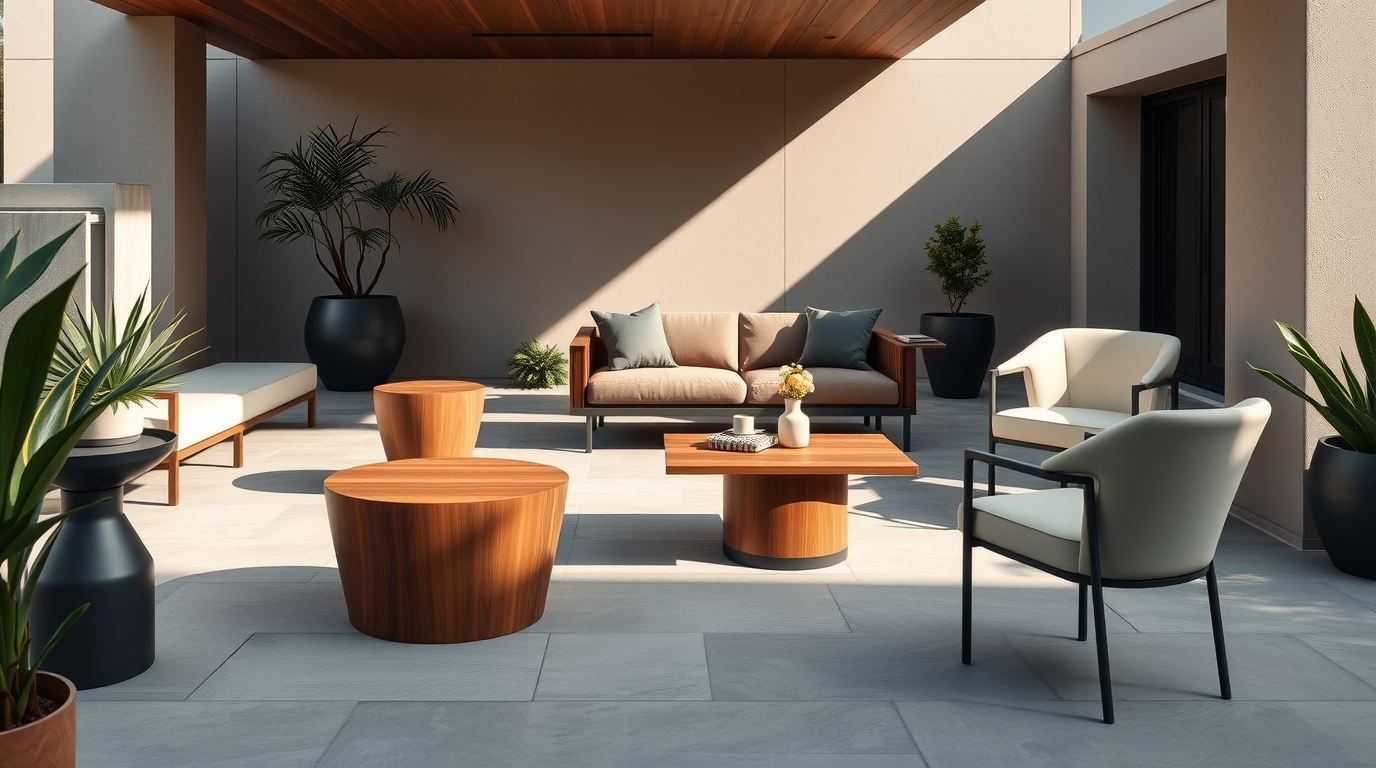
Minimalist furniture appears well suited to online retail. The product is visual, the aesthetic is clear, and customers increasingly begin their search for furniture on a screen rather than by walking into a showroom.
That apparent simplicity can be deceptive.
A beautifully photographed oak dining table may attract attention on Instagram. A sculptural lounge chair may bring visitors from Google. A restrained website may communicate the brand’s design philosophy perfectly. None of those things, however, guarantees that a customer will feel confident enough to spend hundreds or thousands of dollars online.
For New Zealand furniture brands, successful e-commerce requires considerably more than adding products to a clean-looking website. Customers need to understand scale, materials, finish, comfort, delivery, availability, warranty, returns and whether the piece will actually work in their home.
The opportunity is substantial. NZ Post reported in July 2026 that New Zealand shoppers completed nearly six million more online transactions in 2025 than in 2024, an increase of 6%. New Zealand-based retailers also accounted for 79.6% of online spending, while average orders with domestic retailers were more than NZ$50 higher than those placed with international retailers.
For a minimalist furniture business, the commercial challenge is therefore not whether New Zealanders will shop online. It is whether the online experience provides enough information, confidence and convenience to turn design interest into worthwhile orders.
Minimalist Furniture Creates a Particular E-Commerce Challenge
Minimalist furniture relies on restraint. Clean lines, carefully selected materials and an absence of unnecessary decoration are often central to its appeal.
The website selling that furniture should reflect the same design intelligence, but “minimal” should never become “insufficient”.
A furniture website with large photographs, a small logo and very little information may look sophisticated while performing poorly as a sales tool.
Customers considering a NZ$2,000 dining table or premium modular sofa generally want considerably more information than someone purchasing a low-cost household accessory.
They may want to know:
- exact dimensions
- timber species or upholstery composition
- colour and finish options
- care requirements
- assembly requirements
- where the furniture is manufactured
- expected lead time
- whether it is in stock
- delivery cost
- delivery access requirements
- warranty information
- return conditions
- whether samples or swatches are available
Minimalist design removes visual clutter. Good e-commerce removes uncertainty.
Those are not the same task.
New Zealand Customers Are Already Comfortable Buying Online
The behaviour of New Zealand shoppers makes e-commerce increasingly difficult for furniture businesses to treat as a secondary channel.
NZ Post’s 2026 reporting showed not only increasing online transaction volumes but continued strength among domestic retailers. More than a quarter of surveyed shoppers identified factors including buying from a New Zealand-based store, visibility around delivery and easy returns as important reasons for choosing a retailer.
Those findings are particularly relevant to furniture.
Furniture purchases involve practical questions that smaller products often do not. Delivery of a side table is relatively straightforward. Delivering a large dining table, bed frame or modular sofa into an upstairs Wellington townhouse is rather less charming.
An effective New Zealand furniture e-commerce operation should therefore treat fulfilment information as part of marketing rather than as something hidden behind the checkout.
Customers should be able to understand what happens after they press Buy.
Start with the Commercial Role of the Website
Before redesigning an online store, a furniture business should decide what the website is expected to accomplish.
For some brands, the objective may be direct nationwide e-commerce sales.
For others, the website may support a hybrid customer journey involving:
- online research,
- product comparison,
- material or fabric sampling,
- showroom visits,
- design consultation,
- and finally an online or offline purchase.
A custom furniture maker may need an enquiry-led model rather than a conventional checkout.
A furniture retailer with standardised products may be able to complete most transactions entirely online.
A premium brand selling both ready-made and made-to-order furniture may need both.
This distinction matters because a website designed only around online checkout can be inappropriate for a business whose most profitable customers want advice before purchasing.
HLM’s wider e-commerce approach should therefore consider the entire path from initial discovery to completed sale rather than judging performance by website traffic alone.
Product Pages Must Replace Some of the Showroom Experience
When customers cannot touch timber, test a chair or compare upholstery in natural light, the product page has to do more work.
A strong furniture product page should answer the questions a good salesperson would normally answer in a showroom.
Use several types of photography
One isolated product photograph on a white background is rarely sufficient for a high-consideration furniture purchase.
Useful imagery may include:
Clean product photography
Shows shape, proportions, colour and details without distraction.
Room photography
Demonstrates how the furniture works within a realistic interior.
Close-up photographs
Show grain, texture, seams, hardware, joins and surface finishes.
Scale photographs
Help customers understand size by showing the product beside familiar objects or people.
Alternative configurations
Particularly important for modular furniture, shelving systems, extendable tables and configurable sofas.
Minimalist furniture often depends heavily on small details. A beautifully resolved joint, subtle edge profile or carefully chosen timber grain may be part of the reason the product commands a premium price.
Those details deserve to be shown.
Product Dimensions Should Be Almost Impossible to Misunderstand
Furniture returns are inconvenient for customers and expensive for retailers.
Accurate dimensions can prevent some of those problems before they happen.
Every relevant product page should make dimensions easy to find, preferably through both written measurements and a simple diagram.
Depending on the product, useful measurements may include:
- overall width
- depth
- height
- seat height
- seat depth
- arm height
- table clearance
- extended table dimensions
- shelf spacing
- mattress dimensions
- package dimensions
New Zealand businesses should use metric measurements naturally.
Customers also need to think about access. A sofa that fits beautifully into an Auckland apartment once inside is irrelevant if it cannot pass through the lift or doorway.
For larger furniture, an access-measurement guide can reduce uncertainty and potentially prevent difficult delivery situations.
Materials Need More Than Attractive Names
Terms such as “natural”, “premium”, “sustainable” or “crafted” may sound appealing but tell a serious buyer surprisingly little.
Furniture brands should explain what the product is actually made from.
For timber furniture, customers may want to understand:
- timber species
- solid timber versus veneer
- surface treatment
- natural variation
- expected ageing
- maintenance
- source or manufacturing information where relevant
For upholstered furniture, useful information may include:
- fabric composition
- abrasion characteristics where available
- stain resistance
- cleaning requirements
- cushion filling
- removable covers
- replacement options
This is also an area where accuracy matters legally.
The New Zealand Commerce Commission states that businesses must not mislead customers about a product’s price, quality or features and that advertising impressions, including imagery, must be accurate.
Minimalist branding may favour concise copy, but legal and commercial clarity should not be sacrificed for visual purity.
Make Colour and Finish Selection Easier
Colour differences are one of the unavoidable weaknesses of shopping for furniture online.
Timber, fabric and finishes can appear different because of lighting, photography and screen calibration.
Brands can reduce this uncertainty by using:
- professionally colour-managed photography
- close-up material images
- photographs in different lighting conditions
- descriptive finish information
- sample ordering
- fabric swatches
- timber samples
- comparison imagery
For higher-value purchases, sending a small sample may be commercially sensible even if it adds an extra stage to the buying process.
Reducing uncertainty can be more valuable than forcing customers towards checkout as quickly as possible.
Design Product Pages Around Questions, Not Just Aesthetics
A useful product page hierarchy could include:
Product name and concise value proposition
Explain what distinguishes the piece.
Price
Avoid making customers hunt for basic pricing unless the product genuinely requires quotation.
Configuration options
Finish, size, upholstery or other variations.
Primary photography
Show the furniture clearly.
Dimensions
Make measurements obvious.
Materials and construction
Explain what the customer is purchasing.
Availability and lead time
Distinguish between stocked and made-to-order items.
Delivery
Explain how shipping works.
Care
Help the buyer understand long-term ownership.
Warranty and returns
Reduce uncertainty.
Related products
Useful for collections and complete-room purchases.
The page can still feel visually restrained. Minimalism is a design decision, not an excuse for leaving buyers uninformed.
Delivery Can Determine Whether the Sale Happens
Furniture e-commerce is partly a logistics business wearing attractive clothes.
A retailer may invest heavily in search advertising, photography and website development, only to lose the sale when the customer reaches checkout and discovers unclear or unexpectedly expensive shipping.
NZ Post’s recent e-commerce findings are instructive here: delivery visibility was among the factors influencing retailer choice for more than a quarter of shoppers surveyed.
Furniture companies should therefore clarify issues such as:
- nationwide delivery availability
- urban versus rural delivery
- delivery to North Island and South Island locations
- freight charges
- estimated dispatch time
- made-to-order lead times
- tracking
- appointment-based delivery
- kerbside versus inside delivery
- assembly options
- packaging removal
- difficult-access charges
- responsibilities for checking doorway and stair access
A furniture brand selling from Auckland may have a very different cost structure when fulfilling a Christchurch, Queenstown or Dunedin order.
Those realities should be built into e-commerce planning rather than patched onto the website after launch.
Treat Returns and Consumer Rights as Trust Content
Returns policies are sometimes written primarily to protect the retailer.
From the customer’s perspective, however, they are part of the purchase decision.
The Commerce Commission states that New Zealand consumers generally retain the same consumer rights when buying online as when buying in a physical store. Traders selling online must also make it clear that they are in trade.
Consumer Protection notes that under the Consumer Guarantees Act, products sold by businesses trading in New Zealand must, among other requirements, be of acceptable quality, match their description and be fit for purpose. Delivery must also occur within a reasonable time, with remedies potentially available when statutory guarantees are not met.
Furniture retailers should therefore separate two concepts clearly:
change-of-mind policies, which may depend on the retailer’s terms, and
statutory consumer rights, which businesses cannot simply remove by writing restrictive website terms.
Clear policies can increase confidence before purchase and reduce disputes afterwards.
Avoid Artificial Urgency
There is a strange tendency in e-commerce to assume that customers must be chased around the website by countdown clocks, flashing discounts and messages suggesting fourteen strangers are simultaneously trying to purchase the same coffee table.
For a considered furniture brand, this can damage positioning as well as create compliance problems.
The Commerce Commission specifically warns businesses that scarcity and social-proof claims used online must be clear, accurate and capable of being substantiated. This includes claims about limited stock, countdown timers and numbers of other customers supposedly purchasing or viewing a product.
A premium minimalist brand generally benefits more from confidence than pressure.
Useful urgency is factual:
“Two units available for immediate dispatch.”
Manipulative urgency is theatre.
Build E-Commerce Around Mobile Users
Furniture may eventually be purchased on a laptop, but discovery can happen anywhere.
A customer may encounter a dining chair through Instagram, search the brand on their phone, compare it later on a tablet and return several days afterwards to purchase.
That means a mobile furniture website needs more than technical responsiveness.
Important considerations include:
- readable product descriptions
- photographs that can be enlarged easily
- simple variation selection
- clearly visible dimensions
- accessible delivery information
- fast pages
- uncomplicated navigation
- easy cart editing
- mobile-friendly forms
- familiar payment processes
Large image files are particularly dangerous for furniture sites. Beautiful photography is essential, but uploading enormous unoptimised images can make the website painfully slow. Humanity has somehow managed to invent both fibre internet and 14-megabyte product photographs, so image optimisation remains necessary.
Search Visibility Begins with How Customers Actually Shop
A furniture brand should not optimise only for its own product terminology.
Customers may search by:
- furniture category
- room
- material
- design style
- dimensions
- location
- problem
- intended use
Examples could include:
“minimalist dining table NZ”
“oak dining table NZ”
“modern bedside tables”
“small dining table Auckland”
“modular sofa New Zealand”
“solid timber furniture NZ”
“minimalist furniture Auckland”
Search engine optimisation should therefore connect product architecture with real search behaviour.
Useful site structures may include dedicated category pages for:
- dining tables
- dining chairs
- sofas
- lounge chairs
- coffee tables
- side tables
- shelving
- bedroom furniture
- outdoor collections
Collections can then be supported by useful editorial material addressing questions customers ask during research.
Content Can Help Sell Expensive Products
Furniture customers often require education before purchase.
That creates opportunities for content that is genuinely useful rather than written merely to feed search engines.
A minimalist furniture brand could publish guides such as:
How to Choose the Right Dining Table Size
Solid Timber vs Timber Veneer: What Furniture Buyers Should Know
How to Measure a Room Before Ordering a Sofa
Choosing Furniture for a Compact Auckland Apartment
Furniture Materials for New Zealand Coastal Homes
How to Care for Solid Timber Furniture
How to Combine Minimalist Furniture Without Making a Room Feel Sparse
Such content can attract people earlier in the buying process while demonstrating expertise.
It also creates natural internal-linking opportunities from informational articles into relevant collections and products.
For HLM, this is where e-commerce website development and regular SEO can work together rather than operating as separate marketing exercises.
Local SEO Still Matters to an E-Commerce Furniture Business
Nationwide e-commerce does not make physical location irrelevant.
Some buyers will still search for terms such as:
“furniture store Auckland”
“minimalist furniture Wellington”
“designer furniture Christchurch”
Customers may want to inspect furniture before buying, collect an order, order samples or determine whether there is a showroom nearby.
Furniture businesses with legitimate physical locations should therefore maintain accurate Google Business Profiles and ensure information such as opening hours, address, contact details and website links remains current.
Local SEO is particularly valuable when the business combines online sales with a showroom, studio or physical retail presence.
The objective is not to create dozens of thin pages stuffed with city names. Location pages should exist where the business genuinely serves the area and can provide useful information.
Google Ads Can Capture High-Intent Furniture Searches
Organic visibility can take time to build.
Google Ads can provide a complementary way to appear when customers search for relevant products, particularly for commercially specific queries.
A minimalist furniture retailer might target search themes around:
- specific furniture categories
- particular materials
- design styles
- premium furniture
- locally relevant searches
- high-intent product searches
But clicks are not the objective.
A campaign generating 1,000 low-quality visitors may be less valuable than one producing 100 people actively considering the furniture being sold.
For furniture e-commerce, meaningful measurements may include:
- product page engagement
- add-to-cart rate
- checkout initiation
- completed transactions
- revenue
- average order value
- cost per sale
- return on advertising spend
- assisted conversions
Expensive products may also have longer customer journeys, meaning the person who clicks an advertisement today may not purchase until considerably later.
Social Media Should Demonstrate the Furniture in Real Homes
Minimalist furniture is naturally suited to visual platforms, particularly when a brand has strong photography.
But social media should not become an endless catalogue of product photographs against identical walls.
Customers may find greater value in seeing:
- finished interiors
- furniture in different types of homes
- styling combinations
- manufacturing processes
- material details
- new designs
- product demonstrations
- furniture dimensions explained visually
- delivery and installation
- care advice
- designer commentary
- customer homes, with permission
Video can be particularly effective when movement reveals something still photography cannot.
A short video might show how an extendable dining table operates, how a modular sofa changes configuration or how light moves across a timber finish.
Social content can then lead customers back to a product or collection page where the commercial journey continues.
Use E-Commerce Data to Improve the Business
One advantage of selling furniture online is the volume of behavioural information available.
A retailer should move beyond asking, “How many people visited the website?”
Better questions include:
Which products attract the most qualified traffic?
Which products are frequently viewed but rarely added to cart?
Where do customers leave the checkout?
Do mobile and desktop visitors behave differently?
Which acquisition channels produce profitable orders?
Which products are frequently purchased together?
Which regions generate orders?
Which content pages assist later purchases?
How many first-time buyers return?
What is the average order value?
How much does it cost to acquire a customer?
Marketing becomes more useful when those answers influence decisions.
For example, a product receiving heavy traffic but few sales may suffer from poor pricing, weak imagery, insufficient information, limited stock, expensive delivery or simply a mismatch between the search intent and the product.
More traffic would not necessarily fix any of those problems.
Increase Average Order Value Without Undermining the Brand
Minimalist brands should generally avoid aggressive upselling.
There are, however, logical opportunities to increase order value by helping customers complete an interior.
A dining table page might naturally recommend compatible chairs.
A bed frame might link to bedside tables.
A sofa collection might feature matching side or coffee tables.
A shelving system might include relevant modules or accessories.
Bundles may also work when combinations genuinely make sense.
The principle is relevance.
A customer should feel that the website is helping complete the purchase, not attempting to squeeze one final object into the cart before the digital doors close.
Consider the Different Needs of Auckland, Wellington and Other Markets
New Zealand should not be treated as a single uniform furniture market.
Homes, climates, access constraints and property types vary.
An Auckland customer may be furnishing a contemporary apartment, suburban renovation or larger family home.
Wellington customers may face compact sections, steep access and multi-level properties where delivery planning becomes unusually important.
Christchurch’s housing stock includes substantial contemporary development alongside older homes, while Queenstown and other lifestyle markets can present different expectations around materials, interiors and property use.
Coastal environments may also make material durability and maintenance more relevant.
Regional references should only be made where they help the customer make a decision. Filling a page with place names for search optimisation is neither particularly elegant nor particularly useful.
Common E-Commerce Mistakes Minimalist Furniture Brands Should Avoid
Several recurring mistakes can undermine otherwise strong brands.
Making the site beautiful but difficult to buy from
A visually impressive website still needs navigation, search, product information and clear purchasing paths.
Hiding delivery costs too late
Unexpected freight can destroy checkout conversion.
Providing too little product information
Minimal copy may fit the aesthetic while leaving customers uncertain.
Using inconsistent photography
Premium positioning weakens when colours, scale and presentation vary wildly from product to product.
Neglecting mobile performance
A site that works magnificently on the designer’s 27-inch monitor but badly on a customer’s phone is not magnificently designed.
Treating SEO as a list of keywords
Search visibility depends on useful site architecture, content quality, product information, technical performance and authority.
Measuring traffic instead of commercial outcomes
Visits do not pay freight invoices. Sales do.
Using questionable urgency tactics
False countdowns and unsupported stock claims can damage trust and create regulatory risk.
A Practical E-Commerce Checklist for New Zealand Furniture Brands
Before investing more heavily in online advertising, a minimalist furniture business should review the foundations of its online store.
Product presentation
- Are products photographed from several useful angles?
- Can customers understand scale?
- Are materials and finishes shown clearly?
- Are important construction details visible?
Product information
- Are complete dimensions supplied?
- Are materials identified accurately?
- Are care instructions available?
- Are stock status and lead times clear?
Delivery
- Can customers understand freight costs?
- Are regional limitations explained?
- Are large-item delivery conditions clear?
- Is access guidance provided?
Trust
- Are contact details easy to find?
- Are reviews genuine?
- Are policies clearly written?
- Are warranties explained?
- Are statutory rights represented accurately?
Website performance
- Does the site work properly on mobile?
- Are pages reasonably fast?
- Is navigation intuitive?
- Is checkout straightforward?
Search
- Does each important product category have a useful page?
- Does the site target genuine customer searches?
- Is supporting educational content available?
- Are products and articles internally linked logically?
Measurement
- Is e-commerce tracking configured?
- Can the business identify where profitable sales originate?
- Are add-to-cart and checkout drop-off rates monitored?
- Is advertising assessed against sales rather than clicks?
E-Commerce Should Support the Brand, Not Dilute It
Minimalist furniture brands often succeed because they have a distinct point of view.
Their products are selected or designed carefully. Materials matter. Proportion matters. Photography matters. The way the brand communicates matters.
The e-commerce system should preserve those qualities while making purchasing easier.
That means resisting two extremes.
One is the beautiful but impractical website where the customer admires the furniture without being given enough information to buy it.
The other is the conversion-obsessed store filled with intrusive pop-ups, excessive promotions, fabricated urgency and other digital-market-stall behaviour that is completely inconsistent with a considered design brand.
The strongest approach sits between them.
It combines visual restraint with commercial clarity.
Building a Stronger Online Sales System
For New Zealand minimalist furniture businesses, e-commerce can extend a brand well beyond the limits of a physical showroom. Recent NZ Post data shows that online shopping continues to grow and that domestic retailers retain a substantial share of New Zealand online spending.
But furniture is a considered purchase.
Customers need confidence in what they are buying, how it will look and fit, when it will arrive, what delivery will cost and what happens if something goes wrong.
A strong e-commerce strategy therefore connects several disciplines: professional website development, detailed product presentation, SEO, paid search, content, social media, fulfilment and meaningful performance measurement.
For minimalist brands in particular, the guiding principle is simple: remove clutter from the design, not information from the customer’s decision.
Home & Lifestyle Marketing New Zealand works with businesses in furniture, interiors and related home and lifestyle sectors to develop more commercially effective digital marketing systems. For brands seeking to strengthen online sales, HLM’s e-commerce website development approach can help connect product presentation, search visibility, customer experience and conversion performance around the way New Zealand customers actually research and buy.
To learn more, please visit www.hlmco.com.au