Environmental integrity has become a core pillar of modern luxury. Discerning Australians want homes that feel refined, timeless and sophisticated—but they also want to make responsible choices that reduce waste, protect natural resources and reflect their commitment to sustainable living. Smart material selection sits at the heart of this balance.
Materials shape not only how furniture looks and feels, but how long it lasts, how it performs, how it responds to Australian conditions, and how responsibly it can be sourced. Luxury is no longer defined by lavishness or cost alone. True luxury is measured by longevity, craftsmanship, environmental responsibility and a respect for tradition.
This article explores the most important smart material choices shaping today’s luxury living, particularly in outdoor furniture. It highlights the environmental advantages of high-quality materials, why customisation enhances sustainability, and how homeowners can create beautiful spaces without compromising on environmental integrity.
Luxury Begins with Longevity
The first principle of sustainable luxury is longevity. A material that lasts decades—not years—is inherently more environmentally responsible. Longer lifespan means fewer replacements, fewer resources consumed and less waste entering landfill.
Smart materials include:
- Solid teak — one of the longest-lasting outdoor timbers
- Marine-grade aluminium — strong, lightweight, corrosion-resistant
- Olefin outdoor fabrics — UV-resistant, durable and recyclable
- Tempered-glass tops — long-term clarity and impact resistance
- Natural stone — elegant, durable and highly resilient
Homeowners choosing these materials enjoy elevated luxury without the environmental drawbacks of cheaper, short-life alternatives.
Teak: The Gold Standard of Sustainable Timber
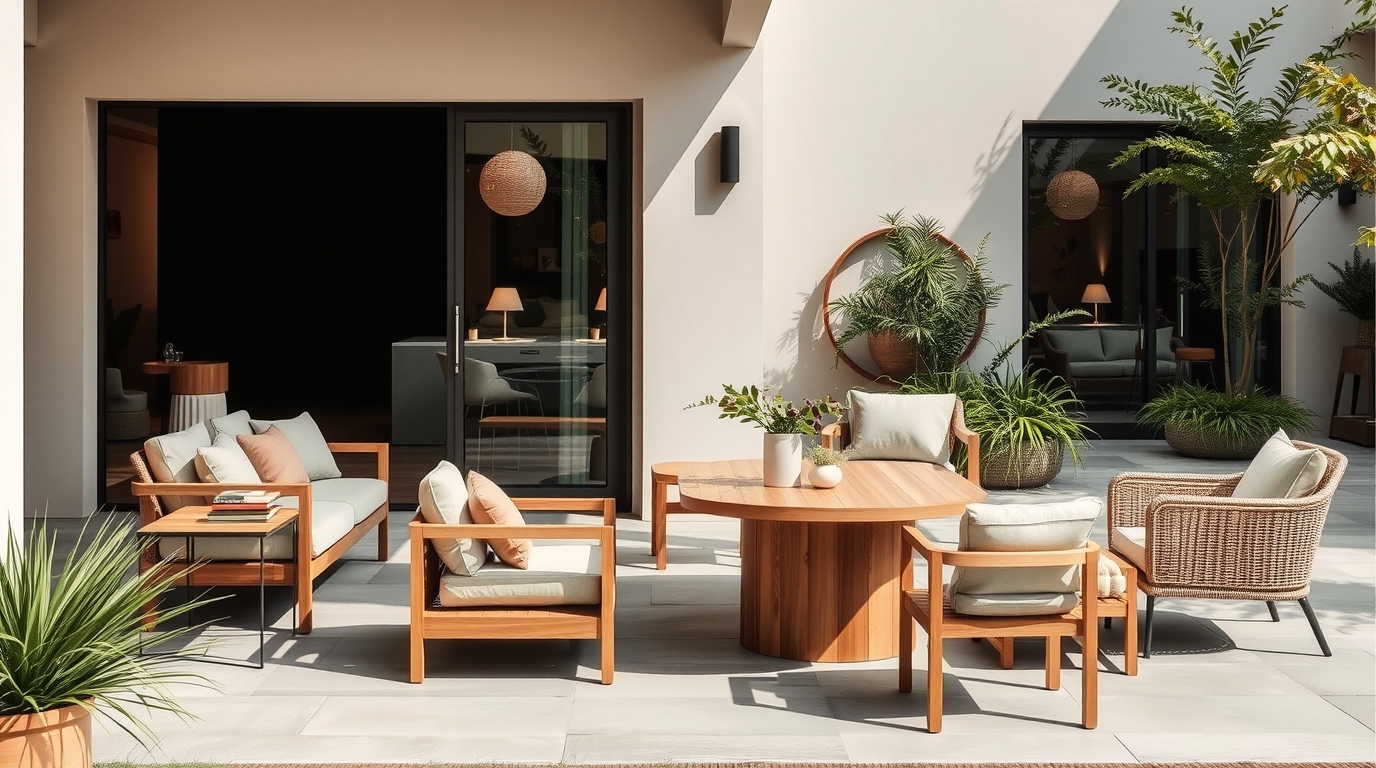
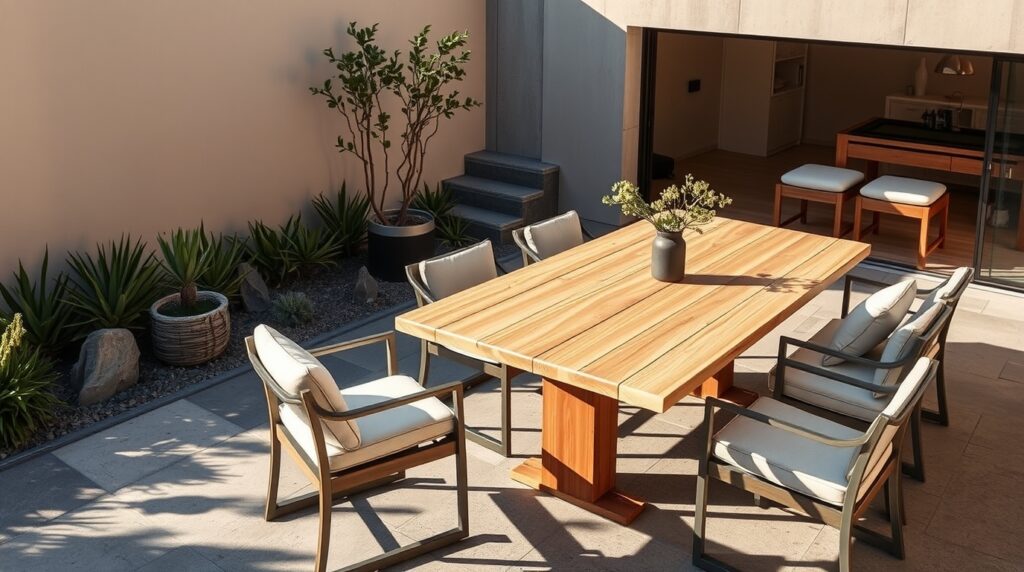
Solid teak has earned its reputation as the ultimate outdoor timber, and for good reason. When sourced from responsibly managed plantations, teak offers exceptional durability and natural weather resistance.
Environmental Advantages
- Needs minimal chemical treatment
- Lasts 20–40 years outdoors
- Naturally resists moisture and insects
- Can be restored, re-oiled and refinished
Because teak lasts decades, environmental impact per year is extremely low compared with fast-growing softwoods or synthetic alternatives. Traditional craftsmanship combined with responsibly sourced teak represents the ideal blend of heritage and sustainability.
Aluminium: Strength Without Environmental Burden
Marine-grade aluminium is one of the smartest materials in modern outdoor luxury. It delivers both elegance and environmental responsibility.
Why Aluminium is Sustainable
- 100% recyclable without quality loss
- Extremely long-lasting
- Lightweight, reducing freight emissions
- Rust-proof and suitable for coastal climates
- Requires minimal maintenance
High-end powder-coatings further extend its life and reduce the need for replacement. Smart design ensures each piece can be used year-round with minimal wear.
Olefin Fabrics: The Future of Outdoor Sustainability
Olefin has rapidly become the preferred fabric for premium outdoor furniture. Unlike polyester or PVC-based materials, Olefin is produced with low waste, fewer chemicals and exceptionally durable fibres.
Environmental and Luxury Benefits
- Exceptional UV resistance
- Resists mould, mildew and moisture
- Feels soft and luxurious
- Lasts significantly longer than cheaper synthetics
- Low environmental impact during manufacturing
For homeowners who appreciate refined outdoor aesthetics, Olefin offers both beauty and responsibility.
Quick-Dry and High-Resilience Foams
Cushion foam quality dramatically affects comfort and lifespan. Smart materials such as quick-dry foam and high-resilience inserts eliminate mould issues while maximising long-term support.
Sustainability Gains
- Water drains rapidly
- Reduces need for chemical treatments
- Extends cushion lifespan by years
- Minimises waste from early replacement
Natural Stone: A Luxury Surface That Endures
Stone has long been valued for its beauty and resilience. In outdoor furniture, natural stone tops offer exceptional lifespan and versatility. Stone is resistant to heat and UV, timeless in its aesthetic, and requires minimal treatment, ensuring low waste over its long use-life.
Tempered Glass: A Clean, Eco-Friendly Option
Tempered glass remains one of the most environmentally friendly materials in luxury furniture. It is fully recyclable, withstands decades of use and remains elegant in all settings. Its clarity and resistance to wear make it a perfect choice for outdoor dining and coffee tables.
Customisation Enhances Sustainability
Smart material choices are amplified when combined with custom manufacturing. Customisation encourages perfect sizing to avoid over-production and tailored designs that last longer. When homeowners personally choose their materials, they value them more deeply and keep their furniture longer.
Avoiding Mass-Produced Short-Life Materials
Cheap outdoor furniture often uses thin plastics, hollow aluminium, or low-density foam. These items contribute to environmental harm when they break down into microplastics or become landfill within a short time. Smart material choices eliminate this waste cycle altogether.
Chemical Safety and Low-VOC Finishes
Luxury and sustainability go hand-in-hand when safe finishes are used. Low-VOC oils, water-based stains and environmentally conscious coatings reduce harmful emissions. Traditional craftsmanship relies heavily on natural oils and finishes—an approach perfectly aligned with sustainable luxury.
Repairability and Rejuvenation
Materials chosen wisely can be rejuvenated instead of replaced. Teak can be sanded, aluminium can be re-powder-coated, and Olefin cushions can be re-covered. Smart material choices support generational longevity, not seasonal trends.
Sourcing Materials with Integrity
Luxury homebuyers increasingly want to know how materials are sourced. Transparency has become essential. Responsible sourcing includes plantation-grown timbers, recyclable metals, and fair labour conditions. Ethical sourcing elevates the meaning of luxury, aligning it with purpose and responsibility.
Blending Luxury Aesthetics with Responsible Choices
Sustainable materials enhance luxury, rather than compromise it. Design advantages include rich timber grains, sleek aluminium profiles, and refined fabric textures. Luxury rooted in material integrity has become the hallmark of modern Australian design.
Conclusion
Smart material choices allow homeowners to enjoy refined, luxurious living without compromising environmental integrity. By choosing durable, responsibly sourced materials — teak, aluminium, Olefin, stone, tempered glass and long-life foams — modern Australians are shaping a new standard of sustainable luxury.
Discover our range of sustainable materials at: www.theexclusivehome.com.au