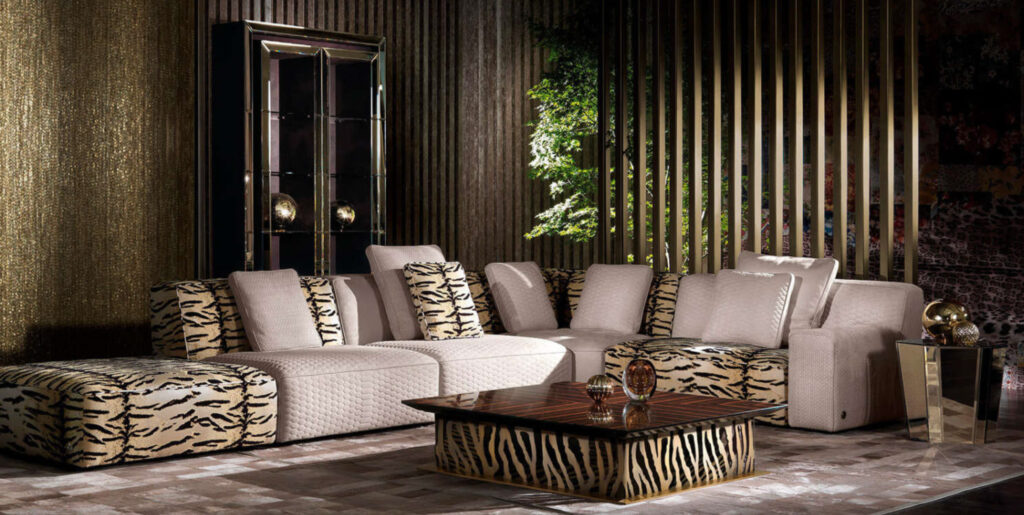
A luxury kitchen, bespoke furniture collection, architect-designed home or premium interior design service is rarely purchased because someone saw one advertisement at the right moment.
High-value home purchases usually develop over time.
A prospective customer may first discover a design style, save photographs for inspiration, compare materials, follow several businesses, visit a showroom, read reviews, study completed projects and eventually make contact. By the time they request a consultation or quotation, they may already have a strong impression of which businesses they trust.
This is where social media can play an important role.
For luxury home design brands, social media is not simply a place to announce new products or publish photographs. Used properly, it can help create demand before the customer is actively searching for a supplier.
That distinction is important.
Google Search is particularly useful when someone already knows what they want and begins looking for a business, product or service. Social media can operate earlier in the journey by showing people possibilities they had not previously considered, helping them develop preferences and giving them reasons to remember a particular brand.
Recent research into homeowner behaviour also reflects the growing role of social media in home improvement discovery and decision-making. The Home Improvement Research Institute, for example, has been examining how social platforms influence inspiration, project initiation, trust and purchasing decisions among homeowners.
For luxury home and lifestyle businesses, the opportunity is therefore not simply to collect followers.
It is to become part of the customer’s consideration process.
What Does Demand Generation Actually Mean?
Demand generation is often confused with direct-response marketing.
They are not the same.
Direct-response marketing attempts to generate an immediate action such as:
- a phone call
- an enquiry
- a quotation request
- a consultation
- an online purchase
Demand generation works further upstream.
The customer may not be ready to enquire yet. They may not even have decided exactly what they want.
Instead, the objective is to increase awareness, interest and preference around a category, style, product or brand.
Consider someone planning a major home renovation.
They might initially think:
“We need to improve the kitchen.”
After seeing several well-designed projects on social media, that idea can become more specific.
They may begin considering:
- a larger island
- natural stone surfaces
- integrated appliances
- bespoke cabinetry
- concealed storage
- architectural lighting
- a particular design style
The social content has not necessarily generated an immediate enquiry.
It has helped shape the customer’s understanding of what is possible.
That is demand generation.
For luxury businesses, this can be particularly valuable because the product itself is often difficult to understand without visual context.
Why Luxury Home Design Is Particularly Suited to Social Media
Many home and lifestyle products are inherently visual.
A photograph can communicate aspects of a finished interior that several paragraphs of text struggle to describe.
The same applies to:
- furniture
- kitchens
- bathrooms
- landscaping
- architecture
- lighting
- outdoor living
- decorative products
- custom cabinetry
- renovations
Social media gives businesses an opportunity to demonstrate these things repeatedly.
A prospective customer may see a project once and scroll past.
Several weeks later, they may see another project from the same company.
Later, they may see a short video showing the craftsmanship behind the product.
Eventually, they may search for the company by name.
The individual social posts are not necessarily responsible for the final sale.
Collectively, they can help build familiarity.
That matters because luxury purchases often involve a considerable degree of perceived risk. The customer is not only asking whether they like the design. They are asking whether the business can deliver the quality, professionalism and experience they expect.
Social Media Can Show What a Website Alone Cannot
A website should remain a central commercial asset, but social media provides a different environment for demonstrating a brand.
A website visitor may arrive deliberately looking for information.
A social media user may encounter a project while browsing.
This difference creates an opportunity to demonstrate a brand’s capabilities through a steady stream of visual evidence.
For example, an interior design business could show:
- completed rooms
- material selections
- lighting details
- furniture combinations
- project progress
- design sketches
- installation days
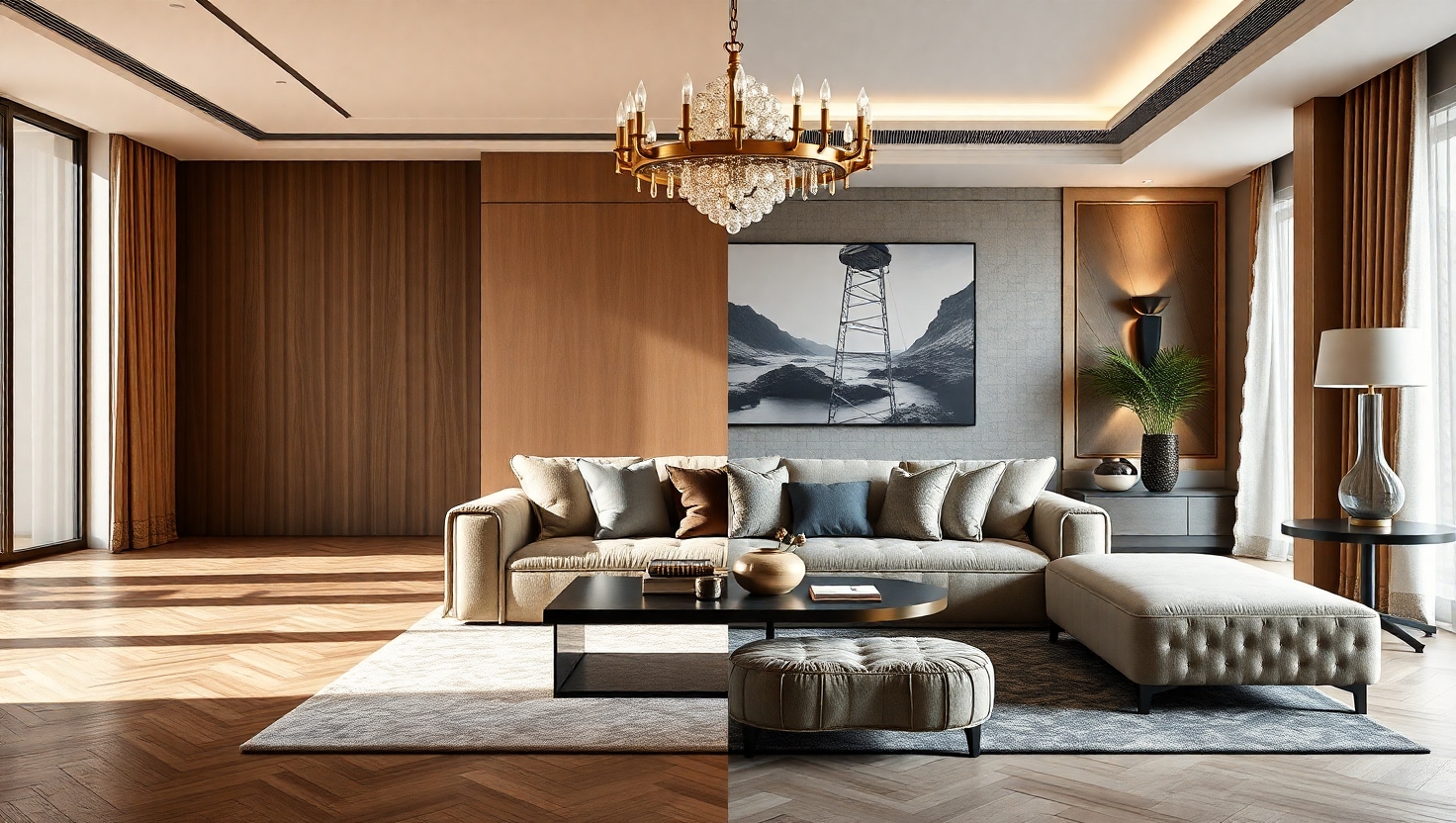
- before-and-after transformations
- details that would otherwise be overlooked
A custom furniture company could show:
- timber selection
- joinery
- finishing
- workshop processes
- completed pieces
- close-up details
- installation
- bespoke commissions
A landscaping business could show:
- site preparation
- planting
- stonework
- outdoor kitchens
- pool surrounds
- lighting
- completed gardens
- seasonal changes
This creates a library of evidence.
The customer does not have to take the company’s word for its capabilities.
They can see them.
Build Desire Through Projects, Not Just Products
Luxury marketing is often strongest when it shows the product or service in context.
A premium sofa photographed against a plain background may communicate what the sofa looks like.
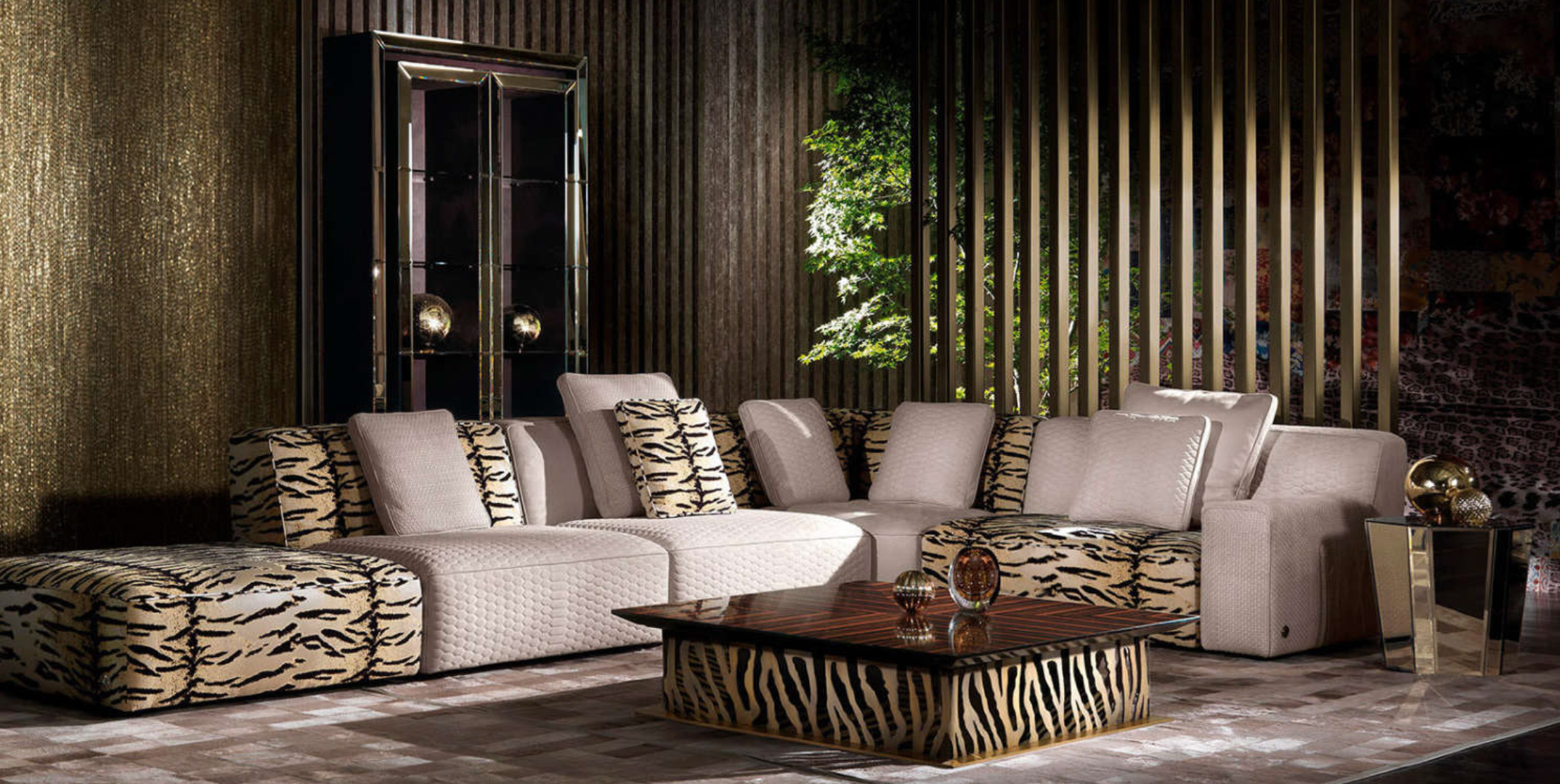
A professionally photographed interior showing the same sofa within a carefully designed room communicates something broader.
It demonstrates:
- proportion
- styling
- materials
- colour
- atmosphere
- quality
- how the product works within a finished environment
The same principle applies to a kitchen.
A photograph of cabinetry is useful.
A photograph of the completed kitchen, showing the cabinetry alongside stone surfaces, lighting, appliances, flooring and furniture, tells a much richer story.
This is especially relevant to demand generation because customers are often buying an outcome, not simply an individual product.
They are not necessarily buying a kitchen cabinet.
They are buying the possibility of a better kitchen.
They are not simply buying a sofa.
They are buying part of a particular interior.
They are not simply buying landscaping.
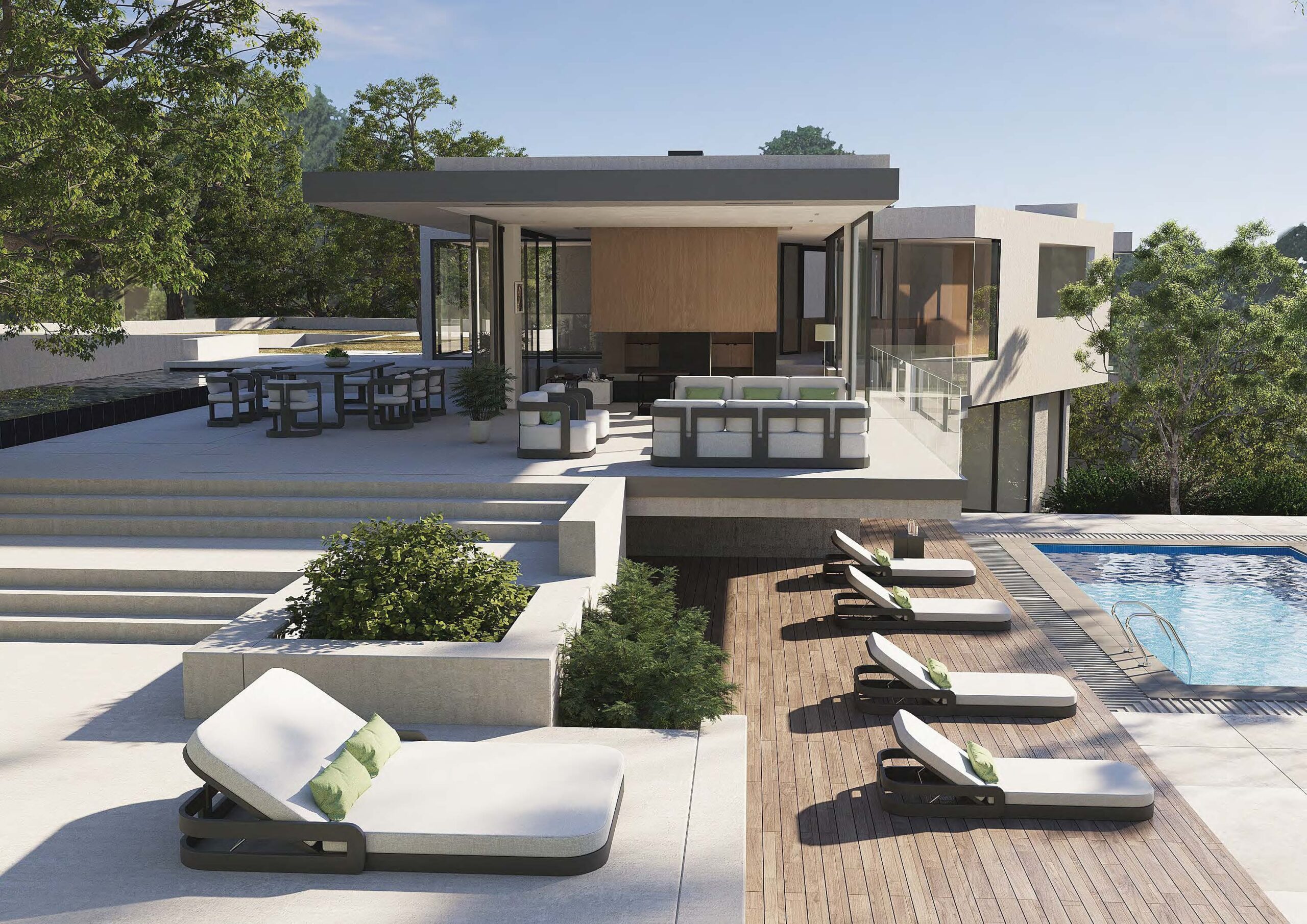
They are buying a particular outdoor environment.
Social content should make that outcome visible.
Create Content Around Aspirations and Problems
Not every post should show a finished project.
Luxury home design customers also have questions.
They may be wondering:
- Which stone is suitable for a kitchen?
- How should a large living room be furnished?
- What makes a bathroom feel more spacious?
- Which materials age well?
- How much storage should a kitchen include?
- What should be considered before a major renovation?
- How can indoor and outdoor spaces connect?
- What makes custom furniture worthwhile?
- Which lighting choices improve an interior?
- How should an outdoor entertaining area be planned?
These questions create useful content opportunities.
A business that consistently answers them can begin to occupy the position of an adviser rather than simply a seller.
That is important for premium brands.
The customer is often not looking for the cheapest available option. They are looking for confidence that they are making a sensible decision.
Useful educational content helps establish that confidence.
Use Expertise as a Demand-Generation Asset
Luxury positioning should not depend entirely on polished photography.
Expertise is also valuable.
An interior designer explaining why certain proportions work can demonstrate more authority than another photograph accompanied by “We love this look”.
A kitchen designer explaining the practical differences between several benchtop materials can provide genuine value.
A landscaper explaining how plant selection changes according to exposure, drainage and maintenance requirements demonstrates practical knowledge.
A furniture maker explaining construction details can help customers understand why a bespoke piece costs more than mass-produced furniture.
This type of content can attract people who are still researching.
It also gives the brand something more defensible than aesthetics alone.
Many businesses can publish attractive photographs.
Fewer consistently demonstrate genuine expertise.
Use Short-Form Video to Demonstrate the Experience
Video is particularly useful where movement, process or human expertise is important.
A luxury home design business does not necessarily need elaborate productions.
Useful short videos might include:
- a designer explaining a completed project
- a walkthrough of a finished room
- a furniture maker discussing construction
- a kitchen designer explaining storage decisions
- an installer demonstrating a particular feature
- a landscaper walking through a completed garden
- a before-and-after transformation
- a material comparison
- a common design mistake
- a project progression from construction to completion
The important factor is not simply producing video.
It is having something worth showing.
A 30-second explanation from someone who genuinely understands the product can be more valuable than a highly produced video containing little useful information.
Video should therefore reinforce the brand’s expertise and character rather than exist simply because short-form video is popular.
Instagram Can Function as a Visual Brand Portfolio
For many luxury home businesses, Instagram is naturally suited to visual storytelling.
It can operate as an informal portfolio that customers can browse before contacting the business.
But the account should not become a catalogue of unrelated photographs.
A stronger approach is to establish recurring content themes.
For example, an interior design brand might use:
Completed Projects
Finished spaces that demonstrate the standard of work.
Design Details
Close-ups showing materials, joinery, lighting and finishes.
Design Education
Short explanations of decisions made during projects.
Behind the Scenes
The people and processes involved in delivering the work.
Client Journey
Appropriate glimpses into planning, design and installation.
Brand Perspective
The design principles and preferences that define the business.
This gives the account structure.
It also helps prospective customers understand what the business actually stands for.
Pinterest Can Help Capture Design Intent
Pinterest deserves particular attention for home and design businesses because its fundamental behaviour is built around visual discovery, saving and planning.
Pinterest describes itself as a visual discovery platform where people search, save and shop ideas, and specifically notes that people use the platform to plan future activities including home renovations.
Pinterest’s own research into luxury audiences found that three in five surveyed luxury shoppers said they used Pinterest to research luxury brands and products. The research also identified Pinterest as a major destination for luxury inspiration. These figures come from Pinterest’s own commissioned research and should therefore be treated as platform-specific rather than universal evidence about all luxury consumers.
For a home design business, the relevance is straightforward.
A person may not yet know which company they want.
But they may be actively collecting ideas.
They may save:
- kitchen designs
- living room concepts
- bathroom finishes
- landscaping ideas
- furniture styles
- lighting schemes
- colour combinations
- architectural details
That makes Pinterest potentially useful at the inspiration stage of the buying journey.
It can help a brand become part of the customer’s mental shortlist before the customer is ready to search for suppliers.
Don’t Assume Every Platform Deserves Equal Attention
One of the most common social media mistakes is trying to maintain a presence everywhere.
A luxury home design brand might have accounts on:
- YouTube
- TikTok
That does not mean all six deserve equal investment.
Platform selection should depend on:
- target customers
- content format
- product category
- geography
- available resources
- customer behaviour
- commercial objectives
A visually led interior design business may have strong reasons to prioritise Instagram and Pinterest.
A commercial architecture or property-related design business may find LinkedIn useful for professional relationships and referral networks.
A business with strong video content may find YouTube valuable for longer demonstrations and project walkthroughs.
The correct answer is not “be everywhere”.
It is to identify where the relevant audience is and where the business can consistently produce worthwhile content.
Luxury Brands Need Consistency More Than Constant Posting
Demand generation is cumulative.
That makes consistency more important than producing a large number of posts for a short period.
A business might publish ten posts in one week and then disappear for six weeks.
That does little to establish a dependable content presence.
A more sustainable approach might involve a smaller number of strong pieces each month, supported by Stories, short videos or other formats where appropriate.
The exact frequency should depend on:
- available content
- audience behaviour
- platform
- business capacity
- campaign activity
- objectives
There is no universal posting frequency that guarantees results.
The standard should be whether the business can maintain a professional and useful presence without reducing quality simply to meet a numerical target.
Reuse Strong Content Instead of Constantly Starting Again
A completed project can provide months of content.
Consider a hypothetical luxury kitchen renovation.
One project could produce:
- A completed-project photograph.
- A before-and-after post.
- A short video walkthrough.
- A post explaining the cabinetry design.
- A post discussing the benchtop selection.
- A lighting detail.
- A designer commentary video.
- A project story for the website.
- A Pinterest collection.
- A case study.
- A customer testimonial.
- A future paid social advertisement.
This is much more efficient than trying to invent completely unrelated content every week.
It also creates consistency between marketing channels.
The same project can support social media, SEO, website content, email marketing and advertising.
Show the People Behind the Brand
Luxury branding can sometimes become too polished.
Every image looks perfect.
Every caption sounds carefully constructed.
Every post is about the finished product.
The result can be visually impressive but strangely impersonal.
Showing the people behind the business can help address this.
Customers may want to see:
- designers
- craftspeople
- installers
- showroom staff
- project managers
- architects
- business owners
A short video explaining a design decision can humanise a brand without making it less premium.
The objective is not to turn the account into a personal diary.
It is to demonstrate that real expertise and accountability sit behind the finished product.
This is particularly relevant for businesses working inside customers’ homes.
The buyer is not only choosing an object.
They may be allowing a company into their property for weeks or months.
People matter.
Use Social Proof Carefully
Luxury customers often conduct considerable research before committing to a supplier.
Social proof can therefore be valuable.
Useful forms include:
- genuine customer testimonials
- completed projects
- reviews
- case studies
- professional recognition
- genuine media coverage
- relevant qualifications
- collaborations
- photographs of real installations
The important word is genuine.
A business should not manufacture testimonials or create misleading impressions of customer experience.
It should also avoid presenting every project as extraordinary.
Specificity is usually more credible.
Instead of saying:
“Another incredible transformation!”
A business could explain what was changed, why the client needed it and what design decisions were involved.
The latter gives the audience something useful to evaluate.
Build a Recognisable Visual Language
Luxury brands benefit from consistency.
This does not mean every photograph needs to look identical.
It means customers should gradually recognise the brand’s visual character.
Consider:
- photography style
- image composition
- typography
- colours
- graphic elements
- video treatment
- tone of captions
- recurring subject matter
The objective is not to create an artificial aesthetic disconnected from the actual business.
The visual identity should reinforce what the company genuinely represents.
A bespoke furniture maker may emphasise craftsmanship and material detail.
An architectural practice may emphasise proportion, structure and spatial relationships.
An interior designer may emphasise atmosphere, texture and composition.
The visual language should have a reason.
Avoid Turning Every Post Into an Advertisement
This is one of the easiest ways to weaken a luxury social presence.
If every post says:
BOOK NOW
SHOP NOW
CONTACT US TODAY
the account can begin to feel like a catalogue of sales requests.
Demand-generation content needs room to inspire and educate.
A customer who is still researching may not be ready to contact the business.
That does not make them worthless.
They may be building preferences today and become a serious prospect six months from now.
Content should therefore serve different stages of the customer journey.
Inspiration Content
Helps customers imagine possibilities.
Educational Content
Helps customers understand options.
Proof Content
Shows that the business can deliver.
Commercial Content
Explains products, services or opportunities to enquire.
A healthy content strategy should contain an appropriate mixture rather than treating every post as a direct sales pitch.
Connect Social Media to the Website
Social media should not become an isolated marketing island.
The website remains the place where customers can obtain deeper information.
A social post showing a completed kitchen might link to the relevant project page.
A video about a design process might direct customers to a service page.
A product post might lead to the appropriate product category.
A case study can provide substantially more detail than a social caption.
This creates a natural progression:
Social discovery → Website research → Trust building → Enquiry
Not every visitor will follow that sequence.
Some may search the brand independently.
Others may return through Google weeks later.
But the principle remains useful.
Social media should contribute to the wider digital ecosystem rather than operating separately from it.
Use Social Media to Strengthen Search Demand
There is another important connection between social media and SEO.
A customer who repeatedly sees a brand on social media may later search for that business by name.
They may also begin using more specific searches because social content has educated them.
For example, someone initially interested in “kitchen ideas” may eventually search:
“custom kitchen designer Sydney”
or:
“bespoke kitchen cabinetry Melbourne”
because their understanding of what they want has developed.
Social media has not necessarily created the search directly.
But it may have helped shape the customer’s awareness and vocabulary.
This is one reason HLM should treat social media, SEO and website development as interconnected services.
The customer does not experience a company’s marketing as separate departments.
They simply experience the brand.
Paid Social Can Extend the Reach of Strong Content
Organic social media has limitations.
A business can publish an excellent project video without reaching everyone who might be interested.
Paid social advertising can extend selected content to defined audiences, subject to each platform’s targeting capabilities and privacy rules.
The important point is that paid promotion should not compensate for weak content.
If the underlying creative is poor, increasing its distribution simply gives more people an opportunity to ignore it.
A better approach is to identify content that already demonstrates strong relevance or that clearly supports a commercial objective, then consider whether paid distribution can extend its useful reach.
Different campaigns may pursue different objectives, including:
- awareness
- video views
- website traffic
- engagement
- lead generation
- product discovery
- remarketing
The appropriate objective depends on the business and the stage of the customer journey.
Measure Demand Generation Differently From Direct Response
This is where luxury home brands need realistic expectations.
A social post may receive:
- 20,000 impressions
- 500 engagements
- 30 website visits
and produce no immediate enquiry.
That does not automatically make the content useless.
Conversely, a post producing 100,000 views is not automatically commercially successful.
Demand generation requires a broader measurement framework.
Useful indicators can include:
- relevant audience reach
- website visits
- branded search activity
- enquiries
- consultation requests
- assisted conversions
- engagement with project content
- video completion or viewing behaviour
- saves
- shares
- direct enquiries
- qualified leads
- eventual sales
Where possible, businesses should connect marketing activity with CRM and sales data.
This helps reveal whether social audiences are producing commercially meaningful prospects rather than merely visible engagement.
Track What Happens After the Click
A common mistake is to measure social media only inside the social platform.
The more important question is what happens after someone leaves it.
For example:
Social post → Website project page → Service page → Consultation request
If a customer follows this path, the website needs to be ready.
That means:
- fast loading
- mobile-friendly design
- clear navigation
- strong project photography
- convincing service information
- genuine reviews
- clear calls to action
- easy contact options
This is why social media performance cannot be separated entirely from website performance.
Sending more people to a weak website does not solve the underlying problem.
High-End Brands Should Think About the Entire Customer Journey
Luxury home design purchases often involve multiple interactions.
A simplified journey might look like:
Discovery
The customer encounters an image, video or recommendation.
Inspiration
They begin exploring styles and possibilities.
Research
They visit websites, social accounts and review platforms.
Comparison
They compare several businesses.
Validation
They look for projects, testimonials, experience and evidence.
Enquiry
They request a consultation or quotation.
Sales Process
The business discusses requirements, budget and scope.
Decision
The customer selects a supplier.
Social media is most influential in some stages and less important in others.
That is perfectly acceptable.
The objective is not to force social media to perform every marketing function.
Its job is to contribute effectively where it has a natural advantage.
What Luxury Home Brands Should Avoid on Social Media
Several approaches can undermine a premium position.
Posting Poor-Quality Images
A luxury product photographed badly can look considerably less valuable.
Copying Competitors
A brand should develop its own perspective rather than reproducing another company’s feed.
Chasing Every Trend
Not every viral format is appropriate for a premium design brand.
Posting Without a Purpose
Content should have a reason to exist.
Using Excessive Sales Language
Luxury customers generally do not need constant pressure.
Buying Fake Followers
A large but irrelevant audience provides little commercial value and can damage credibility.
Manufacturing Reviews or Testimonials
Social proof needs to be genuine.
Posting Too Much Generic Inspirational Content
A feed containing endless stock interiors may generate inspiration but does little to demonstrate why customers should choose the business itself.
Treating Engagement as Revenue
Likes and comments are useful signals, but they are not sales.
A Practical Social Media Framework for Luxury Home Design Brands
A useful strategy can be organised around five content pillars.
1. Inspiration
Show customers what is possible.
Use:
- completed spaces
- product styling
- design combinations
- architectural details
- visual concepts
2. Expertise
Explain why decisions were made.
Use:
- design advice
- material comparisons
- planning guidance
- common mistakes
- professional opinions
3. Proof
Demonstrate the business’s ability to deliver.
Use:
- projects
- testimonials
- case studies
- installations
- craftsmanship
- team expertise
4. Brand
Show what makes the company distinctive.
Use:
- people
- philosophy
- process
- design approach
- behind-the-scenes material
5. Commercial Opportunity
Give customers a logical next step.
Use:
- new collections
- consultations
- showroom invitations
- project enquiries
- selected products
- seasonal services
This framework provides more structure than simply asking, “What should we post today?”
Social Media Should Support, Not Replace, Other Marketing
A luxury home design brand should be cautious about becoming overly dependent on one platform.
Algorithms change.
Consumer behaviour changes.
Advertising costs change.
Platforms rise and decline.
A stronger long-term strategy builds assets the business controls.
That includes:
- a professional website
- strong service pages
- project content
- SEO
- Local SEO where relevant
- customer reviews
- email databases where appropriate
- quality photography
- original video
- useful educational content
Social media then becomes one part of the wider marketing system.
This is particularly important for high-value businesses because a customer may interact with the brand several times before making contact.
The Real Value of Social Media for Luxury Home Brands
The strongest argument for social media is not that it produces instant sales.
Its value is that it can help a brand become familiar, desirable and credible before the customer is ready to buy.
A luxury home design customer may not need a particular product today.
They may be renovating next year.
They may be building a new home in eighteen months.
They may be collecting ideas now and discussing them with their partner.
If the business consistently demonstrates quality, expertise and a distinctive point of view, it has an opportunity to become part of that consideration process.
This is particularly relevant in categories where the customer is buying an experience, aesthetic or long-term improvement rather than a simple commodity.
The brand needs to occupy mental space before it needs to occupy a customer’s order book.
Final Thoughts
Social media can play a valuable role in building demand for luxury home design brands, but the strongest strategy is not based on posting more frequently or collecting the largest possible following.
It is based on giving prospective customers compelling reasons to notice, remember and trust the business.
For high-end home brands, that usually means showing excellent work, explaining genuine expertise, demonstrating craftsmanship, answering useful questions and creating a consistent visual identity.
Instagram can provide a strong environment for visual portfolios and project storytelling. Pinterest can be particularly relevant to inspiration and planning, with its platform behaviour centred on discovering and saving ideas, including home projects. Other platforms can have a role where their audiences and formats genuinely suit the business.
The important point is that social media should form part of a broader marketing system.
A strong post can create interest.
A well-designed website can develop that interest into confidence.
SEO can help the customer find the business again.
Local SEO can support geographically relevant discovery.
Reviews can reinforce trust.
Google Ads can capture customers when they move from inspiration to active search.
And a well-managed sales process can ultimately turn qualified interest into profitable work.
For Home & Lifestyle Marketing Co, that wider connection is central to effective digital marketing for home and lifestyle businesses. Social media should not exist simply to keep an account active. It should contribute to a deliberate commercial strategy designed to build visibility, authority, demand and better-quality opportunities over time.
To learn more, please visit www.hlmco.com.au