Furniture is one of the more difficult products to sell online because customers cannot physically experience it before purchasing.
They cannot sit on a sofa, run their hand across a timber surface, judge the scale of a dining table in a room or examine the quality of a finish through a screen.
The website therefore has an important job.
It must recreate as much of the product evaluation experience as possible through photography, information, design and functionality.
For furniture businesses, product photography and website design are not separate creative exercises. They work together to answer the questions customers have before committing to a purchase.
Good photography creates interest and communicates the product visually. Strong website design makes that information easy to explore. Detailed product information reduces uncertainty. Clear navigation helps customers find alternatives. A straightforward checkout makes the final transaction easier.
When these elements work together, the website can become a much stronger sales environment.
When they do not, even excellent furniture can struggle to convert online interest into purchases.
Furniture Customers Need More Than an Attractive Image
A beautiful photograph can make someone stop scrolling.
It cannot necessarily make them purchase.
A customer considering a $3,000 sofa may want to know:
- What are the exact dimensions?
- How firm is the seating?
- What materials are used?
- What colours are available?
- What does the fabric look like close up?
- How will it look in a normal-sized room?
- Is the cover removable?
- How is it delivered?
- Does it require assembly?
- What is the lead time?
- What happens if it arrives damaged?
- Can it be returned?
- Is the product suitable for their household?
This is why furniture e-commerce requires a combination of visual presentation and practical information.
Photography attracts attention.
Website content supports evaluation.
Design reduces friction.
The purchasing process brings those elements together.
Use Photography to Communicate the Product Clearly
Furniture photography should do more than make the product look attractive.
It should help customers understand what they are buying.
A strong product image set might include:
- A clean front or three-quarter product view
- Multiple angles
- Side and rear views where useful
- Close-up details
- Material and finish photography
- Lifestyle imagery
- Scale references
- Different configurations
- Available colour or fabric options
- Product details that may be difficult to understand from a single image
Each image should have a purpose.
For example, a clean studio photograph can communicate the overall form of a sofa.
A close-up can show the texture of the upholstery.
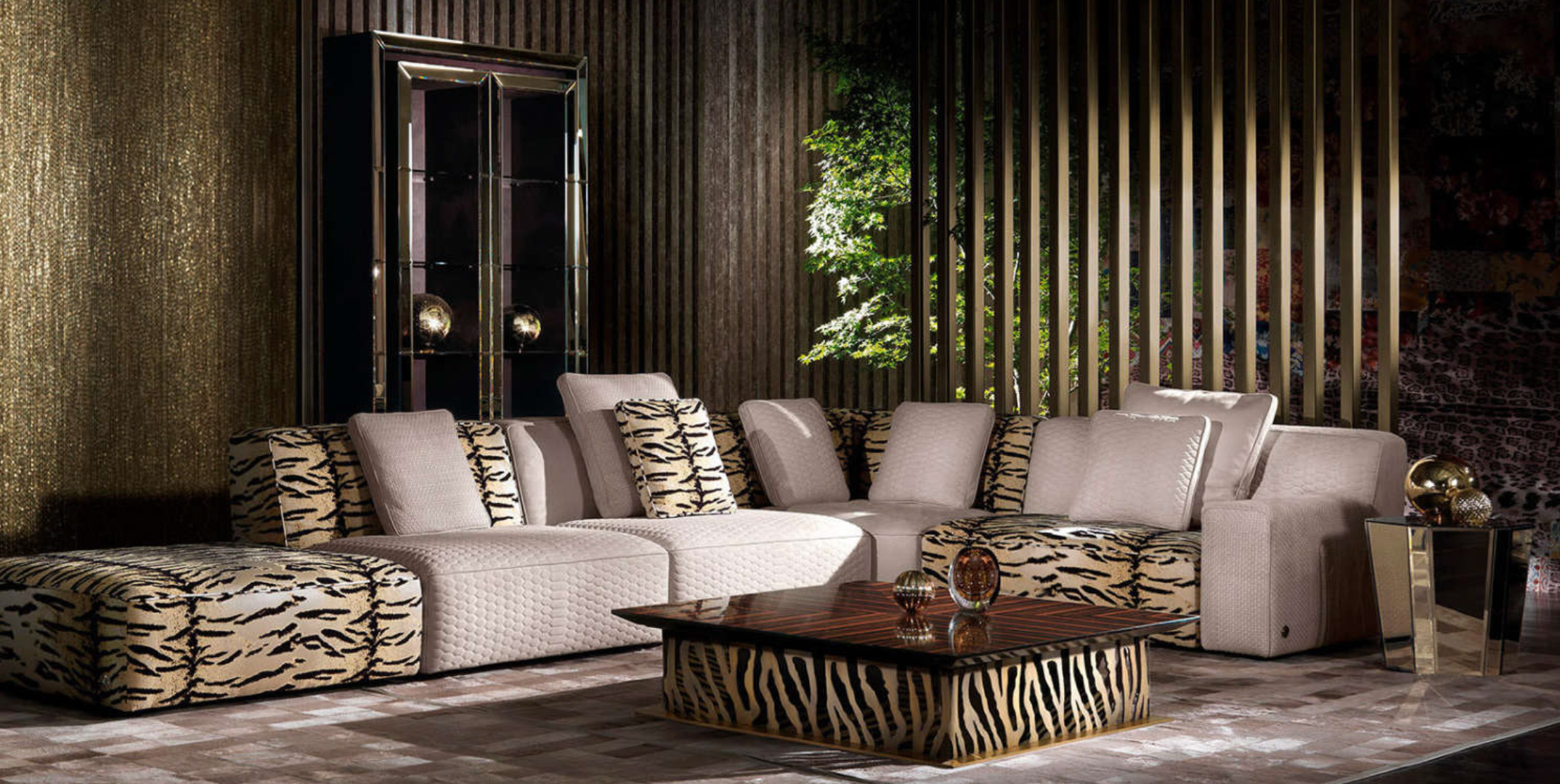
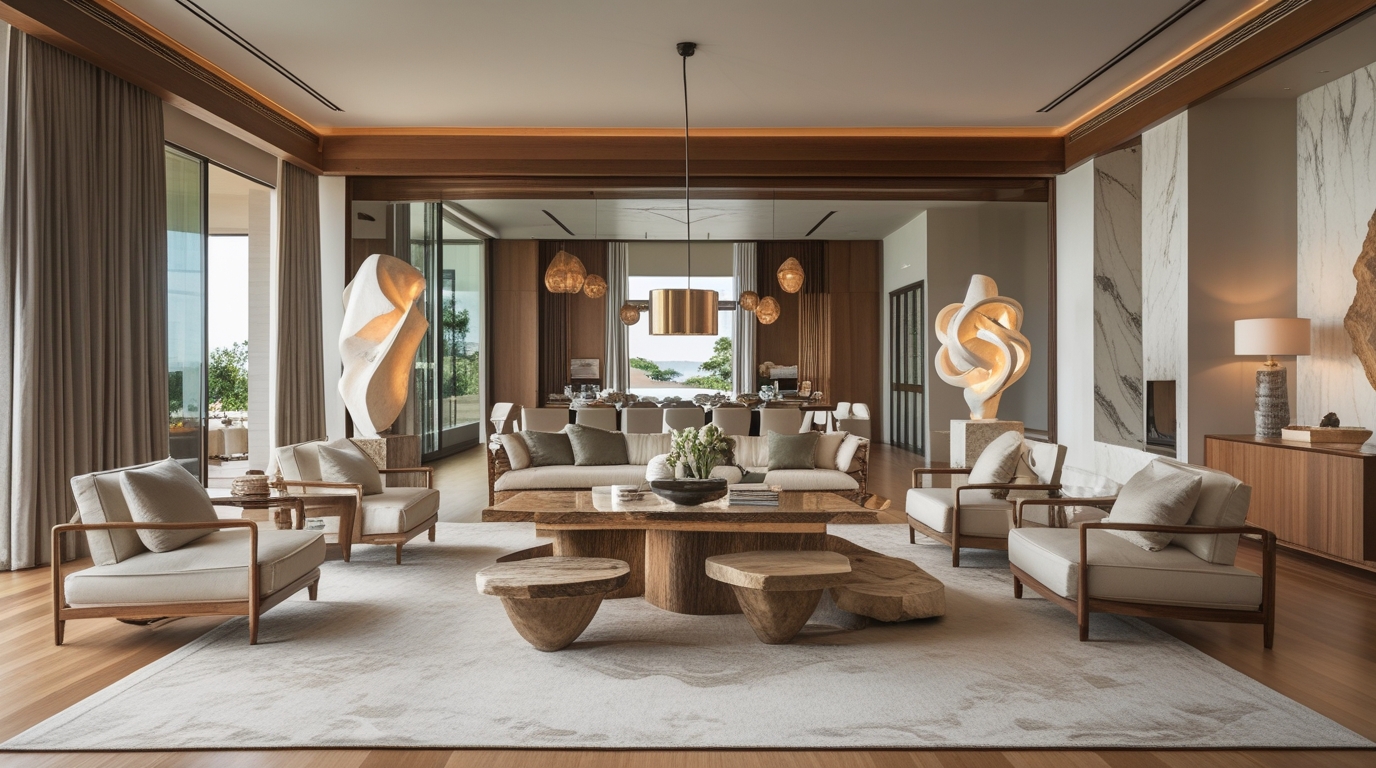
A lifestyle image can demonstrate how the sofa works within an interior.
A dimension diagram can communicate scale.
The customer should not have to guess what an image is intended to show.
Use Lifestyle Photography to Communicate Scale
One of the biggest problems with online furniture shopping is scale.
A product can look completely different when placed in a real room.
A dining table may appear compact in isolation but dominate a small dining area. A sofa may look relatively small in a product photograph but occupy a substantial amount of living space.
Lifestyle photography gives customers a frame of reference.
It can show:
- Furniture relative to people
- Furniture relative to doors and windows
- Seating arrangements
- Room proportions
- Walkways around the product
- How products work together
- Styling possibilities
For contemporary or premium furniture brands, lifestyle photography also communicates the environment associated with the collection.
It allows the customer to imagine the furniture within a finished interior.
That imaginative step can be commercially important.
Show the Details Customers Cannot Touch
A physical showroom gives customers an obvious advantage.
They can inspect materials directly.
An e-commerce website needs to compensate for some of that missing sensory experience.
Photography should therefore reveal details that customers may want to examine before ordering.
For timber furniture, this might include:
- Grain
- Edges
- Joinery
- Finish
- Surface texture
- Colour variation
For upholstered furniture:
- Fabric texture
- Stitching
- Seams
- Cushion construction
- Colour
- Weave
For metal furniture:
- Surface finish
- Welds
- Edges
- Coating
- Hardware
These details can be supported by written descriptions.
The combination is more powerful than either one alone.
Do Not Hide Product Information Behind Minimalist Design
A sophisticated furniture website does not need to be overloaded with text.
But it should not make essential information difficult to find.
This is an important distinction.
Minimalist website design can sometimes become so focused on visual simplicity that practical information is pushed below several layers of interaction.
Customers should be able to find:
- Dimensions
- Materials
- Colours
- Finishes
- Product variants
- Price
- Availability
- Delivery information
- Care instructions
- Warranty information
- Returns information
The interface can remain visually restrained while presenting considerable depth.
Good design organises information.
It does not simply remove it.
Build Product Pages Around the Buying Decision
The product page is often the most important page on an e-commerce furniture website.
It needs to move the customer from interest to confidence.
A strong structure might include:
Product name and concise positioning
Clearly identify the product.
Primary imagery
Present the product immediately.
Price and purchasing options
Make the commercial information obvious.
Short product summary
Explain the key value and design characteristics.
Variants
Present available sizes, finishes, colours and configurations clearly.
Detailed specifications
Provide measurements, materials and construction information.
Lifestyle imagery
Show the product within a realistic environment.
Delivery information
Explain how and when the product reaches the customer.
Care information
Help the customer understand ongoing maintenance.
Reviews
Provide genuine customer experiences where available.
Related products
Help customers explore complementary pieces.
This structure supports both browsing and serious evaluation.
Make Dimensions Impossible to Miss
Furniture dimensions should never be treated as secondary information.
For many customers, dimensions determine whether a purchase is possible.
A product page should clearly communicate:
- Width
- Height
- Depth
- Seat height where applicable
- Table height where applicable
- Weight where relevant
- Internal storage dimensions where useful
- Package dimensions where relevant
Diagrams can be particularly effective.
A photograph may show what a product looks like.
A dimension diagram shows whether it will physically fit.
Where appropriate, the website can also provide practical information such as recommended clearance around dining tables or the space required for reclining furniture.
The information should be presented carefully and factually rather than through unsupported generalisations.
Show Different Product Variants Properly
Furniture often comes in multiple configurations.
A sofa may have several sizes.
A dining table may be available in different lengths.
A chair may come in several upholstery colours.
A timber product may have different finishes.
The website should make these choices easy to understand.
When a customer changes a variant, the relevant product information should update clearly where appropriate.
Google specifically supports structured data for product variants, including furniture, allowing businesses to describe relationships between products that vary by attributes such as size, colour or material.
This is one example of why website architecture and e-commerce functionality should be considered alongside SEO.
Variants need to make sense to the customer and be represented clearly to search engines.
Give Each Image a Commercial Purpose
A large image gallery can look impressive without actually helping customers.
Instead of uploading numerous similar photographs, consider what each image contributes.
For example:
Image 1: Overall product presentation.
Image 2: Alternative angle.
Image 3: Lifestyle setting.
Image 4: Material detail.
Image 5: Scale reference.
Image 6: Configuration or variant.
Image 7: Construction detail.
This provides a sequence of information.
The customer starts with appearance and gradually moves towards evaluation.
Photography becomes part of the sales process rather than decoration around the product description.
Make Image Quality a Priority Without Making the Website Slow
Large furniture photographs are visually valuable, but they can also become technically expensive.
High-resolution imagery needs to be presented efficiently.
An e-commerce website should balance image quality with performance through appropriate:
- Image dimensions
- File formats
- Compression
- Responsive image delivery
- Lazy loading where appropriate
- Content delivery infrastructure
- Thumbnail sizing
The objective is not to make every image as small as possible.
It is to deliver an appropriate image at the appropriate size for the customer’s device.
A customer viewing a sofa on a desktop may need a large image.
A customer browsing on a mobile phone does not need the same file delivered at full resolution.
Website performance should therefore be considered during the photography and development workflow.
Design the Website Around How People Shop for Furniture
Furniture websites should not assume that every customer begins with a product name.
Some visitors know exactly what they want.
Others are still exploring.
Navigation should accommodate both.
Useful pathways might include:
Shop by category
Sofas, tables, chairs, beds, storage and other product types.
Shop by room
Living room, dining room, bedroom, home office and outdoor areas.
Shop by style
Contemporary, minimalist, classic or other relevant design categories.
Shop by material
Timber, metal, stone, leather, fabric and other appropriate materials.
Shop collections
Useful for brands with distinct design ranges.
The exact architecture should reflect the catalogue rather than forcing every furniture business into the same structure.
Use Search and Filters to Reduce Friction
As a furniture catalogue grows, customers need efficient ways to narrow their choices.
Useful filters may include:
- Product type
- Size
- Colour
- Material
- Finish
- Price
- Seating capacity
- Availability
- Collection
Filters should be based on attributes customers genuinely use.
Too many options can become confusing.
The objective is to reduce the distance between the customer’s starting point and the products that are actually relevant.
Search functionality can also help customers who already know what they are looking for.
A customer searching for a particular product should not have to navigate through several collection pages before finding it.
Use Copy to Support the Photography
Product photography creates visual information.
Copy adds context.
The product description should not simply repeat what the photograph already shows.
Instead, it should explain:
- What the product is designed for
- Materials used
- Important construction characteristics
- Available options
- Practical benefits
- Care requirements
- Delivery considerations
Avoid unsupported claims such as “the highest-quality sofa available” or “built to last forever.”
Specific information is more credible.
For example, explaining the timber species, upholstery composition or manufacturing process gives the customer something concrete to evaluate.
Make Material Information Specific
Material descriptions can significantly influence furniture purchasing decisions.
“Premium timber” is vague.
“Solid American oak with a clear matte finish” gives the customer much more useful information.
Similarly, a description of upholstery should provide appropriate information about the material and care requirements.
Where different finishes are available, explain the differences.
If natural materials can vary in grain or colour, communicate that appropriately.
This is particularly important for customers buying online because they cannot physically examine the sample before ordering.
Use Video Where It Adds Information
Video can provide another layer of product information.
A short product demonstration might show:
- A reclining mechanism
- Extendable dining table operation
- Storage compartments
- Adjustable components
- Sofa configurations
- Product assembly
- Material details
- Furniture being used within a room
A room walkthrough can also communicate scale more effectively than static photography.
Video should not be used simply because it is fashionable.
It should solve a communication problem.
If a mechanism is difficult to explain through photographs, video can be particularly useful.
Make the Brand Visible Through Website Design
Furniture is an emotional purchase as well as a practical one.
The website should communicate the character of the brand.
This includes:
- Typography
- Colour
- Photography style
- Layout
- Navigation
- Product presentation
- Tone of voice
- Graphic elements
- Use of space
A premium furniture brand should not necessarily look like a discount furniture marketplace.
Likewise, a contemporary furniture retailer should not imitate the visual identity of a traditional furniture business simply because a particular design is fashionable.
The website should reflect the actual brand position.
Consistency matters.
The same visual language should extend across the website, photography, social media, email and other customer touchpoints.
Use White Space Strategically
White space is particularly useful for furniture websites because it allows products to receive visual attention.
However, white space should support hierarchy rather than simply create empty areas.
Use it to separate:
- Product imagery
- Product information
- Collection sections
- Calls to action
- Specifications
- Related products
A customer should understand the hierarchy of the page without having to work it out.
Minimalism works when it creates clarity.
It becomes counterproductive when it creates ambiguity.
Build Trust Into the Purchase Experience
Furniture can represent a significant financial commitment.
The website therefore needs to answer the question:
Why should I trust this business with my money?
Trust can be supported through:
- Genuine customer reviews
- Product photography
- Detailed specifications
- Company information
- Contact details
- Physical showroom information
- Delivery policies
- Returns information
- Warranty details
- Secure payment options
- Clear customer support
- Project photography
- Designer or maker information
- Trade credentials where relevant
These elements do not need to dominate the homepage.
They need to be accessible when the customer is looking for reassurance.
Make Delivery Information Clear
Delivery can become one of the biggest sources of uncertainty in furniture e-commerce.
Furniture can be large, heavy and difficult to transport.
Customers may want to know:
- Where the business delivers
- Delivery costs
- Estimated lead times
- Whether delivery is to the door or inside the home
- Whether assembly is included
- What happens if access is difficult
- What customers should do if products arrive damaged
- Whether collection is available
The exact policies depend on the business.
The important principle is transparency.
Do not leave customers to discover major delivery conditions after they have reached checkout.
Explain Returns and Damage Procedures
Customers buying furniture online may be concerned about what happens if a product is unsuitable or arrives damaged.
Returns policies should be easy to find and written in clear language.
If certain products have different conditions, explain that clearly.
For example, custom-made furniture may operate under different terms from standard stock products.
Likewise, customers should understand what to do when a delivery arrives with visible damage.
Clear policies can reduce uncertainty and give customers more confidence before purchase.
Use Reviews as Product Information
Reviews can serve a purpose beyond social proof.
A useful furniture review can answer questions that the business itself may not fully anticipate.
Customers may discuss:
- Comfort
- Assembly
- Colour
- Scale
- Delivery
- Everyday use
- Quality
- Ease of maintenance
Where appropriate, reviews can be presented alongside the relevant product.
They should always be genuine.
The website should not manufacture testimonials or use exaggerated claims simply to create reassurance.
Authentic customer experience is more valuable.
Use Product Structured Data as Part of the E-Commerce Architecture
Website design has a technical side that customers may never see.
Product structured data helps search engines interpret information such as product names, offers, availability and other product attributes.
Google states that product markup can make eligible pages available for merchant listing experiences across Google Search and other surfaces, with information such as price, availability, shipping and returns potentially represented.
Google also recommends product structured data on individual product pages, rather than relying on category pages for product rich results.
This reinforces an important principle.
A product page should be treated as a complete digital representation of the product.
It needs to work for:
- Customers
- Search engines
- E-commerce platforms
- Advertising systems
- Internal sales teams
Technical SEO should therefore be considered during website development, not added after launch.
Make the Website Useful for Google Shopping and Product Discovery
Furniture businesses that sell online can also benefit from product discovery through search and shopping experiences.
Accurate product information becomes particularly important here.
The website should maintain consistency between:
- Product name
- Product description
- Price
- Availability
- Images
- Variants
- Delivery information
If the website says one thing while product feeds or structured data communicate something different, problems can arise.
Product information should therefore be managed systematically.
This becomes increasingly important as the catalogue grows.
Design for Mobile Furniture Research
Customers may browse furniture on mobile devices while:
- Sitting at home
- Visiting another showroom
- Comparing products
- Looking at social media
- Searching for design inspiration
- Sharing products with a partner
The mobile website should make product research straightforward.
Important elements include:
- Fast image loading
- Clear navigation
- Readable specifications
- Easy variant selection
- Accessible pricing
- Simple enquiry options
- Clear delivery information
- Easy checkout
Do not assume that mobile users only need a simplified version of the desktop experience.
They still need the information required to make a substantial purchasing decision.
The solution is better information hierarchy, not simply less information.
Make the Add-to-Cart Journey Obvious
Once customers have made their decision, the website should not create unnecessary obstacles.
The purchase journey should make it clear:
- What product is being purchased
- Which variant was selected
- Price
- Quantity
- Delivery charges
- Expected delivery timing
- Payment options
- Relevant policies
The interface should provide confidence without creating unnecessary distractions.
For premium furniture, this is particularly important because the customer may already have spent considerable time researching the product.
The final stage should feel straightforward.
Use Related Products to Increase the Value of Each Visit
Furniture is often purchased as part of a wider room.
A customer viewing a dining table may also need chairs.
Someone looking at a sofa may be interested in an armchair, coffee table or side table.
Related product recommendations can therefore be genuinely useful.
The key is relevance.
Do not recommend random products simply to increase the number of items displayed.
Instead, use logical relationships such as:
- Complete the collection
- Pair with this product
- Matching chairs
- Similar products
- Alternative sizes
- Other finishes
- Frequently purchased together
This helps customers continue exploring the catalogue.
Connect Photography With Social Media
The same professional photography used on product pages can support social media marketing.
A single furniture photoshoot can produce:
- Product images
- Lifestyle posts
- Instagram carousels
- Reels
- Pinterest content
- Website banners
- Collection pages
- Email campaigns
- Google Ads creative
This creates consistency between the brand’s social presence and its e-commerce website.
A customer who discovers a product on social media should recognise the same visual identity when they reach the website.
The transition should feel continuous.
Use Website Analytics to Identify Friction
Once the website is operating, customer behaviour can reveal where the experience needs improvement.
Businesses can examine:
- Product views
- Image interactions
- Product variant selections
- Add-to-cart rates
- Checkout progression
- Purchases
- Product-level revenue
- Returns
- Traffic sources
- Search queries
- Device performance
Suppose a product receives substantial traffic but few purchases.
The answer is not automatically “increase advertising.”
The business may need to investigate:
- Photography
- Price
- Product information
- Delivery costs
- Reviews
- Page speed
- Variant clarity
- Customer expectations
- Checkout friction
Similarly, a product that converts well but receives little traffic may represent an opportunity for SEO, Google Ads or social promotion.
Data should guide investigation rather than dictate simplistic conclusions.
Test Photography as Part of Conversion Improvement
Photography should not be treated as permanently fixed.
If a product is underperforming, consider testing different visual approaches.
For example:
- Studio image first versus lifestyle image first
- Different hero photography
- More detailed material shots
- Additional scale photography
- Different image order
- Video versus static presentation
The objective is not to test endlessly.
It is to identify whether customers have enough visual information to understand the product.
Changes should be assessed alongside commercial metrics rather than engagement alone.
Avoid Common Photography and Website Mistakes
Furniture businesses can lose sales through small presentation problems.
Only Showing One Product Image
Customers cannot properly evaluate the product from one angle.
Using Poorly Styled Lifestyle Images
The surrounding environment can make the furniture difficult to understand.
Hiding Dimensions
Customers need to know whether the product fits.
Generic Product Descriptions
Vague language does not answer practical questions.
Slow Image Loading
Beautiful photography loses value if customers abandon the page before it loads.
Weak Mobile Design
Furniture research increasingly happens across multiple devices.
Unclear Delivery Information
Unexpected logistics can create hesitation.
Difficult Variant Selection
Customers should know exactly which configuration they are purchasing.
Over-Designed Interfaces
Visual sophistication should not come at the expense of usability.
Treating the Website as a Catalogue Only
An effective e-commerce website should educate, reassure and facilitate purchasing.
Build a Photography and Website System Together
The best results come when photography and website design are planned together.
Before a photoshoot, identify the website’s requirements.
Determine which images will be needed for:
- Product pages
- Collection pages
- Homepage
- Category banners
- Social media
- Advertising
- Editorial content
Then plan photography accordingly.
A furniture business can save considerable time and cost when one well-organised production process creates assets for the entire digital marketing system.
The website team should also understand the photography plan.
Image dimensions, cropping, backgrounds, file sizes and responsive layouts should be considered before development is completed.
This prevents situations where beautiful photography does not work effectively within the website.
Measure Sales, Not Just Visual Engagement
A furniture business can receive significant social engagement without generating meaningful revenue.
The same applies to photography.
A beautiful product page may receive thousands of visits but few purchases.
Commercial measurement should therefore include:
- Product page visits
- Add-to-cart rate
- Checkout progression
- Conversion rate
- Revenue
- Average order value
- Product-level sales
- Returns
- Enquiries
- Assisted conversions
- Revenue by traffic source
For businesses selling custom or high-value furniture, enquiries and consultations may matter more than immediate online transactions.
The measurement framework should reflect the actual sales process.
The objective is not simply to make the website look better.
It is to improve the customer’s ability and willingness to make an informed purchase.
Think of the Website as a Digital Showroom
A physical furniture showroom gives customers the opportunity to explore.
They can see products from different angles, compare materials, ask questions and understand scale.
An e-commerce website should aim to recreate as much of that experience as practical.
It can provide:
- Multiple product views
- Room settings
- Detailed specifications
- Material information
- Product comparisons
- Customer reviews
- Videos
- Delivery information
- FAQs
- Related products
- Customer support
This is why website design has such a significant role in online furniture sales.
It is not merely the frame around the products.
It is the environment in which the customer evaluates them.
Conclusion
Product photography and website design can have a direct influence on how confidently customers evaluate furniture online.
Photography gives customers visual evidence. Website design organises that evidence. Product descriptions provide context. Specifications answer practical questions. Reviews build reassurance. Delivery and returns information reduce uncertainty. Navigation helps customers discover alternatives. Checkout removes the final barriers to purchase.
For furniture businesses, these elements need to work as one system.
A strong product page should make the customer feel that they understand the product despite not being able to physically inspect it. The photography should communicate appearance and detail, while the website provides the information needed to assess size, materials, variants, delivery and suitability.
There is also a technical dimension. Google currently supports product structured data for merchant listings and product snippets, while specific structured data is available for furniture variants such as different sizes, colours and materials.
Ultimately, good e-commerce design is not about making furniture look attractive online.
It is about giving customers enough visual and practical information to make a confident decision.
For furniture brands competing online, professional photography and thoughtful website design can therefore become important commercial assets. When supported by SEO, Google Ads, social media, e-commerce strategy and accurate measurement, they help turn product interest into meaningful customer action.
If your furniture business wants to improve how its products are presented and sold online, Home & Lifestyle Marketing Co can help assess the relationship between product photography, website structure, e-commerce functionality and the wider digital marketing strategy.
To learn more, please visit www.hlmco.com.au