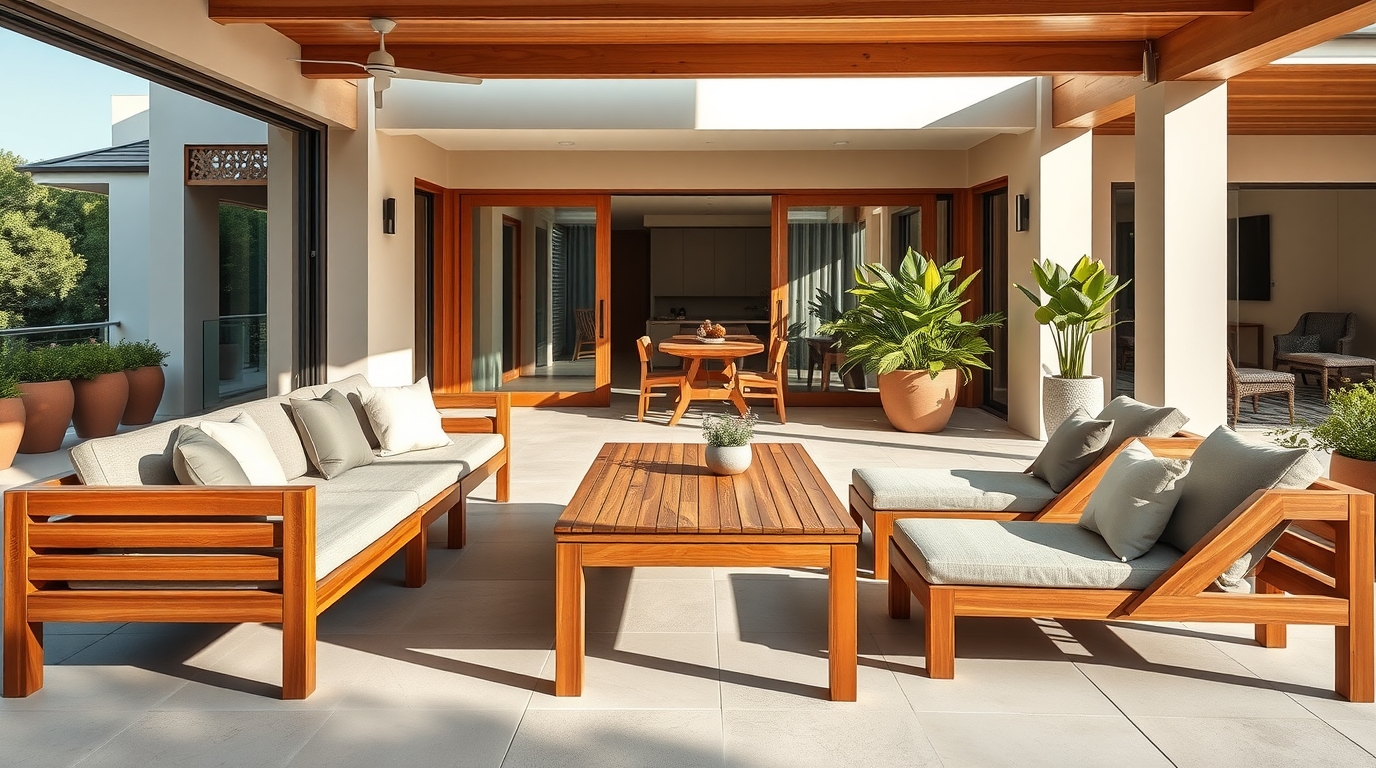

Outdoor living businesses operate in a market where customers rarely make purchasing decisions after seeing a single advertisement.
A new outdoor kitchen, pergola, pool area, deck, patio, garden room or complete outdoor entertaining space can represent a significant investment. Customers often spend weeks or months researching ideas, comparing materials, reviewing photographs, checking local businesses and considering what will work with their property.
That creates an important opportunity for digital marketing.
The objective is not simply to generate more website visitors. An outdoor living business needs to attract people who have a genuine interest in its products or services, help them understand what is possible, demonstrate credibility and make it easy to begin a conversation.
This requires several digital channels working together.
Google Ads can capture existing demand. SEO can build visibility for customers researching ideas and solutions. Local SEO can help businesses appear in relevant geographic searches. Social media can demonstrate completed projects and inspire potential customers. A professional website can turn that attention into enquiries.
The most effective approach is therefore not about choosing one digital channel and expecting it to produce every result. It is about building a connected customer journey from initial discovery through to enquiry, consultation, quotation and eventually sale.
Start With the Type of Lead You Actually Want
“More leads” sounds straightforward, but lead volume alone is not a useful measure of marketing performance.
An outdoor living business may receive enquiries from people who are:
- Looking for a very low-cost solution
- Outside the business’s service area
- Researching products without immediate buying intent
- Looking for DIY information
- Interested in a service the business does not provide
- Comparing prices without understanding the scope of the project
- Ready to discuss a substantial project
These enquiries have very different commercial value.
A useful digital marketing strategy therefore starts by defining the ideal customer.
For example, an outdoor living business may want enquiries from homeowners planning:
- A new entertaining area
- A custom outdoor kitchen
- A covered patio
- A pergola
- A premium deck
- A complete backyard renovation
- A poolside entertaining area
- A landscaped outdoor living space
The business should then build its website and marketing around these actual opportunities.
This helps move the focus from lead quantity to lead quality.
Google’s current measurement guidance distinguishes meaningful actions such as lead submissions from general website activity, while Google Ads also supports measurement of qualified and converted leads further through the sales journey.
Build a Website That Converts Outdoor Living Interest Into Enquiries
The website is usually the central asset connecting digital marketing channels.
A potential customer may discover an outdoor living business through an advertisement, organic search, social media or a recommendation. The website then needs to provide enough information to support the next decision.
A strong outdoor living website should make it easy to understand:
- What the business offers
- Which types of projects it undertakes
- Where it operates
- What its work looks like
- What materials or systems it uses
- How the process works
- What makes its approach different
- How customers can make an enquiry
The website should also demonstrate the scale and quality of the work.
For an outdoor living business, photographs are particularly important because customers are often trying to visualise what their own property could become.
A project gallery should therefore be more than a collection of attractive photographs.
Where possible, individual projects should explain the brief, constraints, solution and finished result.
This gives potential customers a better understanding of the business’s capabilities.
Create Dedicated Pages for High-Value Services
One common website problem is putting every outdoor living service onto one generic page.
A business offering pergolas, outdoor kitchens, decking and complete outdoor renovations may be better served by dedicated service pages.
For example:
- Outdoor Kitchens
- Pergolas
- Decking
- Covered Outdoor Areas
- Outdoor Entertaining Areas
- Patio Design
- Backyard Renovations
- Custom Outdoor Living
The exact structure should reflect the business’s real services.
Each page can then address the specific questions customers have about that service.
An outdoor kitchen page might discuss:
- Layout
- Materials
- Appliances
- Storage
- Weather exposure
- Installation
- Integration with existing outdoor areas
- Project planning
A pergola page could focus on:
- Size
- Design
- Materials
- Roof options
- Shade
- Integration with the house
- Planning considerations
- Installation
This makes the website more useful to customers and creates more relevant destinations for both organic search and paid advertising.
Use Project Photography as Lead-Generation Content
Outdoor living is inherently visual.
Customers want to see real examples before committing to a business.
Photography should therefore demonstrate more than the finished space from one angle.
Useful project imagery can include:
- Wide views
- Close-up construction details
- Materials
- Outdoor kitchens
- Seating areas
- Lighting
- Covered areas
- Landscaping integration
- Before-and-after photographs
- Different times of day
- Completed projects from several angles
The photographs should help prospective customers answer practical questions.
How much space is required?
How does the structure connect with the house?
What does the finished material look like?
How could an outdoor kitchen be arranged?
What does a covered entertaining area look like at night?
The stronger the visual evidence, the easier it becomes for a potential customer to imagine a project of their own.
Turn Completed Projects Into Case Studies
A project case study can be more commercially useful than a gallery containing dozens of photographs.
A strong case study can explain:
The brief
What did the customer want to achieve?
The property
What characteristics or limitations affected the design?
The challenge
Were there space, access, layout, material or usability considerations?
The solution
What did the business recommend and why?
The finished result
How does the completed outdoor area function?
This demonstrates expertise.
For example, instead of simply displaying a photograph of an outdoor kitchen, a business could explain how the kitchen was planned around entertaining requirements, available space and the relationship between cooking, seating and circulation.
That gives prospective customers a much clearer indication of how the business approaches real projects.
Use Local SEO to Capture Nearby Demand
Outdoor living is highly location-dependent.
Most customers are not searching for an outdoor living contractor hundreds of kilometres away. They are looking for businesses capable of visiting their property, assessing the site, supplying materials and completing the work.
This makes Local SEO particularly important.
A complete and accurate Google Business Profile helps businesses manage how they appear on Google Search and Maps, including business information, photos, services and customer reviews. Google states that local results are primarily influenced by relevance, distance and prominence.
An outdoor living business should therefore pay attention to:
- Accurate business information
- Correct business category
- Service area information
- Relevant services
- High-quality project photographs
- Genuine customer reviews
- Review responses
- Consistent contact information
- Links to relevant website pages
The website should reinforce this local relevance.
If a business genuinely serves several locations, relevant service-area pages can help customers understand where the business operates.
However, creating dozens of near-identical location pages simply by replacing the suburb name is unlikely to provide much value.
Useful local pages should contain genuinely relevant information, such as completed projects, service details, local considerations and clear evidence that the business actually serves that market.
Target Customers With Google Ads When They Are Ready to Act
SEO can take time to build.
Google Ads provides another way to appear when potential customers are actively searching for a service.
Consider the difference between:
outdoor kitchen ideas
and
custom outdoor kitchen contractor near me
The first may represent research.
The second may indicate a much stronger commercial intention.
This does not mean informational searches are worthless. They can form part of the longer buying journey.
But an advertising strategy should understand the difference between searches that indicate immediate service demand and those that are primarily exploratory.
Campaigns can be structured around important commercial services rather than putting every keyword into one campaign.
For example:
- Outdoor kitchens
- Pergolas
- Decking
- Outdoor renovations
- Covered patios
- Outdoor entertaining areas
This allows ad messaging and landing pages to be more closely aligned with the customer’s search.
Send Google Ads Traffic to Relevant Landing Pages
One of the simplest ways to weaken a Google Ads campaign is to send every click to the homepage.
Someone searching for:
custom outdoor kitchen
should ideally arrive at a page specifically about outdoor kitchens.
That page can show:
- Outdoor kitchen projects
- Design options
- Materials
- Appliances
- Process
- Frequently asked questions
- Service area
- Enquiry options
The customer immediately sees that they have arrived at a business relevant to their search.
The same principle applies to pergolas, decking and other services.
Google Ads conversion tracking can measure actions such as leads and phone calls, helping businesses understand which campaigns and keywords are producing valuable activity rather than simply counting clicks.
Write Ads Around Customer Intent
Outdoor living advertising should answer the customer’s immediate question.
Instead of relying on vague claims such as “Transform Your Backyard”, an advertisement might communicate:
- Custom outdoor kitchens
- Designed for your outdoor space
- Outdoor entertaining solutions
- Local design and installation
- View completed outdoor projects
- Request a project consultation
The precise wording should reflect what the business can genuinely offer.
The landing page then needs to support the promise made in the advertisement.
This creates a consistent path:
Search → Advertisement → Relevant page → Evidence → Enquiry
The fewer gaps between these stages, the easier it is for customers to understand the offer.
Use Negative Keywords to Protect Advertising Spend
Not every search containing an outdoor living term represents a commercially useful opportunity.
Depending on the business, irrelevant searches could include:
- DIY
- Free plans
- Jobs
- Training
- Courses
- Second-hand products
- Repairs
- Unrelated product searches
Negative keywords can help prevent ads from appearing for searches that are not relevant to the business.
Search-term data can then be reviewed regularly to identify new irrelevant queries and opportunities for more targeted keywords.
The goal is not simply to reduce the number of clicks.
It is to reduce wasted spend while improving the relevance of the traffic reaching the website.
Use SEO to Capture Customers Earlier in the Buying Journey
Not every potential customer is ready to request a quote.
Someone may be considering an outdoor kitchen but still be deciding between different layouts.
Another customer may be researching the best materials for a covered entertaining area.
Another may be trying to understand whether a pergola is appropriate for their property.
Useful SEO content can reach these customers earlier.
Examples include:
- How to Plan an Outdoor Entertaining Area
- What to Consider When Designing an Outdoor Kitchen
- How to Choose Materials for an Outdoor Living Project
- Outdoor Kitchen Layout Ideas
- How Much Space Does an Outdoor Kitchen Need?
- Covered Outdoor Area Design Considerations
- How to Combine Seating, Cooking and Entertaining Areas
- Common Outdoor Renovation Planning Mistakes
The content should be genuinely useful.
The objective is not to create articles simply because a keyword has search volume.
Good content can introduce a potential customer to the business, demonstrate expertise and create a pathway toward relevant services.
Make the Website Useful for High-Consideration Purchases
Outdoor living projects often involve more than a simple product transaction.
Customers may need to consider:
- Property layout
- Budget
- Materials
- Weather exposure
- Maintenance
- Council or planning considerations
- Construction requirements
- Existing structures
- Electrical or plumbing requirements
- Landscaping
- Furniture
- Lighting
- Long-term usability
The website should help customers understand these issues where they fall within the business’s expertise.
This is where educational content becomes commercially valuable.
A customer who understands the factors involved in planning an outdoor kitchen may be more prepared to discuss their requirements with a professional.
The content is therefore not separate from lead generation.
It supports the decision that eventually creates the lead.
Use Social Media to Demonstrate the Work
Social media can be particularly effective for outdoor living businesses because the work is visually compelling.
Useful content can include:
- Before-and-after projects
- Construction progress
- Material details
- Outdoor kitchens
- Pergola installations
- Decking transformations
- Lighting
- Completed entertaining spaces
- Short walkthrough videos
- Design decisions
- Common planning mistakes
- Maintenance advice
However, social media should not become an endless stream of finished-project photographs without context.
Explain what customers are seeing.
A short video could show how an outdoor kitchen has been arranged and explain why the cooking, preparation and seating areas were positioned in particular places.
A project photograph can be accompanied by a short explanation of the brief and the solution.
This makes the content more informative and demonstrates professional judgement.
Use Video to Show Scale and Function
Photography can show a finished outdoor area.
Video can demonstrate how it works.
A short project walkthrough might show:
- Movement between zones
- Seating arrangements
- Kitchen layout
- Storage
- Lighting
- Roof systems
- Opening and closing mechanisms
- Relationship with the house
- Views across the completed space
Video can also help demonstrate craftsmanship.
Short clips from installation or construction can show the process behind the finished result.
This type of content can be reused across the website, social media and other digital channels.
The objective is not to produce highly polished video for every project.
A useful, well-shot walkthrough can often communicate more than a long promotional presentation.
Make Reviews Part of the Lead Journey
Outdoor living projects can involve substantial investment.
Customers want reassurance that the business communicates well, completes quality work and delivers what it promises.
Genuine reviews can contribute to that reassurance.
However, businesses should not treat reviews simply as a number.
The content can be valuable.
A customer discussing the design process, communication, workmanship and completed project provides more context than a generic five-star rating.
Where appropriate, reviews can be displayed alongside relevant project photographs.
This creates a stronger connection between:
What the business says it does
and
What customers say their experience was like.
Businesses should request genuine feedback and avoid manufactured testimonials or incentives that compromise authenticity.
Build Trust Through Clear Project Information
Trust is not created by saying “trusted experts” repeatedly.
It is created by evidence.
An outdoor living website can demonstrate credibility through:
- Completed projects
- Detailed case studies
- Customer reviews
- Team information
- Years of relevant experience where accurately stated
- Qualifications or memberships where relevant
- Material information
- Clear service descriptions
- Transparent processes
- Professional photography
- Clear contact information
The more expensive or complex the project, the more useful this evidence becomes.
A customer considering a major outdoor renovation may spend considerable time reviewing the website before making contact.
The website should reward that research.
Give Customers a Clear Reason to Enquire
A contact page saying “Get in touch” is functional, but it may not give customers enough context.
The call to action should explain what happens next.
Examples include:
Discuss Your Outdoor Living Project
or
Request a Project Consultation
or
Talk to Our Team About Your Outdoor Space
The surrounding copy can then explain what information the customer should provide.
For example:
Tell us about your outdoor space, what you would like to achieve and your preferred timeframe. Our team can then discuss the project and explain the next steps.
This feels more useful than simply presenting a blank form.
Keep Lead Forms Simple but Useful
A lead form should collect enough information to help the business qualify an enquiry without creating unnecessary friction.
Potential fields might include:
- Name
- Phone
- Location
- Project type
- Brief description
- Approximate timeframe
For higher-value projects, an approximate budget range may sometimes be useful if the business genuinely needs it to assess suitability.
But every additional field creates another opportunity for abandonment.
Google’s Analytics guidance specifically recommends measuring how many users reach a lead form, start it and submit it so businesses can identify where people drop out of the process.
This makes the form itself something that can be tested and improved.
Make Phone Enquiries Easy to Track
Outdoor living customers may prefer to call rather than complete a form.
A website should make the phone number easy to find, particularly on mobile.
If paid advertising is being used, call tracking can help connect phone enquiries with marketing activity.
Google Ads supports conversion measurement for phone calls as well as website actions.
This can provide a more complete picture of lead generation.
Otherwise, a business may see a large number of website form submissions while missing the fact that another important portion of enquiries is arriving by telephone.
Connect Digital Marketing Channels
The strongest outdoor living marketing strategies do not treat every channel as an isolated activity.
Consider a potential customer who sees a completed outdoor kitchen project on social media.
They visit the website.
They read the project case study.
A few weeks later, they search Google for outdoor kitchen contractors.
They see a paid advertisement or organic result.
They return to the website.
They review other projects and testimonials.
They submit an enquiry.
No single channel necessarily created the entire customer journey.
The channels supported one another.
This is why an outdoor living business should think beyond individual campaigns.
Google Ads can capture immediate intent.
SEO can build long-term search visibility.
Local SEO can strengthen geographic discovery.
Social media can demonstrate projects and generate inspiration.
The website can provide evidence and convert interest into enquiries.
Reviews can reinforce trust.
Email or remarketing activity, where appropriate, can help maintain awareness during a longer decision process.
Retarget Potential Customers Who Are Still Researching
Outdoor living projects can have a longer consideration period.
A visitor may look at several project pages without enquiring.
That does not necessarily mean they were uninterested.
They may be:
- Discussing the project with a partner
- Comparing businesses
- Waiting for a suitable time
- Working through their budget
- Researching design options
- Planning around another renovation
Depending on the business and its privacy-compliant marketing setup, remarketing can help maintain visibility among people who have previously interacted with the website.
The message should remain useful.
A customer who has viewed outdoor kitchen projects might later see content about planning an outdoor kitchen rather than an unrelated general advertisement.
The objective is to remain relevant during the research process rather than repeatedly displaying the same sales message.
Measure Leads Through to Sales
This is one of the most important parts of digital marketing for outdoor living businesses.
A form submission is not necessarily a sale.
A useful reporting structure could look like:
Website visitor → Enquiry → Qualified enquiry → Consultation → Quote → Accepted quote → Project revenue
This allows the business to identify where marketing is actually contributing commercial value.
For example, one advertising campaign might produce 20 enquiries, but only two qualified opportunities.
Another might produce eight enquiries, of which five become serious projects.
Looking only at enquiry volume would make the first campaign appear stronger.
Looking at lead quality provides a different picture.
Google currently supports measurement of qualified and converted leads within Google Ads, allowing businesses to connect online lead generation with later stages of the sales process.
That is particularly relevant for outdoor living businesses because many projects are quoted and sold offline.
Track the Economics of Lead Generation
Digital marketing should ultimately be assessed against the economics of the business.
Useful measures can include:
- Cost per enquiry
- Cost per qualified enquiry
- Consultation rate
- Quote rate
- Quote acceptance rate
- Average project value
- Gross profit by project
- Revenue generated
- Revenue by marketing channel
- Repeat and referral business
Suppose an outdoor living business spends $2,000 on Google Ads.
If that produces 40 low-quality enquiries, the headline cost per lead is $50.
But if only one becomes a profitable project, the business needs to ask a different question.
What did that marketing spend contribute to qualified opportunities and actual revenue?
This is why lead generation should never be reduced to a single cost-per-lead figure.
Avoid Marketing to Everyone
Outdoor living businesses often provide multiple services.
That does not mean every potential customer should see the same message.
Different customers have different motivations.
Someone planning a small deck may have very different priorities from someone planning a complete outdoor entertaining area.
A homeowner considering an outdoor kitchen may care about:
- Cooking
- Appliances
- Storage
- Entertaining
- Layout
- Materials
Someone considering a pergola may focus more on:
- Shade
- Weather protection
- Outdoor comfort
- Appearance
- Integration with the property
The website and marketing should reflect these differences.
Specific marketing usually produces clearer customer journeys than a generic message attempting to cover everything.
Use Seasonal Demand Intelligently
Outdoor living demand can change throughout the year.
Customers may research projects well before they are ready to start construction.
This makes seasonality important when planning content and advertising.
A business might develop content and campaigns around:
- Entertaining
- Summer preparation
- Outdoor kitchens
- Covered areas
- Garden improvements
- Spring projects
- Holiday entertaining
However, seasonal marketing should reflect the actual market and business capacity.
There is little value in generating a large volume of enquiries during a period when the business cannot realistically respond or complete additional projects.
Marketing and operational capacity need to be considered together.
Respond Quickly and Professionally
Digital marketing can generate an enquiry, but the sales process determines what happens next.
A strong website cannot compensate for consistently slow follow-up.
The business should have a clear process for:
- Receiving enquiries
- Reviewing project information
- Making initial contact
- Qualifying the opportunity
- Arranging consultations
- Preparing quotations
- Following up appropriately
This is particularly important when advertising spend is involved.
Every lead represents a marketing cost.
If qualified enquiries are not followed up effectively, part of that investment is lost after the marketing channel has already done its job.
Common Digital Marketing Mistakes in Outdoor Living
Several mistakes can reduce the commercial value of digital marketing.
Focusing on traffic instead of enquiries
More visitors are not automatically more customers.
Sending every visitor to the homepage
Different services need relevant landing pages.
Showing beautiful photographs without explaining the projects
Customers need to understand capability, not just appearance.
Using generic service descriptions
Specific information makes it easier for customers to understand what is being offered.
Ignoring local search
Outdoor living is usually geographically constrained.
Running Google Ads without conversion tracking
Without measurement, it becomes difficult to understand what advertising is actually producing.
Counting every form submission as a valuable lead
Lead quality matters.
Neglecting mobile users
Customers frequently research businesses from mobile devices.
Publishing social content without a commercial pathway
Inspiration is useful, but interested customers need an easy route to the website and enquiry process.
Treating SEO as a collection of blog posts
Service pages, project pages, technical SEO and site structure are all important.
Failing to update project evidence
An outdated portfolio can make an active business look inactive.
A Practical Digital Lead-Generation Framework
An outdoor living business can use the following framework to assess its digital marketing.
1. Define the ideal projects
Identify the services, project sizes, locations and customer types that are commercially important.
2. Strengthen the website
Create clear service pages, project portfolios, case studies, trust signals and enquiry pathways.
3. Improve local visibility
Keep the Google Business Profile accurate and build genuine local relevance through the website, reviews and project evidence.
4. Build organic search visibility
Create useful service pages and content that addresses genuine customer questions.
5. Capture existing demand with Google Ads
Target relevant commercial searches and direct traffic to matching landing pages.
6. Use social media to demonstrate expertise
Show projects, processes, materials and design decisions rather than relying entirely on promotional posts.
7. Make enquiries easy
Use clear calls to action, straightforward forms and visible phone contact.
8. Track meaningful actions
Measure forms, calls and other genuine lead actions as part of the marketing funnel. Google Analytics supports measuring meaningful interactions as key events, while Google Ads can use conversion data for campaign measurement and optimisation.
9. Measure lead quality
Track which enquiries become consultations, quotes and projects.
10. Improve continuously
Use marketing data and actual sales outcomes to refine campaigns, landing pages, content and targeting.
Digital Marketing Should Help Customers Make a Confident Decision
Outdoor living is a natural fit for digital marketing because customers often begin their journey by looking for ideas.
They browse completed projects.
They search for solutions.
They compare materials.
They look at photographs.
They read reviews.
They search for local businesses.
They consider budgets and options.
Eventually, they look for someone they can trust to turn the idea into a real project.
The role of digital marketing is to support that journey.
A strong website gives customers the information they need. SEO helps them discover the business while researching. Local SEO improves visibility among customers in the relevant service area. Google Ads can capture searches where purchase intent is already present. Social media demonstrates the quality and character of the work. Reviews provide customer evidence. Conversion tracking shows which activities are producing meaningful enquiries.
The commercial objective is not simply to make an outdoor living business more visible.
It is to make the business visible to the right people, give those people enough confidence to engage and create a clear path from initial interest to qualified enquiry.
For businesses selling substantial outdoor living projects, that distinction matters.
More traffic may look positive in a report. More qualified opportunities, consultations, accepted quotations and profitable projects are much closer to the actual business objective.
If your business operates in the home and lifestyle sector and you would like to improve the quality of your digital marketing and lead generation, Home & Lifestyle Marketing Co can help assess how your website, Google Ads, SEO, Local SEO and social media can work together to create a more effective customer journey.
To learn more, please visit www.hlmco.com.au