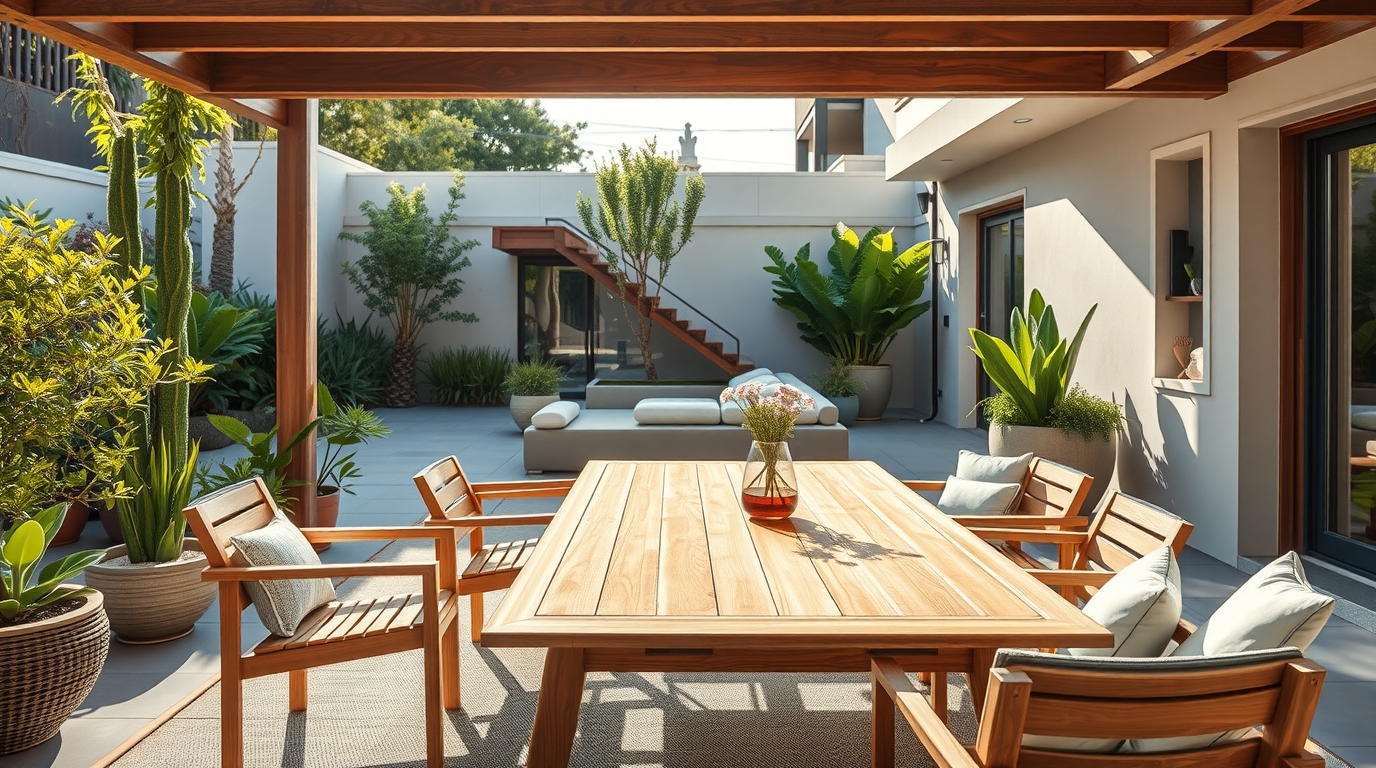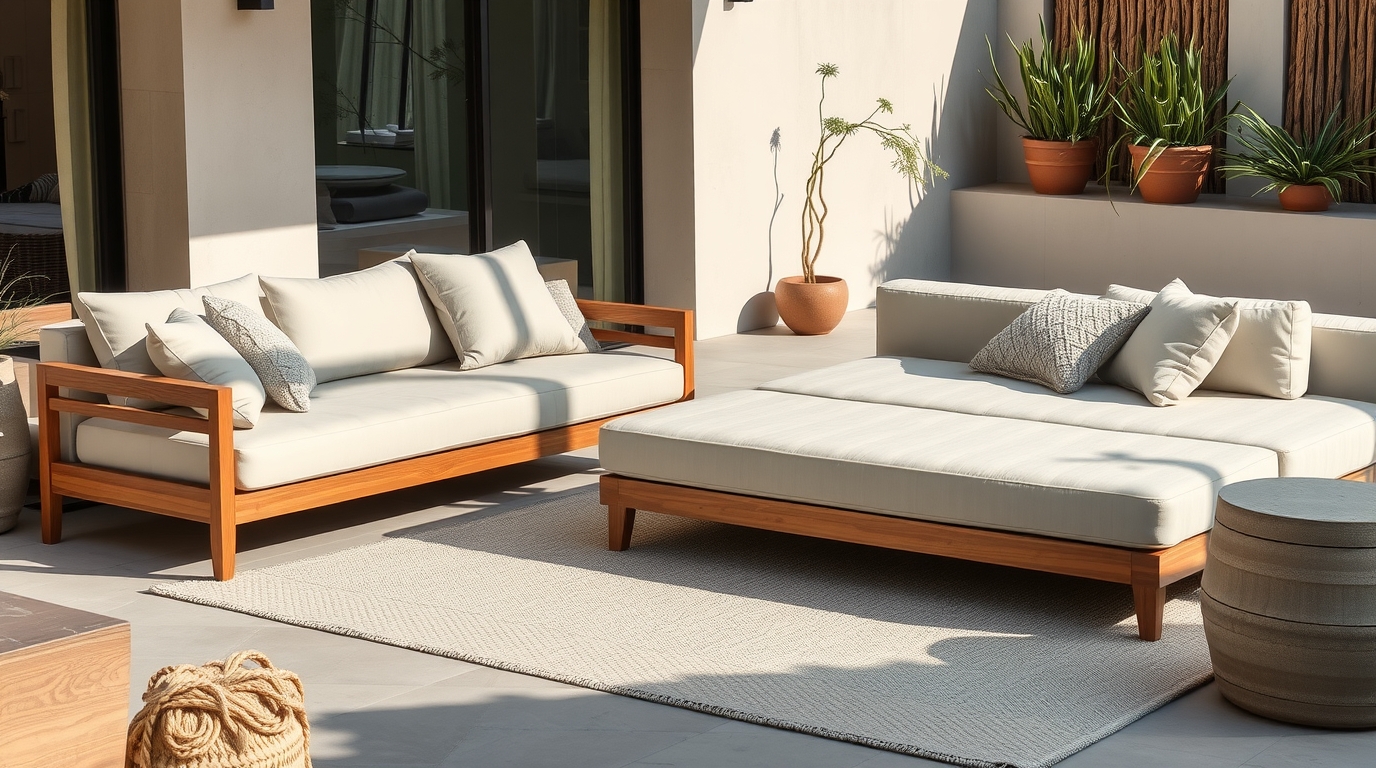

Outdoor living covers an unusually broad commercial market.
At one end sits a homeowner ordering a NZ$150 outdoor side table online.
At the other is someone planning a complete outdoor kitchen, pergola and entertaining area worth tens of thousands of dollars.
Between those points are:
- outdoor dining settings
- lounge furniture
- umbrellas
- heaters
- fire pits
- bar furniture
- modular sofas
- outdoor appliances
- shade systems
- storage
- cooking equipment
- accessories
Google Ads can help businesses promote all of these products and services, but the campaign strategy should reflect how each one is actually purchased.
A customer shopping for outdoor cushions may be ready to transact online within minutes.
Someone considering a custom outdoor kitchen may spend weeks comparing designs, materials, installers and prices before requesting a consultation.
Those two customers should not be treated as though they are following the same journey.
For New Zealand outdoor living businesses, effective Google advertising therefore begins by distinguishing between:
product sales
and:
project enquiries
The objective is not simply to generate clicks.
It is to use paid search and product advertising to attract the right customers, send them to relevant pages and produce sales or qualified opportunities at a commercially sensible cost.
Why Google Ads Suits the Outdoor Living Market
Many outdoor living purchases begin with active research.
A homeowner may search:
- outdoor kitchen Auckland
- outdoor furniture NZ
- outdoor dining set
- pergola with outdoor kitchen
- outdoor sofa New Zealand
- BBQ kitchen installation
- outdoor heater
- teak outdoor table
- outdoor furniture Christchurch
These searches indicate different levels of intent.
Some are clearly transactional.
Others suggest a customer is still researching a larger project.
Google Ads can be useful because advertising can appear when the customer is already expressing that interest rather than requiring the business to create demand from scratch.
That differs from social media.
A person scrolling through Instagram may admire an outdoor kitchen without any immediate intention to purchase one.
Someone typing “outdoor kitchen installer Auckland” is signalling something considerably more specific.
This is why paid search can become a valuable part of the customer-acquisition mix.
Decide Whether the Campaign Is Selling a Product or Generating a Lead
This distinction should influence almost every campaign decision.
Outdoor Furniture Retail
The objective may be:
- online transaction
- product sale
- category sale
- showroom visit
Useful measures include:
- purchases
- revenue
- average order value
- cost per sale
- return on advertising spend
- gross margin
Outdoor Kitchen or Installation Business
The objective may be:
- enquiry
- consultation
- design meeting
- quote request
- site visit
Useful measures include:
- qualified enquiries
- consultation bookings
- quotations
- projects won
- cost per qualified enquiry
- average project value
- gross profit
Reporting should reflect this difference.
A campaign producing 100 furniture transactions can reasonably be evaluated differently from a campaign generating 10 outdoor kitchen consultations.
The platform may be the same.
The commercial objective is not.
Search Campaigns Can Capture High-Intent Project Demand
Search campaigns can be particularly useful for installation and design services.
Relevant searches might include:
- outdoor kitchen installer
- custom outdoor kitchen
- outdoor kitchen design
- built-in BBQ kitchen
- outdoor kitchen Auckland
- outdoor kitchen Christchurch
These searches suggest the customer is looking for professional help rather than general inspiration.
Advertisements should make the service clear.
For example, useful messaging could mention:
- custom outdoor kitchens
- design and installation
- specific service areas
- consultation availability
- integrated appliances
- weather-resistant materials
The ad should help the searcher determine whether the business matches their need.
Generic phrases such as:
Transform your outdoor lifestyle
may sound attractive but explain almost nothing.
Search advertising works better when customers quickly understand what is being offered.
Geographic Targeting Is Essential for Installation Businesses
Outdoor kitchens and related construction services are normally limited by geography.
A company based in Auckland may not want enquiries from Invercargill.
Google Ads allows advertisers to target geographic locations and proximity areas. Google advises advertisers to review location targeting carefully because campaigns without relevant location targeting can show much more broadly than intended.
A business might target:
- Auckland
- North Shore
- Tauranga
- Hamilton
- Wellington
- Christchurch
- Queenstown
depending on genuine service coverage.
The objective should be to concentrate spend where the business can actually deliver work profitably.
National visibility is impressive only until the sales team spends half the day politely explaining that no, the company will not install one barbecue bench 900 kilometres away.
Different Locations May Justify Different Campaigns
Regional campaigns can also be useful where:
- competition varies
- delivery charges differ
- service capacity differs
- customer values differ
- particular products sell better
For example, a furniture retailer might have different delivery economics for Auckland and the South Island.
A project-based business may have teams in Auckland and Christchurch but not elsewhere.
Separate campaigns can give the advertiser greater control over:
- budgets
- bids
- ad wording
- landing pages
- performance reporting
The structure should follow operational reality rather than creating unnecessary complexity.
Shopping Campaigns Can Be Powerful for Outdoor Furniture
Product-based businesses have another major opportunity: Shopping advertising.
Shopping-style results can present customers with information such as:
- product image
- title
- price
- retailer
- availability
before the person reaches the website.
That format suits visually appealing products such as:
- outdoor sofas
- dining settings
- umbrellas
- lounge chairs
- tables
- fire pits
- accessories
But Shopping performance depends heavily on product data.
Google Merchant Center tracks details including product visibility, price, availability and shipping estimates.
The product feed therefore becomes part of advertising strategy.
A badly written feed can undermine an otherwise attractive website.
Product Titles Should Be Specific
A product title such as:
Outdoor Table
provides very little information.
A stronger title might be:
8-Seater Teak Outdoor Dining Table – 220 cm
depending on the actual product.
Useful attributes could include:
- product type
- material
- seating capacity
- size
- collection
- major feature
Titles should remain readable rather than becoming keyword warehouses.
Customers should understand what they are looking at quickly.
Product Images Matter Before the Click
Outdoor furniture is a highly visual purchase.
In Shopping placements, the customer may compare several products visually before visiting any website.
Images should therefore:
- represent the actual product
- be high quality
- show the product clearly
- avoid unnecessary visual clutter
- remain consistent with the landing page
Lifestyle images can be persuasive on the website, but primary product imagery should still make the actual item easy to identify.
The advertisement is not merely competing on price.
It is competing for attention.
Availability Must Match Reality
Stock accuracy is especially important for furniture.
Some products may be:
- in stock
- sold out
- backordered
- available for preorder
Google requires Merchant Center availability information to match what appears on the product landing page and checkout experience. For preorder or backordered products, expected availability information must also be supplied.
This matters commercially as well as technically.
A customer clicking an advertisement for a dining setting marked “in stock” is unlikely to appreciate discovering that the next shipment is actually three months away.
Accurate advertising reduces disappointment and wasted clicks.
Shipping Information Is Especially Important for Large Products
Outdoor furniture creates complicated freight questions.
A customer may be purchasing:
- a large table
- six chairs
- a modular sofa
- an umbrella
- several heavy bases
Delivery may differ depending on:
- region
- rural address
- product dimensions
- freight company
- assembly
- delivery type
Google Merchant Center allows retailers to supply shipping speed and cost information, including product-specific shipping where required. Google specifically notes that shipping speed and cost are common reasons customers abandon purchases.
That makes accurate shipping information a conversion issue, not merely an administrative detail.
A customer considering a NZ$4,000 outdoor setting should not reach the final checkout step before learning that freight adds several hundred dollars.
Search Ads Still Matter for Retail Categories
Shopping is not the only useful format for furniture retailers.
Search campaigns can capture broader category demand.
For example:
- luxury outdoor furniture NZ
- outdoor dining furniture Auckland
- teak outdoor furniture
- coastal outdoor furniture
- weather-resistant outdoor sofa
A category search may lead to a collection page rather than a single product.
That customer may want to compare:
- several tables
- different materials
- price points
- styles
The landing page should support that behaviour.
Do not send every search to the home page.
Outdoor Kitchens Need Dedicated Landing Pages
A homeowner clicking an outdoor kitchen advertisement should land on a page that answers their likely questions.
Useful information might include:
- types of outdoor kitchens
- materials
- appliances
- design options
- installation process
- service areas
- project photographs
- approximate pricing factors
- consultation process
- enquiry form
The page should make the next step obvious.
If the advertisement promises:
Custom Outdoor Kitchens – Design & Installation
the landing page should immediately confirm that the business provides exactly that.
The customer should not have to search through six menus to discover whether installation is included.
Product Advertising Needs Strong Category and Product Pages
Retail advertisements should send customers to pages that are:
- fast
- mobile-friendly
- visually clear
- accurate
- easy to purchase from
Useful product information may include:
- dimensions
- materials
- colours
- care
- warranty
- stock
- delivery
- assembly
- returns
Outdoor products may also need guidance regarding:
- coastal exposure
- sun
- rain
- wind
- storage
- protective covers
Good advertising cannot compensate indefinitely for poor product information.
Paid traffic simply helps more people discover the problem faster.
Negative Keywords Can Reduce Wasted Search Spend
Installation businesses may attract unrelated searches.
For example:
- DIY outdoor kitchen plans
- outdoor kitchen jobs
- outdoor kitchen course
- second hand outdoor kitchen
- free BBQ plans
Depending on the business, those searches may not represent useful prospects.
Negative keywords can help exclude clearly irrelevant intent.
The same principle applies to retailers.
A premium outdoor furniture company may discover traffic from:
- free furniture
- used furniture
- pallet furniture plans
- outdoor furniture repair
Search-term reviews should be ongoing because customers remain endlessly inventive in the ways they phrase things.
Do Not Assume Cheap Clicks Are Better
Imagine two campaigns.
Campaign A
Average click: NZ$2
100 clicks
One qualified enquiry
Campaign B
Average click: NZ$7
40 clicks
Eight qualified enquiries
Campaign B costs more per click but may be far more commercially valuable.
The same applies to e-commerce.
A retailer could purchase cheap traffic that rarely converts.
Another campaign may attract expensive but highly motivated product searches and produce profitable sales.
The correct metric depends on the business model.
For project services, look at:
- cost per qualified enquiry
- cost per consultation
- cost per won project
For retail:
- cost per transaction
- conversion rate
- advertising cost relative to revenue
- gross profit
Clicks are an input.
They are not the final objective.
Calculate Marketing Economics Before Increasing Spend
Suppose an outdoor kitchen business has:
Average project revenue: NZ$25,000
Average gross profit: NZ$8,000
Qualified enquiry-to-sale rate: 20%
If five qualified enquiries statistically produce one sale, the business can begin estimating what a qualified enquiry may be worth.
That does not mean it should spend the entire expected profit acquiring the customer.
There are still:
- overheads
- sales costs
- design time
- site visits
- capacity constraints
But this calculation creates a rational starting point.
The same principle applies to furniture.
Suppose a dining setting sells for NZ$3,000 but has relatively thin margins and expensive freight.
A campaign generating NZ$10,000 of revenue is not necessarily healthy if acquisition and fulfilment costs consume most of the margin.
Google Ads should be evaluated against commercial economics rather than revenue screenshots designed to make everyone feel productive.
Advertise Different Product Values Differently
Not every product deserves equal advertising spend.
A retailer might sell:
- NZ$60 cushions
- NZ$250 side tables
- NZ$1,500 umbrellas
- NZ$4,000 dining settings
- NZ$8,000 lounge configurations
The margin and average order value may differ dramatically.
Campaigns can be structured to reflect:
- profitability
- stock
- demand
- seasonal priority
- strategic importance
A product with high revenue but poor margin may not deserve aggressive promotion.
Another with strong margin, good stock and high customer satisfaction may justify more budget.
Seasonal Campaign Planning Matters in New Zealand
Outdoor living has a natural seasonal rhythm.
New Zealand seasons are:
- Summer: December to February
- Autumn: March to May
- Winter: June to August
- Spring: September to November
Interest in outdoor entertaining products may strengthen during spring and approaching summer.
Businesses might increase visibility around:
- spring garden preparation
- summer entertaining
- Christmas
- bach season
- summer holidays
But campaign planning should be based on actual historical data where available.
Some larger projects require planning long before summer.
A customer wanting an outdoor kitchen ready for December may begin searching months earlier.
Marketing should align with project lead times, not merely the date customers hope to use the finished space.
Promotions Need Accurate Pricing
Outdoor furniture businesses often run:
- seasonal sales
- clearance offers
- percentage discounts
- bundle promotions
These can be effective advertising hooks.
They must also be accurate.
The New Zealand Commerce Commission states that price claims should be clear, accurate and unambiguous. Advertised pricing should be clear about GST, and businesses should not create misleading savings claims or hide additional charges.
For example, a “30% off” promotion should reflect a genuine comparison price rather than an inflated number invented for the sale.
Likewise:
Outdoor Dining Setting – NZ$2,499
should not unexpectedly become:
NZ$2,499 + mandatory NZ$500 handling fee
after the customer has already committed significant effort to the purchase.
Advertising Claims Need Evidence
Outdoor lifestyle marketing often contains ambitious claims.
Examples might include:
- weatherproof
- maintenance free
- rust proof
- best in New Zealand
- longest-lasting
- sustainably made
- lowest price
These statements should be treated carefully.
New Zealand’s Advertising Standards Code requires advertising to be truthful, balanced and not misleading, and advertisers must hold evidence to substantiate claims.
The Commerce Commission similarly says businesses must have a reasonable basis for claims about product characteristics and advises against vague environmental or superiority claims that cannot be supported.
Product advertising should therefore communicate genuine advantages rather than claims the business would struggle to defend.
Use Extensions and Additional Ad Information Carefully
Search advertisements can communicate more than a headline.
Depending on current Google Ads availability and campaign settings, additional assets may help highlight:
- services
- categories
- locations
- offers
- calls
- relevant page links
For an outdoor kitchen business, additional links might lead to:
- Projects
- Outdoor Kitchen Design
- Materials
- Consultation
- Contact
For a furniture retailer:
- Dining
- Lounge
- Umbrellas
- New Arrivals
- Sale
The goal is to help customers reach the most relevant part of the website more quickly.
Remarketing Can Support Longer Decisions
Customers considering expensive outdoor products may not buy immediately.
They may:
- measure the patio
- speak with a partner
- compare competitors
- wait for renovation work
- revisit several products
Remarketing can help keep suitable products or the business visible during this period.
For example, someone who viewed:
premium outdoor dining settings
may later see relevant advertising.
Someone researching outdoor kitchens may see:
- project examples
- consultation messaging
- customer testimonials
Remarketing should remain proportionate.
There is a line between useful brand reinforcement and making someone wonder whether their outdoor sofa has acquired surveillance capabilities.
Project Images Can Improve Advertising Performance
For outdoor kitchen businesses, real project photography can be one of the strongest assets available.
Useful imagery may show:
- completed kitchens
- appliances
- benchtops
- storage
- pergolas
- seating areas
- integration with landscaping
- night lighting
Photographs give prospective customers evidence of what the company can actually deliver.
The same material can support:
- landing pages
- social media
- remarketing
- website portfolios
High-value customers often need proof before making contact.
Video Can Explain Premium Outdoor Products
Video can demonstrate features difficult to communicate through still images.
Examples include:
- extendable tables
- modular sofa arrangements
- retractable shade
- louvre systems
- outdoor kitchen drawers
- integrated BBQ equipment
- weather-resistant covers
For project-based businesses, video can also show completed spaces and customer journeys.
Video advertising should still support a commercial objective rather than existing purely because moving images attract attention.
Integrate Paid Search With Local SEO
Google Ads provides paid visibility.
Local SEO builds organic visibility.
They can work together.
An outdoor kitchen company may advertise for:
outdoor kitchen Auckland
while simultaneously strengthening:
- Google Business Profile
- local project pages
- reviews
- organic service pages
A customer may first click an advertisement, then later search the company name and inspect its reviews.
The final enquiry may involve several interactions.
That makes a strong overall digital presence important.
Use Social Media to Reinforce the Purchase Decision
Outdoor furniture and lifestyle products are visually suited to:
- video platforms
A customer may discover furniture on social media but later search Google when ready to buy.
Likewise, a customer may discover a company through Google Ads and check Instagram before requesting a quote.
These channels should therefore reinforce one another.
Consistent:
- branding
- imagery
- product information
- pricing
- service messaging
helps build confidence.
Track Offline Outcomes for Project Businesses
Conversion tracking should not stop at the enquiry form.
Suppose Google Ads produces:
25 enquiries.
Ten are suitable.
Six receive quotations.
Two become projects.
That information is far more valuable than simply reporting 25 conversions.
The business should ideally understand:
- which campaign generated the lead
- service requested
- location
- qualification status
- quoted value
- final sale
This allows future advertising decisions to be based on real commercial outcomes.
Track Profitability for Retail Campaigns
Retailers have greater access to direct transaction data.
Useful measures can include:
- revenue
- average order value
- cost per sale
- conversion rate
- return on advertising spend
- gross margin
- return rate
- shipping cost
A campaign generating large revenue may still be weak if it mainly sells:
- low-margin products
- heavy products with costly freight
- products frequently returned
Advertising should ultimately support profitability.
Common Google Ads Mistakes Outdoor Living Businesses Should Avoid
Combining Every Product and Service Into One Campaign
Outdoor kitchens and cushions have remarkably little in common as advertising objectives.
Targeting Too Broadly
Installation businesses should focus on actual service regions.
Sending Every Search to the Home Page
Use specific product, category or service landing pages.
Ignoring Product Feed Quality
Shopping campaigns depend heavily on accurate data.
Showing Incorrect Availability
Merchant Center stock status should match the website.
Hiding Freight Costs
Shipping cost and speed can strongly affect online purchase completion.
Measuring Only Clicks
Clicks do not automatically represent customers.
Ignoring Negative Keywords
Irrelevant searches consume budget.
Making Unsupported Claims
NZ advertising rules require truthful, substantiated advertising.
Scaling Poor Campaigns
More budget does not fix weak targeting, unsuitable landing pages or poor product economics.
It merely allows the mistake to travel faster.
A Practical Google Ads Checklist for Outdoor Living Businesses
Before increasing paid advertising spend, review whether the business has:
- Defined whether each campaign is generating sales or leads.
- Separate campaign structures for major services or product categories.
- Accurate geographic targeting.
- Relevant high-intent keywords.
- Negative keyword management.
- Specific service landing pages.
- Strong category and product pages.
- High-quality product and project photography.
- Accurate Merchant Center product feeds.
- Correct pricing.
- Current stock availability.
- Accurate shipping charges.
- Clear delivery timeframes.
- Mobile-friendly pages.
- Fast website performance.
- Clear calls to action.
- Purchase tracking for e-commerce.
- Enquiry tracking for project services.
- Lead qualification.
- Quote and sale tracking.
- Margin awareness.
- Seasonal campaign planning.
- Evidence for advertising claims.
- Regular search-term analysis.
- Ongoing budget optimisation based on commercial outcomes.
Google Ads Should Connect Demand With the Right Offer
Outdoor living businesses have an advantage that many industries would quite happily steal.
Customers actively search for their products and services.
People look for:
- outdoor kitchens
- dining settings
- lounge furniture
- pergolas
- outdoor heating
- lifestyle products
because they already have some level of interest.
Google Ads allows businesses to meet that existing demand.
The difficult part is ensuring the right offer appears for the right search.
An outdoor furniture customer should see:
- relevant products
- accurate prices
- stock
- delivery information
- straightforward purchasing
An outdoor kitchen customer should see:
- project examples
- service areas
- design capability
- process
- a clear path to consultation
That distinction is central to profitable advertising.
When Google Ads is connected to strong websites, accurate product feeds, appropriate geographic targeting and proper conversion measurement, it can become a practical customer-acquisition tool rather than simply another monthly marketing expense.
For New Zealand outdoor kitchen companies, furniture retailers and outdoor lifestyle businesses wanting to improve paid search performance, Home & Lifestyle Marketing New Zealand can help develop Google Ads strategies focused on qualified enquiries, product sales and commercially meaningful outcomes.
To learn more, please visit www.hlmco.com.au