For a luxury home design business, social media is rarely just about publishing attractive images.
The more important question is what happens after someone sees them.
A potential customer might discover a furniture collection on Instagram, watch a kitchen installation video, save an interior photograph for a future renovation, visit the company’s website several days later, compare other suppliers, read reviews and eventually enquire about a substantial purchase or project.
That process is particularly relevant to luxury home and lifestyle businesses because customers often need time before making a decision. A high-value sofa, custom kitchen, architectural product, interior design service or landscaping project is rarely an impulse purchase.
Social media can therefore play a different role from simply generating immediate clicks. It can help create awareness, establish a distinctive position, demonstrate expertise and keep a business visible while potential customers are researching their options.
For New Zealand luxury home design brands, the opportunity is to build a social presence that reflects the quality of the business itself.
That means using photography, video, education, project content and expert commentary deliberately — and connecting social activity with a website and wider digital marketing strategy.
What Does Social Media Actually Need to Do for a Luxury Home Brand?
Luxury positioning changes the role of social media.
A business selling high-value home products or services does not necessarily need the largest possible audience. It needs to be visible to people who are relevant to what it sells.
That distinction matters.
A post may receive thousands of views without producing a single worthwhile enquiry. Another post might receive fewer interactions but introduce the brand to an architect, homeowner, developer, interior designer or prospective customer who is genuinely considering a significant project.
For that reason, luxury home design brands should think beyond:
- follower numbers
- likes
- comments
- reach
- impressions
- video views
These figures can be useful indicators, but they do not necessarily represent commercial value.
More meaningful questions include:
- Are the right people discovering the brand?
- Are prospective customers visiting the website?
- Are people exploring products or services after seeing social content?
- Are visitors viewing project galleries or case studies?
- Are social visitors making enquiries?
- Which content appears to contribute to serious conversations?
- Are customers returning to the brand during a longer buying journey?
Social media works best when it contributes to the wider customer journey rather than being treated as an isolated publishing exercise.
Why Visual Content Suits Luxury Home Design
Home design is inherently visual.
Customers want to see materials, proportions, finishes, textures, layouts, craftsmanship and completed spaces before they commit to a purchase or project.
This gives luxury home brands a substantial amount of useful content to work with.
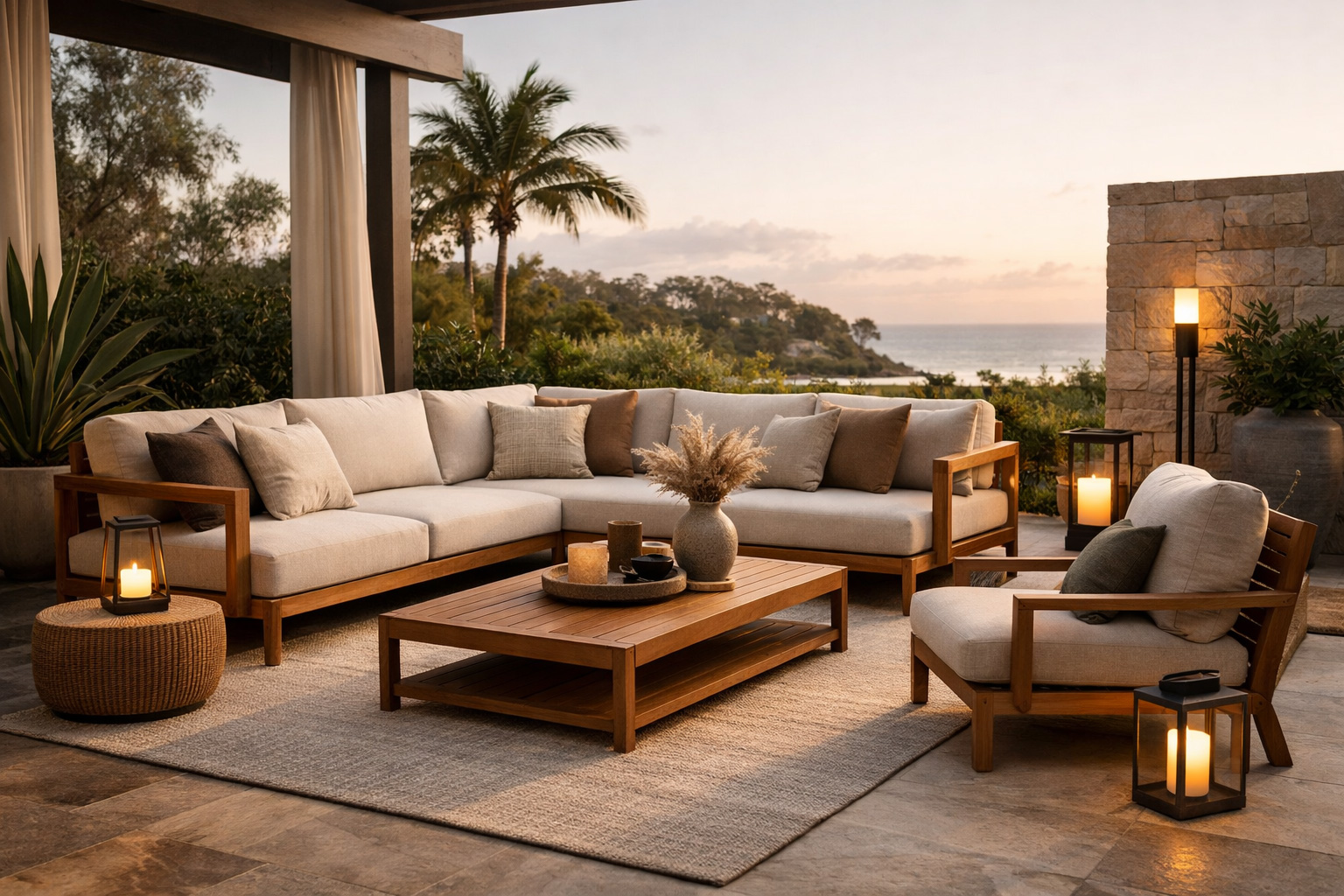
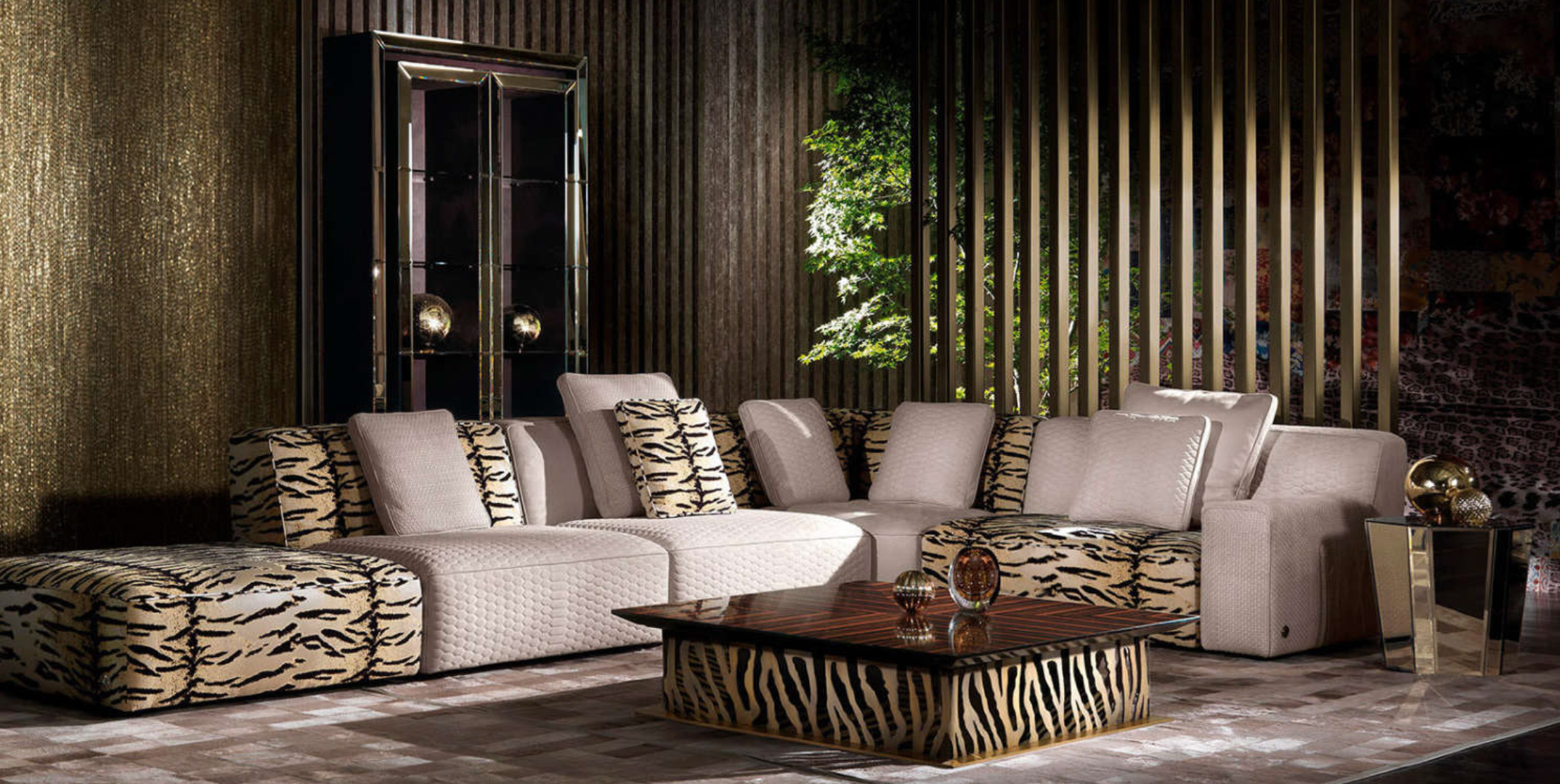
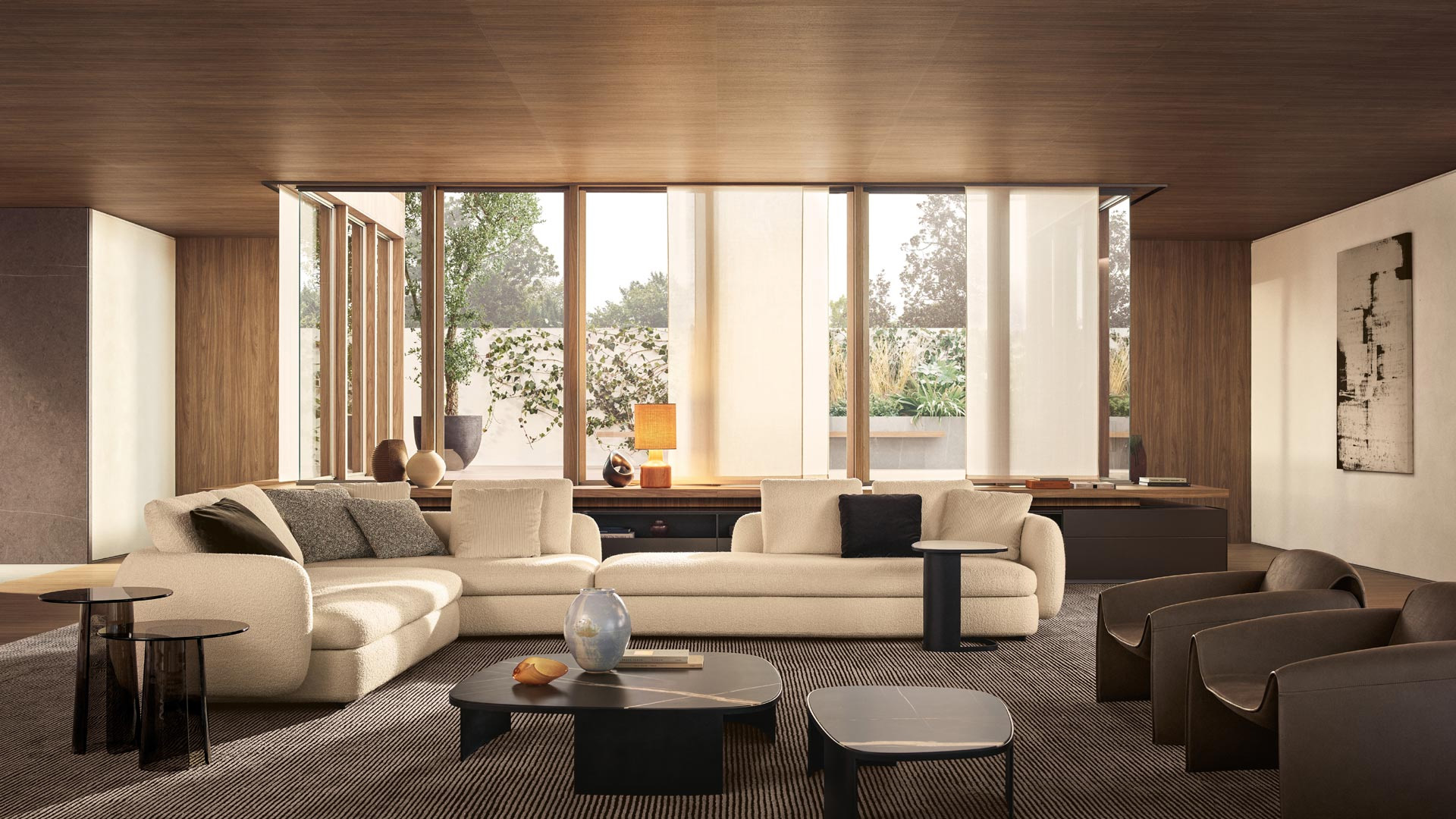
A furniture company can show a product in context rather than displaying it against an empty background.
An interior designer can demonstrate how a completed room came together.
A kitchen company can show the relationship between cabinetry, benchtops, lighting, appliances and surrounding architecture.
A landscaping business can document the transformation of an outdoor space over time.
A building or renovation company can show progress, materials, detailing and finished work.
The strongest content often communicates something that a product description alone cannot.
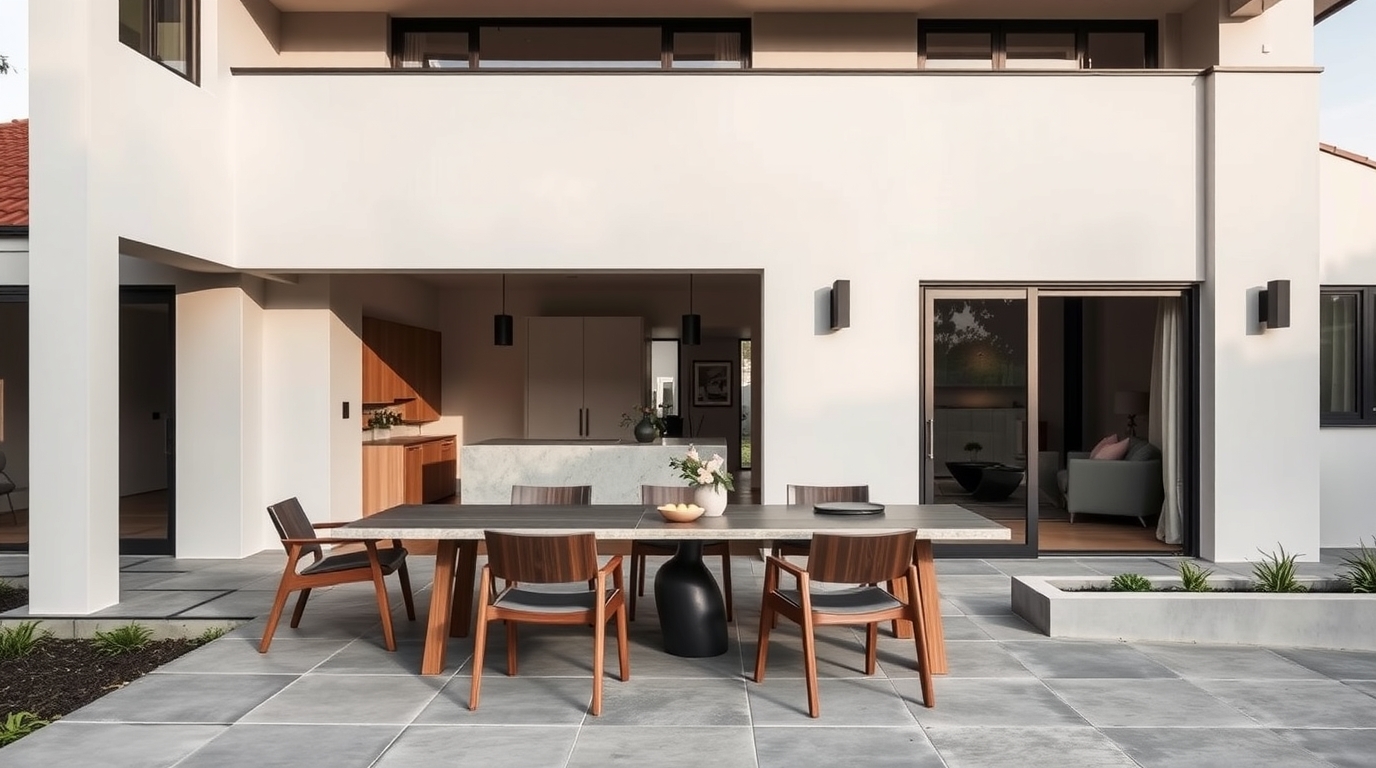
Instead of simply saying that a dining table is made from a particular material, for example, visual content can show how its scale works within a dining room, how it interacts with natural light and how it sits alongside other design elements.
That gives potential customers more information to work with.
Show the Finished Result, Not Just the Product
One of the most useful approaches for luxury home design businesses is to move from product presentation to context.
A photograph of a chair is useful.
A photograph of that chair within a carefully designed living room tells a much larger story.
The same principle applies across the sector.
Instead of only showing:
- a tap
- a benchtop
- a light fitting
- a sofa
- a wardrobe
- a deck
- a garden
- a bathroom fitting
show how the product or service contributes to a finished environment.
This helps prospective customers understand scale, application and design intent.
It also gives the brand an opportunity to communicate its point of view.
For example, a luxury kitchen business might publish a series explaining why a particular layout works well in a compact Auckland home, or how storage was integrated without compromising the appearance of a kitchen.
A landscape designer might explain how planting and outdoor living areas can be planned differently for a coastal property exposed to wind and salt.
A furniture retailer might demonstrate how a particular piece can work within an open-plan living area rather than simply displaying its dimensions.
The content becomes more useful because it answers questions customers actually have.
Build Desire Through a Consistent Visual Identity
Luxury brands need consistency.
That does not mean every social post needs to look identical. It means the overall presentation should feel connected.
Consider:
- photography style
- image quality
- typography
- colours
- editing
- captions
- tone of voice
- product presentation
- use of video
- graphic design
- brand positioning
A customer should be able to encounter several posts from the same company and recognise that they belong to one brand.
This matters because social media is often encountered in small fragments.
Someone may see one project photograph today, another post next week and a video several weeks later. Each interaction contributes to their understanding of the business.
For a premium business, inconsistent or low-quality presentation can create a disconnect between the brand’s claimed positioning and the experience customers receive online.
The social presence does not need to be excessively polished or artificial. Authentic project photography, behind-the-scenes content and genuine expertise can be highly valuable.
But the content should still be intentional.
Use Social Media to Demonstrate Expertise
Luxury customers are not only buying objects.
They may be buying design judgement, craftsmanship, experience, advice, project management, technical knowledge or confidence in a significant decision.
That creates an opportunity to use social media as an educational channel.
Consider content such as:
Design explanations
Explain why a particular layout, material, finish or colour combination works.
Buying advice
Help customers understand what to consider before choosing a product or service.
Project decisions
Explain decisions made during a real project and what those decisions achieved.
Common mistakes
Identify problems that can create unnecessary cost, maintenance or disappointment.
Material comparisons
Explain the practical differences between commonly considered materials.
Maintenance guidance
Show customers how to care for products, surfaces, outdoor areas or installations.
Frequently asked questions
Answer questions customers repeatedly ask your team.
Process content
Show what happens between the initial consultation and finished project.
This type of content can strengthen the perception that the business understands its field rather than simply selling products.
Use New Zealand Homes as the Context
A New Zealand luxury home design strategy should feel like it belongs in New Zealand.
That does not mean adding the word “NZ” to every caption.
It means understanding the environments in which products and services are actually used.
New Zealand homes vary significantly.
There are character villas and bungalows, contemporary architectural homes, apartments, townhouses, coastal properties, holiday homes, rural properties and larger lifestyle blocks.
The conditions also vary.
A coastal home may face salt-laden air and strong winds. A property in a wetter region may have different considerations around moisture and maintenance. Colder southern locations can create different expectations around insulation, heating and indoor comfort.
Social content can acknowledge these realities naturally.
For example, a home design brand could create content around:
- designing for indoor-outdoor living
- selecting finishes for coastal properties
- creating warmth and texture during New Zealand winters
- designing compact urban spaces
- furnishing an open-plan contemporary home
- making the most of a small section
- planning a bach that works for both relaxation and practical use
- choosing materials according to maintenance requirements
- balancing aesthetics with durability
This makes content more relevant than generic international design inspiration.
Instagram Can Be More Than a Portfolio
For many home design businesses, Instagram naturally becomes a portfolio.
That is useful, but it should not stop there.
A portfolio answers:
“What have you done?”
A stronger social strategy can also answer:
“How do you think?”
“What do you know?”
“What should I consider?”
“Why should I trust you?”
“What would working with you actually be like?”
This distinction is particularly important for service businesses.
An interior designer, architect, kitchen company, builder or landscape designer cannot always communicate their full value through finished photographs.
The thinking behind the work can be just as important.
Use captions and short-form video to explain the decisions that produced the finished result.
That might include why a layout was changed, why one material was selected over another, how a difficult site was handled or how a particular design problem was solved.
The finished photograph creates attention.
The explanation creates understanding.
Video Can Show What Static Images Cannot
Video gives luxury home brands another way to communicate expertise and atmosphere.
It can show:
- a completed home
- a room walkthrough
- a kitchen installation
- furniture details
- material textures
- construction progress
- design consultations
- product demonstrations
- outdoor transformations
- craftsmanship
- before-and-after changes
- maintenance processes
- answers to common customer questions
A short video does not need to resemble an expensive television advertisement.
A clear, well-shot walkthrough accompanied by useful commentary can sometimes communicate more than a heavily produced promotional video.
For example, a kitchen designer could walk through a completed project and explain three decisions that made the layout more functional.
A furniture brand could demonstrate the construction details that customers cannot easily see in a standard product photograph.
A landscape designer could document a garden across several stages of development.
These formats provide evidence rather than simply making claims.
Turn One Project Into Multiple Pieces of Content
Luxury home projects can take considerable time and effort to complete.
The resulting content should not necessarily be used once.
A single completed project could produce:
- a hero photograph
- a carousel explaining the design
- a short video walkthrough
- a material-focused post
- a before-and-after comparison
- a customer question
- a behind-the-scenes post
- a project case study on the website
- a blog article
- a series of Stories
- a short educational video
- a post explaining one specific design decision
This approach makes content production more efficient.
It also creates a connection between social media and the company’s website.
Instead of treating the website and social accounts as separate marketing activities, the same project can become a useful asset across several channels.
Connect Social Media to the Website
A social profile should not become the only place where a business explains itself.
For high-value products and services, the website remains important because it provides room for much more detailed information.
Someone discovering a brand through social media may want to:
- view more projects
- compare products
- understand services
- read customer reviews
- find pricing information or pricing guidance
- understand the process
- see service areas
- check contact details
- request a consultation
- enquire about a project
- purchase a product
This means social content should have somewhere useful to take interested people.
If a post discusses a particular project, the relevant project page should ideally provide more information.
If a post introduces a product collection, the website should make that collection easy to explore.
If a video answers a common question, the website could contain a more comprehensive guide.
Google’s current guidance also emphasises the importance of useful, people-first content and effective links between relevant resources. Social promotion can support discovery, while the website provides the deeper information and conversion path.
Give Customers a Reason to Save and Share Content
Not every valuable social post needs to generate an immediate website visit.
Some content can work by becoming something people want to keep.
For example:
- a kitchen planning checklist
- a guide to choosing outdoor furniture
- five questions to ask before renovating
- a comparison of flooring considerations
- a list of bathroom planning mistakes
- a guide to preparing for an interior design consultation
- ideas for making a small living area feel more spacious
This is particularly useful for longer buying journeys.
Someone may not be ready to contact a business when they first encounter it. But if the content is useful enough to save, return to or share, the brand remains part of their consideration set.
That is a more commercially useful form of engagement than pursuing likes for their own sake.
Create Content for Different Stages of the Buying Journey
A luxury home design brand should not expect every social post to perform the same job.
Different content can support different stages.
Awareness
At this stage, visual content can introduce the brand.
Examples include:
- completed projects
- design inspiration
- distinctive products
- short videos
- striking photography
Consideration
Here, customers need more information.
Useful content includes:
- comparisons
- design explanations
- buying advice
- FAQs
- project stories
- material information
- process explanations
Decision
Customers are looking for confidence.
Content can include:
- testimonials
- detailed project examples
- craftsmanship
- qualifications
- service information
- guarantees or warranties where applicable
- clear consultation or enquiry processes
- answers to common objections
Post-purchase
The relationship does not necessarily end when the sale is completed.
Maintenance advice, care instructions, styling ideas and ongoing useful content can help maintain engagement and encourage future interactions.
This framework helps prevent a social feed from becoming a collection of disconnected promotional posts.
Social Media Advertising Should Support the Organic Strategy
Organic social media and paid social advertising can work together, but they should not be treated as interchangeable.
Organic content helps establish the brand’s voice, expertise and visual identity.
Paid advertising can provide additional reach for selected products, projects, offers or audiences.
For a high-value home design business, paid campaigns should be connected to a specific commercial objective.
That might be:
- generating consultation enquiries
- promoting a particular product range
- introducing a new collection
- attracting visitors to a project page
- generating enquiries for a particular service
- re-engaging people who have previously visited the website
The destination matters.
Sending every campaign to a generic homepage makes it harder to continue the customer’s journey.
A campaign promoting a particular kitchen service should take visitors to information about that service.
A product campaign should lead to the relevant product or collection.
A project advertisement should lead to the project itself.
The closer the connection between the message and destination, the easier it is for the customer to continue researching.
Remarketing Can Help With Longer Buying Decisions
High-value home purchases often involve consideration over time.
Someone might visit a website, look at several projects and leave without enquiring.
That does not necessarily mean they were uninterested.
They may still be comparing options, discussing the project with a partner, waiting for a renovation to progress or simply gathering ideas.
Where appropriate and subject to platform rules and privacy requirements, remarketing can help a business reconnect with people who have already interacted with its digital presence.
The important point is relevance.
Repeatedly showing a generic advertisement can become irritating.
A more considered strategy might use content related to the area of interest, such as a relevant project, collection, guide or service.
The objective should be to help the customer continue their research rather than simply pursue them around the internet.
Use Social Media to Strengthen Your Search Strategy
Social media and SEO should not be treated as completely separate activities.
Ideas that perform well on social can reveal questions and topics that deserve more detailed treatment on the website.
For example, if customers repeatedly engage with content about:
- kitchen storage
- outdoor entertaining
- natural stone
- compact bathrooms
- coastal materials
- lighting
- renovation planning
those themes may provide opportunities for website content as well.
The reverse can also happen.
A detailed article can be turned into several social posts, videos or carousels.
Google has also introduced Search Console platform properties that allow eligible creators and site owners to examine how content from platforms including Instagram, TikTok, X and YouTube performs in Google Search. This makes it increasingly practical to consider social and search content as connected parts of a broader content strategy.
The commercial benefit is not that every social post will rank in Google.
It is that audience questions and content performance can inform a broader digital strategy.
Avoid Turning the Feed Into a Catalogue
A luxury home design account can become repetitive when every post follows the same pattern:
“New product available.”
“Shop now.”
“Contact us today.”
“Beautiful new project.”
“Book a consultation.”
There is a place for promotional content, but customers need reasons to keep paying attention.
A healthier mix might include:
- inspiration
- education
- completed work
- process
- product information
- expert commentary
- customer questions
- behind-the-scenes material
- useful advice
- testimonials
- carefully selected promotional messages
The exact balance depends on the business.
A furniture retailer may naturally publish more product-led content than an architect.
A builder may rely heavily on projects and process.
An interior designer may have more educational and inspirational material.
The principle is to make the feed useful enough that customers have a reason to return.
Common Social Media Mistakes Luxury Brands Should Avoid
Chasing follower numbers
A large audience is not automatically a commercially valuable audience.
Posting without a clear purpose
Content should contribute to awareness, understanding, trust, engagement or a measurable commercial objective.
Using poor-quality photography
Visual presentation has a direct relationship with perceived brand quality in a visual industry.
Making every post promotional
Constant selling can make the account less useful to prospective customers.
Ignoring captions
A strong image may attract attention, but useful written context can explain why the project or product matters.
Sending all traffic to the homepage
Relevant content should lead to relevant website destinations.
Focusing entirely on trends
A trend may generate attention without strengthening the business’s positioning.
Publishing without measuring
Without reviewing meaningful results, it becomes difficult to understand which content deserves more investment.
Treating every platform identically
The same underlying idea can be adapted for different platforms rather than copied mechanically.
Making unsupported luxury claims
Terms such as “best”, “leading” or “premium” have limited value if the content does not provide evidence of what differentiates the business.
What Should Luxury Home Brands Measure?
Measurement should reflect commercial objectives.
Useful indicators can include:
- website visits from social platforms
- engagement with project content
- product page visits
- consultation requests
- enquiry form submissions
- phone enquiries where tracking is available
- enquiries attributed to campaigns
- qualified leads
- sales or project opportunities
- content engagement by topic
- returning visitors
- audience growth within relevant markets
It is useful to separate attention from business outcomes.
For example:
Reach tells you how many people were exposed to content.
Engagement tells you whether people interacted with it.
Website traffic tells you whether some people continued their research.
Enquiries show that some visitors took a commercial action.
Qualified enquiries provide more information about whether the audience is relevant.
Sales or completed projects are further down the commercial journey.
A business should understand those stages rather than treating them as interchangeable.
Build a Social Media Content Plan Around the Business
A practical content plan does not need to be complicated.
Start by identifying the major things the business needs customers to understand.
For example:
Brand
What does the business stand for?
Expertise
What does the team know that customers may not?
Products or services
What is actually being offered?
Projects
What evidence demonstrates the quality of the work?
Process
What can customers expect when they enquire?
Questions
What do customers repeatedly ask?
Objections
What makes people hesitate?
Local relevance
What matters to customers in the New Zealand market?
Conversion
What should an interested customer do next?
These categories can then be turned into a repeatable content system.
The advantage is that the business is no longer waiting for inspiration every time it needs to publish something.
A Practical Monthly Framework
A luxury home design brand could start with a simple monthly structure such as:
Week 1 — Project:
Show a completed project and explain an important design or technical decision.
Week 2 — Education:
Answer a question customers commonly ask.
Week 3 — Product or service:
Show a product or service in context and explain who it is suited to.
Week 4 — Expertise:
Share an insight from the team, a process explanation or a useful planning consideration.
Additional short-form content can then be created from these core subjects.
The exact publishing frequency should depend on the business’s capacity and audience rather than an arbitrary requirement to post every day.
Consistency is more useful when the content remains worthwhile.
Make Social Media Part of a Larger Digital Strategy
The strongest results rarely come from treating social media as an isolated channel.
Consider how the different parts of the digital presence connect.
Social media creates visibility and ongoing engagement.
The website provides depth, credibility and conversion opportunities.
SEO helps people discover useful pages when they are actively searching.
Google Ads can provide targeted visibility for commercially valuable searches.
Content marketing answers questions and builds authority.
Video demonstrates products, projects and expertise.
Google Business Profile and local SEO can support local discovery for businesses serving specific areas.
Reviews and testimonials provide social proof.
Each channel can perform a different role.
For a luxury home design brand, the website is particularly important because social media attention needs somewhere credible to go.
A beautiful Instagram account cannot replace a poorly structured website.
If a prospective customer is ready to investigate a business seriously, they may want detailed project information, services, product specifications, contact information, reviews and clear next steps.
The digital experience should support that research.
How HLM Approaches Social Media for Home & Lifestyle Businesses
Social media for a luxury home design brand requires more than a generic posting schedule.
The strategy needs to reflect the business, its customers, its products or services and the value of each potential enquiry.
For a home and lifestyle business, that can mean developing content around completed projects, product applications, design expertise, customer questions, local considerations and the reasons people should have confidence in the business.
It also means considering how social activity connects with the website, SEO, Google Ads, content marketing and conversion.
HLM’s approach to social media marketing is therefore centred on commercial usefulness rather than activity for its own sake.
The objective is not simply to keep a feed busy.
It is to help the right people discover the business, understand its expertise, develop confidence and take the next appropriate step.
Social Media Checklist for a New Zealand Luxury Home Design Brand
Before investing more heavily in social media, review the following:
- Does the visual quality reflect the level of the brand?
- Are finished projects shown in useful context?
- Does the content demonstrate genuine expertise?
- Are customers being educated as well as inspired?
- Does the content reflect New Zealand homes and conditions where relevant?
- Are there enough examples of completed work?
- Are products or services clearly explained?
- Does the business answer common customer questions?
- Is there a clear path from social content to the website?
- Do landing pages match the social content being promoted?
- Are important trust signals easy to find?
- Are organic and paid campaigns working toward defined objectives?
- Are meaningful enquiries being measured?
- Is the business distinguishing reach from qualified leads?
- Is useful content being repurposed across social, website and video?
- Are results being reviewed and used to improve future content?
Conclusion: Build Demand Before You Ask for the Sale
For luxury home design businesses, social media can be valuable precisely because customers often take time to make a decision.
The role of social media is not simply to generate another like or add another follower. It can introduce a brand, demonstrate its work, explain its expertise, answer questions and keep the business visible while a prospective customer researches what to buy and who to trust.
For New Zealand brands, the opportunity is to make that content locally relevant without losing the distinctive character of the business.
Show the work properly. Explain the thinking behind it. Answer real questions. Use New Zealand homes and conditions as useful context. Give people reasons to save and return to your content. Then make sure the website provides the depth and confidence needed to move from interest to enquiry.
The most effective social media strategy is therefore not necessarily the one that produces the most activity.
It is the one that contributes meaningfully to how the right customers discover, evaluate and ultimately engage with the business.
For a luxury home design brand, that makes social media part of the broader marketing system — not a separate stream of posts competing for attention.
To learn more, please visit www.hlmco.com.au