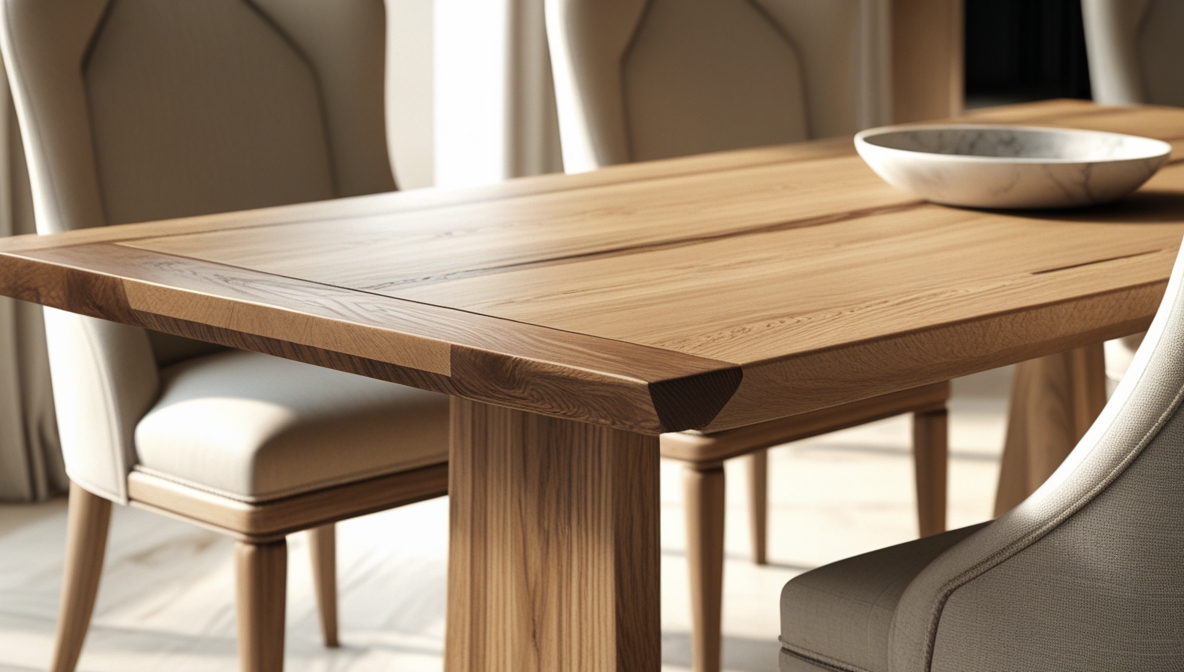

Minimalist furniture brands have one substantial advantage in digital advertising: their customers often reveal exactly what they want through search.
Someone entering “oak dining table NZ”, “minimalist bedside table”, “modern modular sofa Auckland” or “solid timber coffee table” into Google is not simply browsing an inspirational interior magazine. The search itself can indicate a product requirement, preferred style, material, location or purchasing intention.
Google Ads gives furniture businesses an opportunity to appear at precisely that stage.
That does not mean buying as many clicks as possible.
For a contemporary furniture retailer, the commercial objective should be to reach people whose searches correspond with products the business actually sells, send them to pages capable of supporting a considered purchase, and determine whether the resulting sales justify the advertising cost.
This distinction matters because furniture is frequently a high-consideration purchase. A customer may compare multiple retailers, investigate dimensions and materials, discuss a purchase with someone else, visit a showroom and return to the website several times before buying.
New Zealand’s wider e-commerce environment makes this increasingly relevant. NZ Post reported in July 2026 that shoppers made almost six million more online transactions in 2025 than in 2024, an increase of 6%. New Zealand retailers accounted for 79.6% of online spending and recorded average online order values more than NZ$50 higher than international retailers.
For minimalist furniture businesses, Google Ads can therefore be an important customer-acquisition channel, but only when advertising decisions are based on purchase intent and commercial value rather than traffic alone.
Why Google Search Is Particularly Relevant to Furniture Retail
Social media can introduce a furniture brand to someone who was not actively shopping.
Google Search performs a different role.
Search advertising can place a business in front of people who are already expressing a need. Google’s own guidance describes Search campaigns as a way of reaching users actively searching online for relevant products and services.
That difference in intent is commercially significant.
Consider these searches:
“minimalist furniture ideas”
“modern furniture store”
“oak dining table 180cm”
“buy oak dining table NZ”
All four concern furniture, but they indicate different levels of purchasing readiness.
The first customer might be gathering inspiration.
The second may be comparing retailers.
The third has moved towards a specific product specification.
The fourth appears considerably closer to purchasing.
A strong Google Ads strategy recognises these differences instead of assigning equal value to every furniture-related search.
Start with What the Customer Is Actually Looking For
Keyword selection should reflect the structure of the furniture business.
A minimalist retailer selling dining tables, dining chairs, occasional furniture and sofas should not place everything inside one enormous campaign targeting phrases such as “furniture” and “modern furniture”.
Campaign and ad-group structures should correspond with meaningful product categories and search intentions.
A dining-table campaign, for example, could distinguish searches around solid timber tables, oak dining tables, extendable dining tables and minimalist dining tables where the catalogue justifies that distinction.
The principle is simple: the advertisement and landing page should feel like a logical answer to the search.
A customer searching specifically for an oak dining table should ideally see advertising that refers to relevant dining tables and land on an oak dining-table collection or suitable product page.
Sending that person to a generic homepage forces them to repeat the work they have already done in Google.
Humans are remarkably capable of abandoning a website rather than performing three additional clicks. Digital marketing has spent decades rediscovering this fact.
Understand Google’s Keyword Match Types
Google Ads currently provides broad, phrase and exact keyword match types. Google explains that broader match types can reach a wider range of relevant searches, while exact match offers more control over the search intentions to which a keyword may correspond.
This does not mean that one match type is universally superior.
A furniture advertiser might use tightly controlled searches when launching a campaign and gathering information, while more automated matching may become appropriate when sufficient conversion data and reliable bidding signals exist.
Google also notes that broad match can consider additional information such as landing-page content, other keywords and users’ recent search behaviour when determining relevance.
The practical lesson for furniture businesses is that keyword strategy can no longer be separated entirely from website quality and conversion tracking.
If Google’s systems are being asked to optimise towards valuable customers, the account must first provide meaningful signals about what a valuable customer actually is.
Negative Keywords Help Protect the Budget
Furniture terminology can attract surprisingly unrelated searches.
A premium furniture brand advertising “modern chairs” could potentially encounter searches involving chair repairs, free furniture, second-hand products, employment, DIY plans or furniture types the company does not sell.
Negative keywords allow advertisers to prevent ads from appearing for selected terms. Google specifically identifies negative keywords as the mechanism for excluding searches containing irrelevant terms.
For minimalist furniture businesses, search-term reviews should therefore become part of routine campaign management.
The relevant exclusions depend on the business.
A premium new-furniture retailer might decide that searches strongly associated with free, used or second-hand furniture are commercially inappropriate.
A retailer selling only indoor furniture might exclude garden or outdoor searches.
A furniture seller should not automatically exclude broad categories without analysing actual performance, but there should be a deliberate process for identifying irrelevant demand.
Otherwise, advertising budgets develop the unfortunate habit of financing Google’s quarterly results rather more efficiently than the retailer’s.
Product-Specific Advertising Usually Beats Generic Messaging
Minimalist furniture customers often care about particular product attributes.
These may include materials, dimensions, colour, manufacturing origin, style, configuration or delivery availability.
Advertising should reflect these concerns.
A generic message such as “Beautiful Furniture for Every Home” communicates very little.
More useful advertising may refer to the actual product category, relevant material, New Zealand availability, showroom access or other genuine advantages.
The key word is genuine.
Claims about discounts, manufacturing origin, stock availability or delivery should be accurate.
Minimalist brands often rely heavily on design credibility. Exaggerated advertising can undermine that positioning before the customer even reaches the website.
Google Shopping Can Be Particularly Valuable for Visual Products
Search text is only one way furniture can appear through Google advertising.
Retailers with e-commerce catalogues can use Google Merchant Center product data in advertising campaigns. Google explains that product information from Merchant Center can be used to display details including the photograph, title, price and retailer name before a shopper clicks.
That format is naturally relevant to furniture.
Appearance matters enormously when customers compare minimalist products. Two oak tables may have broadly similar technical specifications while differing significantly in proportion, edge profile, leg design and finish.
Showing the product visually before the click can therefore help qualify interest.
Google describes Shopping ads as potentially producing more qualified traffic because customers can see useful product information before visiting the retailer’s site.
For a minimalist furniture retailer, the quality of product data therefore becomes part of advertising performance.
Titles, imagery, pricing, availability and product categorisation should be accurate and maintained properly.
Poor catalogue data can undermine otherwise competent campaign management.
Performance Max Can Extend Product Advertising Across Google
Google Merchant Center currently uses Performance Max when advertisers create campaigns through Merchant Center. Google states that these campaigns can use product information across channels including Search, YouTube and Discover.
For furniture retailers, this can broaden the ways products are discovered.
However, greater automation does not remove the need for commercial oversight.
A campaign still requires accurate conversion tracking, sensible budgets, strong product data and analysis of whether the resulting sales are commercially worthwhile.
An automated system can optimise towards the objective it has been given.
If that objective is poorly defined, automation merely becomes a highly efficient way of pursuing the wrong thing.
Geography Matters in New Zealand Furniture Advertising
New Zealand furniture businesses can have very different fulfilment models.
One retailer may ship nationwide.
Another may deliver only within the North Island.
A custom furniture workshop might operate predominantly around Auckland.
A Christchurch showroom might sell nationally but offer installation only locally.
Google Ads allows advertisers to target countries, areas within countries and, in some campaign types, radius-based locations. Locations can also be excluded. Google cautions that location targeting relies on multiple signals and is not perfectly accurate, which makes ongoing performance review important.
Furniture advertisers should therefore align geographic targeting with commercial reality.
Paying for Queenstown searches is questionable if delivering the product there makes the sale uneconomic.
Conversely, a nationwide e-commerce retailer should be careful not to restrict campaigns so tightly around its physical showroom that profitable buyers elsewhere never see the products.
Auckland Searches May Require Different Thinking from Nationwide Searches
A retailer operating an Auckland showroom might reasonably target local searches such as “minimalist furniture Auckland” or “modern furniture store Auckland”.
These users may want to physically inspect furniture before buying.
A nationwide search such as “oak dining table NZ” represents another type of opportunity.
The landing experience may therefore differ.
Local search advertising could emphasise showroom information, opening hours and directions.
Nationwide e-commerce advertising might emphasise product information, delivery, availability and online purchasing.
This is another reason why one generic campaign is rarely ideal.
New Zealand is geographically small compared with many advertising markets, but furniture delivery has an impressive ability to make distance economically meaningful.
Landing Pages Are Where Advertising Either Becomes Useful or Expensive
A Google Ads campaign can do its job perfectly and still fail commercially if the website is poor.
If a shopper searches for a minimalist modular sofa, clicks an appropriate advertisement and lands on a slow homepage containing no obvious sofas, the advertising platform is not the main problem.
Landing pages for furniture campaigns should help customers evaluate the purchase.
Relevant information may include clear photography, price, dimensions, materials, colour and configuration options, delivery information, stock or lead time, warranty information and obvious next steps.
For high-value items, the next action does not always have to be immediate checkout.
Depending on the product, valuable actions could include requesting a fabric sample, booking a showroom consultation, making an enquiry or contacting the retailer about a configuration.
Campaign success should therefore reflect how customers actually purchase.
Mobile Experience Deserves Particular Attention
Furniture discovery often happens on mobile devices, even where the final purchase is completed elsewhere.
Someone may first encounter a product during a lunch break, continue researching at home and finally buy several days later.
Advertising landing pages should therefore work properly on small screens.
Large professional photographs need to remain visually effective without making pages painfully slow.
Important specifications should be readable.
Variation selectors should be usable.
Forms should not require a dexterity qualification.
And calls to action should be easy to find without overwhelming the product presentation.
A premium advertisement followed by a frustrating mobile experience is an expensive way to introduce customers to a competitor.
Remarketing Can Support Longer Furniture Buying Journeys
High-value furniture is not always purchased during the first visit.
Customers may compare retailers, measure rooms, check delivery requirements or wait until a renovation reaches the appropriate stage.
Remarketing can help a brand remain visible during that decision period.
However, furniture businesses should approach remarketing thoughtfully.
Repeatedly showing the same sofa to someone twenty times a day does not necessarily produce confidence. It can instead create the digital equivalent of a salesperson following the customer around the showroom carrying a chair.
Remarketing is most useful as part of the wider customer journey rather than as a substitute for one.
Budget Should Follow Commercial Economics
There is no universal amount that a minimalist furniture business should spend on Google Ads.
A useful budget depends on factors including product margins, average order values, conversion rates, search demand, geographic reach, competition and the retailer’s ability to fulfil additional sales.
Businesses should work backwards from economics.
Suppose an average profitable furniture order produces NZ$900 in gross profit after relevant direct costs.
If one in four qualified sales opportunities ultimately purchases, the business can begin estimating what acquiring a genuinely qualified prospect may be worth.
The exact calculation will vary substantially between e-commerce sales, showroom enquiries and custom furniture projects.
What matters is that advertising decisions are connected to financial outcomes.
An arbitrary monthly budget selected because it “sounds about right” is not a strategy.
Cost Per Click Is Not the Most Important Metric
Furniture advertisers understandably pay attention to CPC, or cost per click.
It matters, but it is incomplete.
A NZ$1 click that never produces anything can be more expensive than a NZ$5 click that contributes to a profitable NZ$4,000 sale.
Metrics should therefore progress from advertising activity towards business value.
Impressions show whether advertisements appeared.
Clicks show that people visited.
Conversions indicate that users completed a defined action.
Sales reveal whether money changed hands.
Gross profit begins to tell the business whether the effort was worthwhile.
Google’s Merchant Center documentation similarly distinguishes basic advertising metrics from conversion outcomes and notes that campaign reporting differs when conversion tracking has not been configured.
Without reliable conversion tracking, optimisation is partly guesswork.
Track More Than Completed Online Orders
For a purely online furniture retailer, completed purchases may be the primary conversion.
For businesses combining e-commerce and showrooms, the buying journey may be more complicated.
Useful tracked actions could include phone calls, enquiry submissions, sample requests, appointment bookings, showroom directions and completed purchases.
Businesses should avoid assigning equal value to every tiny interaction.
A visitor spending thirty seconds on a product page is interesting.
A customer requesting a NZ$4,000 sofa consultation is commercially rather more interesting.
Measurement should reflect that difference.
High-Value Furniture Requires Patience with Attribution
Advertising attribution becomes more difficult when purchases involve multiple visits and channels.
A buyer may discover a brand through Google Ads, later search the business organically, view its Instagram account, visit the showroom and eventually purchase.
Giving all credit to whichever channel happened to record the final click can oversimplify the journey.
Furniture businesses should therefore interpret advertising data alongside broader sales information.
Ask customers how they discovered the business.
Track assisted conversions where possible.
Compare showroom enquiries with campaign activity.
Analyse performance over meaningful periods rather than reacting to a handful of daily transactions.
The longer and more expensive the decision, the more careful attribution needs to become.
Search Advertising and SEO Should Work Together
Google Ads and SEO are sometimes treated as competing approaches.
For furniture businesses, they can be complementary.
Google Ads can provide relatively immediate visibility for commercially important searches.
SEO can build longer-term organic visibility through product, category and educational content.
Paid search also generates information that can improve organic strategy.
Search-term data can reveal how customers describe furniture, which products attract commercial interest and which searches repeatedly produce poor-quality traffic.
Likewise, strong SEO landing pages can improve the overall usefulness of pages receiving paid visitors.
The website does not care whether its customer arrived through a paid or organic listing.
It still has to make the sale.
Search Terms Can Reveal Product Opportunities
One of the less obvious benefits of Google Ads is market information.
A furniture retailer may notice repeated searches around a material, dimension, colour or product configuration.
That does not automatically mean the business should create that product, but it can provide evidence worth investigating.
For example, repeated qualified searches for compact dining tables could indicate demand from apartment or townhouse customers.
Interest in particular timber finishes could inform merchandising.
Frequent searches for products the company does not sell can reveal either an expansion opportunity or a useful negative keyword.
Advertising data becomes more valuable when product and marketing teams actually communicate.
A novel concept, admittedly.
Brand Campaigns Need Their Own Logic
Furniture businesses may also advertise on their own brand name.
Whether that is worthwhile depends on competition, organic visibility, retailer relationships and how customers search.
Brand campaigns can provide control over messaging and help protect visibility where competitors bid around similar terms.
However, businesses should evaluate branded and non-branded advertising separately.
A branded search from someone already looking specifically for the company is not equivalent to acquiring a new customer searching generically for “minimalist dining table NZ”.
Combining both into one impressive conversion figure can make campaign performance look healthier than customer acquisition really is.
Common Google Ads Mistakes Furniture Brands Should Avoid
Minimalist furniture businesses often waste advertising budget in predictable ways. The practical warning signs include:
- targeting extremely broad furniture terms without sufficient control or conversion data;
- advertising products that are unavailable or have impractical lead times;
- sending every search to the homepage;
- failing to use negative keywords;
- ignoring geographic delivery limitations;
- using weak or inaccurate Merchant Center product information;
- judging campaigns mainly by impressions or clicks;
- failing to distinguish branded from new-customer searches;
- running campaigns without dependable conversion tracking;
- ignoring mobile landing-page performance;
- promoting low-margin products without considering the cost of acquisition;
- continually increasing budget before fixing weak website conversion;
- using automated campaigns while supplying poor objectives or incomplete data.
These problems are not glamorous. Neither are most things that quietly consume advertising budgets.
A Better Google Ads Framework for Minimalist Furniture Businesses
A strong campaign begins before the advertisement is created.
The retailer first needs to understand which products deserve promotion, who can realistically buy them, where those customers are located and how much a successful sale is worth.
Campaigns can then be organised around relevant product groups and customer intent.
Search terms should be monitored.
Negative keywords should be refined.
Landing pages should answer the questions serious furniture buyers actually have.
Product feeds should remain accurate.
Conversion tracking should connect advertising with sales or meaningful enquiries.
And performance should be judged against profitability rather than activity.
This is less dramatic than simply “turning on Google Ads”.
It is also far more useful.
Google Ads Works Best as Part of a Wider Sales System
Advertising cannot compensate indefinitely for weak fundamentals.
If product photography is poor, more paid traffic exposes more people to poor photography.
If delivery information is confusing, advertising sends more customers towards confusion.
If the website is slow, higher campaign budgets allow more people to experience that slowness.
Google Ads is therefore most effective when combined with strong e-commerce development, product presentation, SEO, social proof and clear customer service.
For minimalist furniture brands, this integrated approach is particularly important because the brand experience itself influences willingness to pay.
Customers considering premium furniture need to see coherence between the advertisement, website, product and service experience.
Reaching the Right Buyer Matters More Than Reaching Everyone
New Zealand’s online retail market continues to expand, and local retailers continue to account for the large majority of online spending recorded in NZ Post’s latest e-commerce research.
That creates an attractive opportunity for modern and minimalist furniture businesses.
But Google Ads should not be treated as a tap that produces customers whenever more money is poured into it.
Its real strength is the ability to connect products with people expressing relevant buying intent.
For furniture businesses, that requires careful keyword strategy, useful exclusions, accurate product feeds, realistic geographic targeting, strong landing pages, reliable conversion measurement and an understanding of how long considered purchases may take.
The central question is therefore not:
How many clicks did the campaign generate?
It is:
Did advertising create profitable opportunities from customers who were genuinely suitable for the furniture being sold?
That is the standard against which Google Ads should ultimately be judged.
Home & Lifestyle Marketing New Zealand specialises in digital marketing for businesses operating in furniture, interiors and the wider home and lifestyle sector. HLM’s Google Ads management approach focuses on connecting search demand with commercially appropriate products, improving campaign and landing-page alignment, measuring meaningful conversions and reducing wasted advertising spend rather than pursuing traffic for its own sake.
To learn more, please visit www.hlmco.com.au