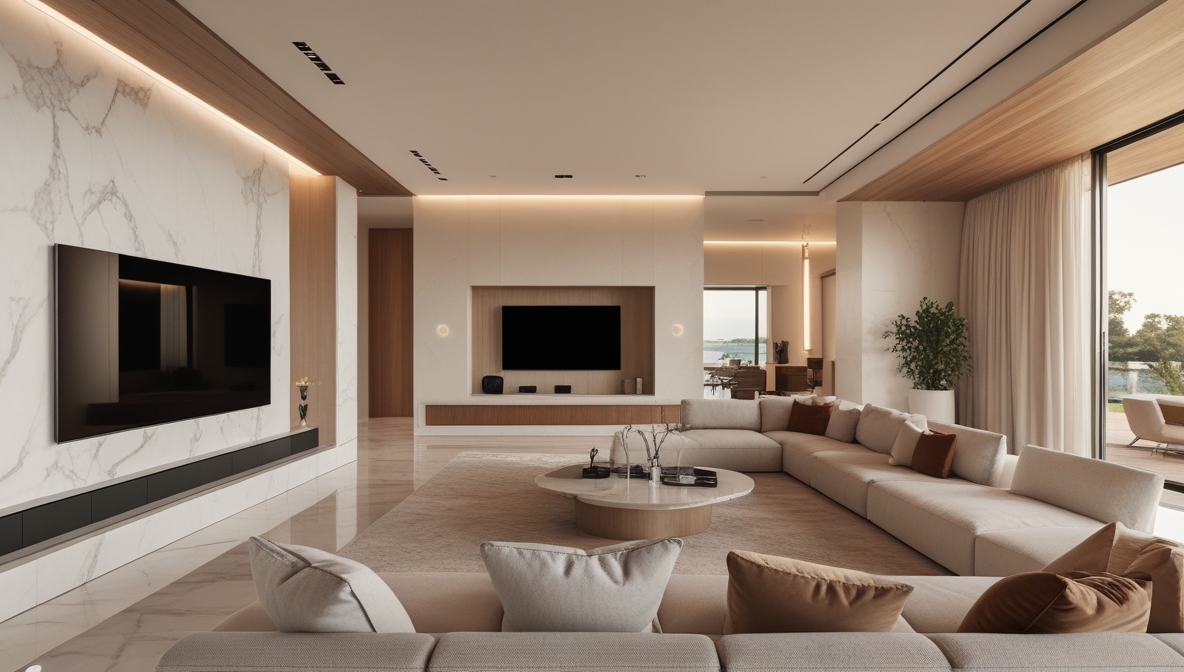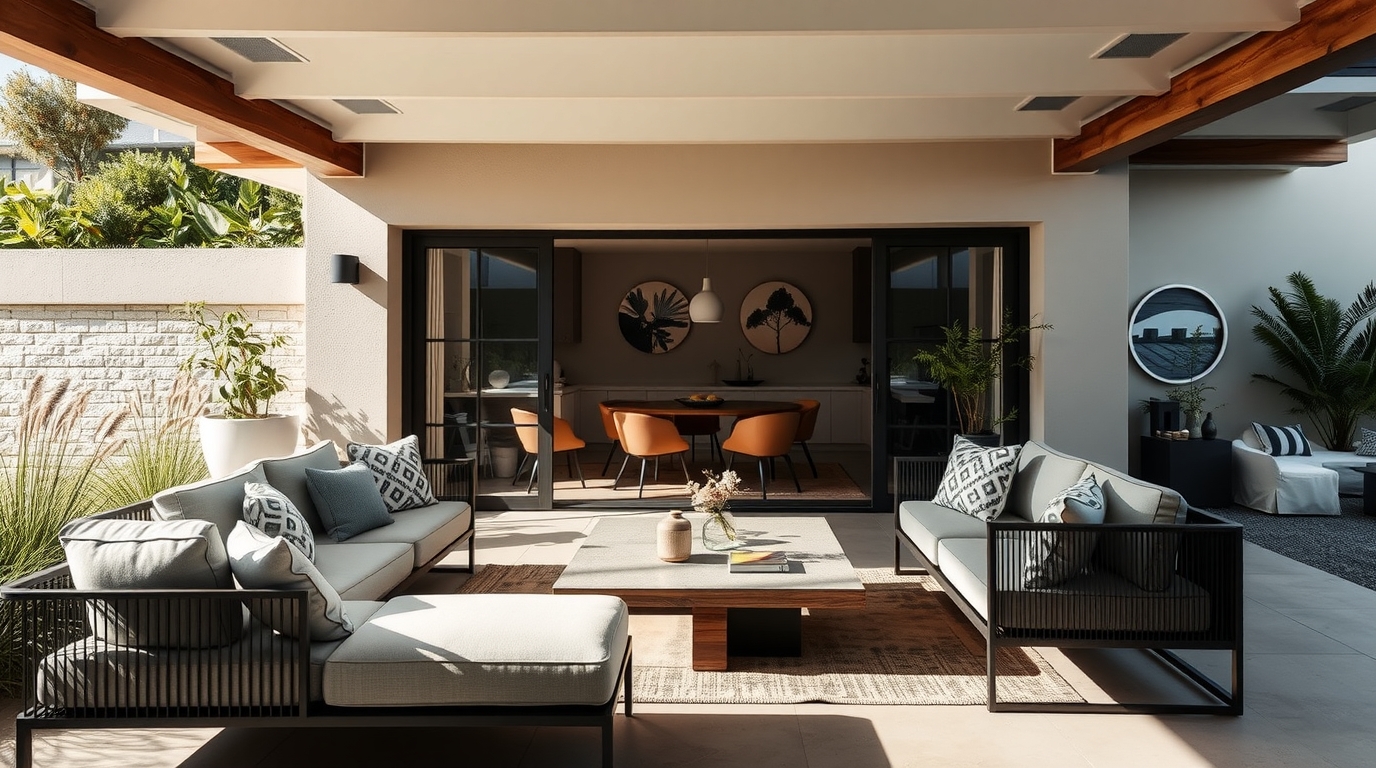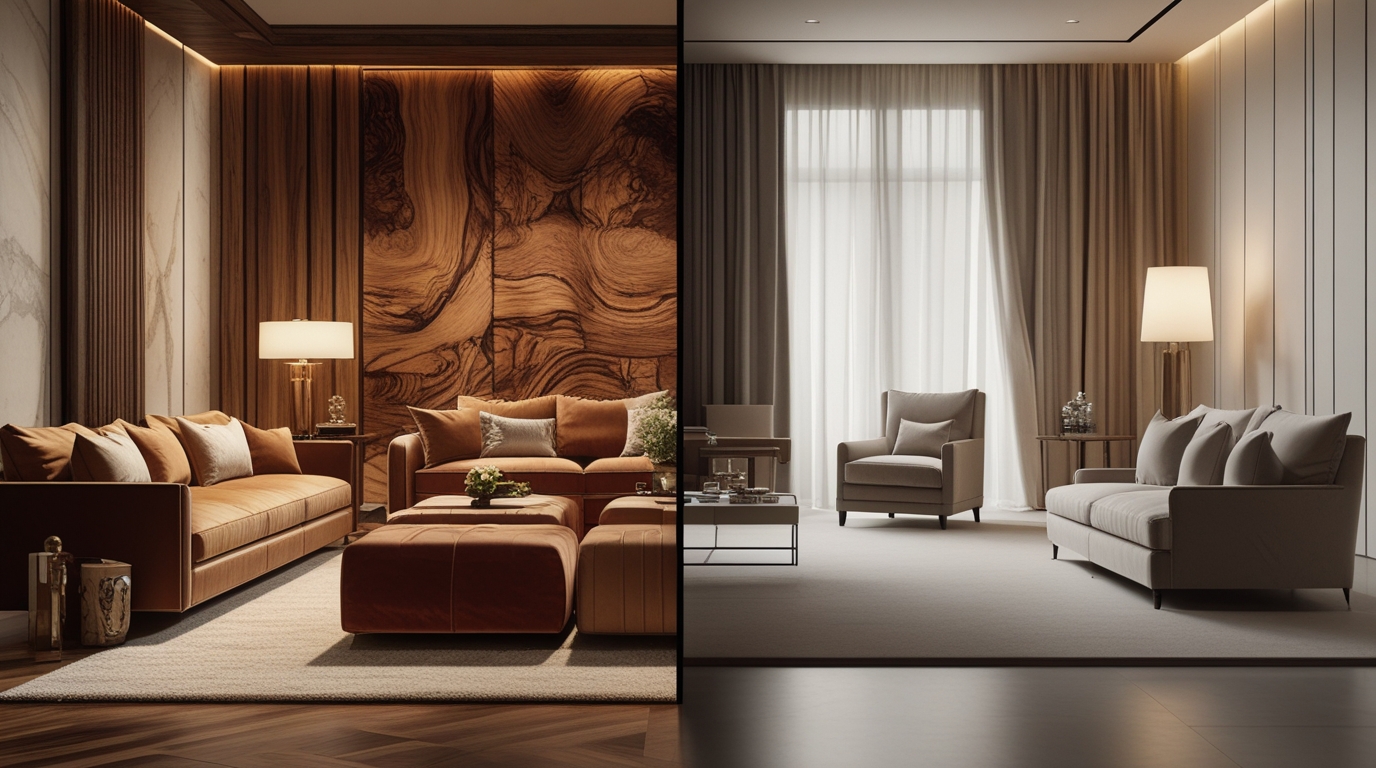

Interior styling, home staging and decorating are almost perfectly suited to social media.
The services are visual. Transformations can often be understood within seconds. Finished rooms photograph well. Before-and-after content can demonstrate substantial change without requiring lengthy explanations. Colours, furniture, lighting, artwork and materials all provide a constant supply of potential content.
Yet that visual advantage creates a problem.
A styling business can build an attractive Instagram account, accumulate thousands of followers and receive a steady stream of likes while generating surprisingly few serious enquiries.
The reason is simple: inspiration and commercial intent are not the same thing.
Someone saving a photograph of a beautifully styled living room may be gathering ideas for a house they plan to renovate in five years. Another person may live outside New Zealand. Someone else may simply enjoy interiors.
Meanwhile, a homeowner in Auckland, Wellington, Christchurch or Tauranga may be actively searching for professional help and still fail to understand from the same social media account:
- what services are available
- where the stylist works
- what type of projects they accept
- how the process works
- whether the business suits their budget
- how to make an enquiry
Good social media marketing therefore does more than provide attractive inspiration.
It uses visual content to build confidence, explain services, demonstrate expertise and guide appropriate prospective customers towards making contact.
For New Zealand styling businesses, that distinction can turn social media from an attractive digital portfolio into a more useful customer-acquisition channel.
Social Media Should Have a Commercial Purpose
Posting regularly is not an objective by itself.
Neither is increasing follower numbers.
A home styling business should first decide what social media is expected to contribute to the wider marketing strategy.
Possible objectives might include:
- increasing awareness within a specific region
- generating consultations
- attracting full-home styling projects
- supporting home staging enquiries
- demonstrating expertise to real estate professionals
- building confidence before customers make contact
- displaying completed work
- supporting Google Ads or SEO campaigns
- maintaining visibility with previous clients and referrers
- encouraging website visits
Several of these objectives may apply simultaneously.
But the business should still identify the commercial outcome it wants.
If the objective is enquiries, content must eventually help the audience move from:
“I like this room”
to:
“This business may be able to help with my home.”
And finally:
“I know what to do next.”
That progression requires considerably more than attractive photographs.
Inspiration Gets Attention, but Relevance Creates Enquiries
Styling businesses naturally want their social media feeds to look polished.
That makes sense.
However, a visually appealing image often tells the viewer relatively little about the service behind it.
Consider a photograph of a beautifully furnished lounge.
The audience may not know:
- whether the stylist furnished the entire room
- whether existing pieces were retained
- whether it was a staging project or an occupied home
- what problem the client wanted solved
- whether the property was in Auckland or Queenstown
- whether the business works on similar homes
- whether the service cost NZ$300 or NZ$30,000
The caption can provide that commercial context.
For example:
The owners of this Christchurch townhouse already had their sofa and dining furniture but wanted help making the open-plan living area feel more cohesive. We developed a warmer colour palette, introduced lighting, artwork, occasional furniture and softer furnishings, then restyled the existing pieces rather than replacing everything.
That caption still provides inspiration.
But it also tells potential clients something about how the business works.
A reader with a similar problem may recognise themselves in the project.
That is where attractive content begins to develop commercial value.
Show the Problem, Not Just the Finished Room
Finished interiors are useful, but the strongest content often explains what changed.
A project could be presented as:
The Original Situation
The room felt visually disconnected.
The Styling Challenge
The homeowner wanted to retain several existing pieces while creating a calmer and more contemporary result.
The Approach
The stylist adjusted furniture placement, introduced warmer textiles, selected artwork and replaced several smaller items.
The Outcome
The room became more cohesive without requiring complete refurnishing.
This structure helps followers understand that professional styling is not simply buying attractive furniture.
It demonstrates decision-making.
That matters because expertise is easier to trust when the audience can see how decisions are made.
The same principle can apply to:
- colour consultation
- furniture selection
- property staging
- new-build styling
- renovation finishing
- art selection
- lighting
- room layout
- accessory styling
- window treatments
Social media should reveal enough of the thinking behind the result to demonstrate professional value.
Before-and-After Content Can Demonstrate Value Quickly
Before-and-after photographs are particularly powerful for visually led businesses because they make change immediately understandable.
However, they should still be explained.
Instead of simply posting two photographs labelled “before” and “after”, describe what changed and why.
For example:
- oversized furniture was removed
- the dining orientation was changed
- a cooler palette was replaced with warmer tones
- artwork was used to create a stronger focal point
- window treatments improved softness
- additional lighting reduced reliance on one central fitting
- furniture proportions were adjusted for a compact room
A Wellington apartment may require very different decisions from a spacious lifestyle property outside Hamilton.
Showing those differences makes the content more recognisably relevant to New Zealand homeowners rather than presenting a stream of generic international interior imagery.
Use New Zealand Homes as Part of the Story
A genuinely local social media presence should reflect the types of homes and living environments the business actually encounters.
Depending on the service area, these may include:
- villas
- bungalows
- weatherboard homes
- apartments
- townhouses
- contemporary new builds
- coastal properties
- rural homes
- lifestyle blocks
- holiday homes and baches
The objective is not to force “New Zealand” into every caption.
It is to demonstrate that the business understands local housing.
For example, a stylist might discuss:
- retaining character features in an older villa
- furnishing a narrow townhouse living space
- creating visual warmth in a cooler South Island home
- selecting materials for a coastal property
- balancing furniture scale in an Auckland apartment
- creating stronger indoor-outdoor flow in a family home
Those details are more persuasive than repeatedly announcing that a business is “NZ-based”.
Local relevance is demonstrated through knowledge rather than geography shouted through a megaphone.
Different Content Should Serve Different Stages of the Customer Journey
Not every social media post needs to ask for an enquiry.
That would become exhausting rather quickly.
Instead, a useful content strategy should serve different stages of the customer journey.
Inspiration Content
Examples include:
- completed rooms
- materials
- colour combinations
- furniture arrangements
- styled details
Its job is to attract attention and demonstrate aesthetic capability.
Educational Content
Examples include:
- choosing furniture proportions
- mistakes when selecting paint colours
- how to layer lighting
- styling a small living area
- when to use a colour consultant
- preparing for a styling consultation
Its job is to demonstrate expertise.
Process Content
Examples include:
- initial consultation
- mood boards
- sourcing
- installation day
- furniture selection
- styling adjustments
Its job is to make the service easier to understand.
Proof Content
Examples include:
- completed projects
- genuine client testimonials
- project walkthroughs
- professional photographs
Its job is to create confidence.
Conversion Content
Examples include:
- consultation availability
- explaining how to book
- introducing a particular service
- directing viewers to a project enquiry page
Its job is to encourage action.
A balanced account uses all five types rather than relying entirely on polished photography.
Short-Form Video Can Explain What Still Images Cannot
Video is particularly useful when a styling business needs to communicate:
- room flow
- spatial relationships
- movement between areas
- scale
- before-and-after transformations
- the styling process
A short video might show a completed living area while explaining three choices that made the strongest difference.
Another could follow an installation day.
A stylist might also answer one question directly to camera, such as:
“Do I need to replace all my furniture before booking a stylist?”
This type of content demonstrates both expertise and personality.
Potential clients are not merely choosing colours and furniture.
They are choosing someone they may invite into their home, discuss personal preferences with and possibly work alongside for several months.
Seeing and hearing the person behind the business can therefore help reduce uncertainty.
Video should still have a purpose.
Posting random clips simply because video currently performs well on a platform is not much of a strategy.
Instagram Can Act as a Visual Proof Library
Instagram naturally suits styling because prospective customers can scan previous projects quickly.
A useful profile should make several things obvious without requiring detective work.
A visitor should be able to understand:
- what the business does
- where it operates
- who it works with
- what its aesthetic range looks like
- what services are offered
- how to make contact
Useful permanent profile elements may include highlights covering:
- Services
- Projects
- Before & After
- Reviews
- FAQs
- Process
- Locations
- About
- Contact
These provide structure to content that would otherwise disappear into the timeline.
A prospective customer may first discover one Reel, visit the profile and then spend ten minutes examining previous work.
That is effectively a mini customer journey occurring inside the platform.
The account should support it.
Facebook Can Still Support Local Visibility
The appropriate social platforms depend on the audience and the type of business.
A styling business does not need to maintain every available platform simply because somebody has created another app.
Facebook may still be useful for:
- local homeowners
- community visibility
- project galleries
- recommendations
- longer explanations
- links to website content
- paid social advertising
It can also support audiences who are less active on visually intensive platforms.
The important question is not whether Facebook, Instagram, Pinterest, TikTok or another platform is universally “best”.
It is whether the platform:
- contains the right audience
- suits the available content
- can be maintained to a professional standard
- contributes to meaningful business outcomes
The HLM strategy should prioritise commercially useful channels rather than creating six neglected accounts.
Pinterest May Support Earlier-Stage Research
Pinterest can suit interior and styling businesses because consumers often use it during planning and inspiration stages.
However, those users may be considerably earlier in the buying journey.
A saved image does not necessarily indicate an immediate requirement for professional help.
That means Pinterest may be more useful as:
- long-term discovery
- design inspiration
- traffic generation
- portfolio exposure
than as a direct-response channel for every business.
A business targeting renovation clients or new-build homeowners may find greater value because customers often plan those projects over longer periods.
Again, platform selection should follow customer behaviour rather than fashion.
Do Not Mistake Followers for Potential Customers
A styling account can attract followers from almost anywhere.
This creates a particular problem for local service businesses.
Imagine a Tauranga interior styling company with 40,000 Instagram followers.
That sounds impressive.
But if 35,000 followers live overseas and another 4,000 simply enjoy interior inspiration, the audience may generate fewer local enquiries than an account with 3,000 highly relevant regional followers.
Useful audience questions include:
- Where are followers located?
- Which posts generate website visits?
- Which content produces direct messages?
- Which followers become enquiries?
- Which enquiries become consultations?
- What services are people asking about?
Follower count is therefore a visibility measure, not a business result.
The commercial value comes from the audience’s relevance.
Captions Should Help Potential Customers Understand the Service
A caption does not have to be long.
It does have to contribute something.
Instead of:
“Obsessed with this beautiful space. What do you think?”
a more useful caption might explain:
“This Auckland living room already had strong architectural features, but the owners were struggling to choose furniture that suited the scale of the space. We retained two existing pieces, introduced a larger rug to anchor the seating area and selected lower-profile furniture to keep the room feeling open.”
The second version:
- demonstrates expertise
- explains the problem
- shows professional decision-making
- tells a prospective customer what the stylist can help with
A simple enquiry prompt could then be added where appropriate.
Not every caption needs a hard sell.
But collectively, the account should make the service increasingly understandable.
Calls to Action Should Match the Content
“DM us now” on every post becomes background noise.
Calls to action should vary according to the audience’s likely readiness.
Examples include:
- View the full project on our website.
- Learn more about our home styling consultations.
- Save this for your renovation planning.
- See how our colour consultation works.
- Enquire about an upcoming project.
- Send us your project details.
- Book an initial consultation.
- View our Auckland service areas.
The purpose is to make the next logical action obvious.
Someone watching a 30-second colour tip probably does not need to be aggressively told to book a complete home furnishing project immediately.
Someone viewing a detailed service case study may be considerably closer to making contact.
The Website Still Matters
One of the biggest mistakes styling businesses can make is treating Instagram as a complete substitute for a website.
Social platforms are useful for discovery and credibility.
A website is better suited to explaining:
- services
- processes
- project scope
- service areas
- pricing factors
- FAQs
- detailed case studies
- team information
- terms
- booking or enquiry processes
A potential customer may discover the business on social media and then visit the website before contacting anyone.
The website therefore needs to continue the same quality of presentation.
If a highly polished social account sends users to a confusing website with vague service descriptions and an enquiry form from approximately 2008, some of that confidence evaporates.
Social media should feed into a stronger digital system.
Make the Enquiry Process Easy
A customer who has finally decided to make contact should not be faced with needless friction.
Useful options may include:
- direct message
- enquiry form
- telephone
- consultation booking
The best combination depends on how the business operates.
If most projects require detailed information, an enquiry form could ask:
- location
- property type
- rooms involved
- service required
- approximate timing
- project description
That can help pre-qualify enquiries without making the form unnecessarily difficult.
If direct messages frequently begin with vague questions such as “How much?”, the business may also benefit from clearer website pricing guidance or an FAQ link.
Use Genuine Testimonials and Social Proof
Client feedback can be extremely useful on social media.
A testimonial paired with photographs from the relevant project can help potential customers understand both the work and the experience of hiring the business.
But reviews and testimonials must be genuine.
The New Zealand Commerce Commission states that online reviews should be authentic and presented in a way that does not mislead consumers about the overall message being conveyed.
This is not merely theoretical guidance.
In August 2026, the Commerce Commission reported that The TV Shop had been ordered to pay NZ$1.104 million following conduct that included employees posting positive reviews without disclosing their relationship to the company. The Commission stressed that consumers should be able to trust that reviews are genuine and not manipulated.
For a styling business, sensible practice therefore includes:
- using real client feedback
- obtaining appropriate permission
- not inventing testimonials
- not disguising staff or family recommendations as independent reviews
- not selectively presenting feedback in a misleading way
Trust works rather better when the evidence used to create it is actually true. Humanity occasionally sets the bar breathtakingly low.
Be Careful With Sponsored and Influencer Content
A styling or interiors business may occasionally work with:
- influencers
- property personalities
- content creators
- suppliers
- furniture brands
- lifestyle publishers
Where content is advertising, that relationship should be clear.
The New Zealand Advertising Standards Authority says audiences should be able to recognise advertising without having to investigate the relationship themselves. Its guidance states that hiding the disclosure elsewhere, such as only in a profile biography, may be insufficient when the content itself is advertising.
The ASA also emphasised in its 2025 annual reporting that New Zealand advertising rules apply across media platforms, including digital and social channels.
That means collaborations should be planned with transparency rather than relying on vague tags that viewers may not understand.
Avoid Misleading Scarcity and Pressure
Social media can make manufactured urgency tempting.
Examples include:
- “Only one consultation left!”
- “Last chance!”
- “Nearly fully booked!”
- countdown timers
- claims that many customers are currently enquiring
Such statements may be legitimate when true.
They should not be invented to pressure people.
The Commerce Commission advises that online scarcity and popularity claims must be accurate, clear and capable of being substantiated. Claims designed to create urgency can mislead consumers if the supposed limitation is not genuine.
For styling businesses, a simple statement such as:
“Our October consultation calendar is almost full”
should therefore only be used if the business can genuinely support that claim.
Manufactured urgency may create a short-term response, but it is a particularly strange way to build a premium service brand based on trust.
Paid Social Advertising Can Extend Strong Organic Content
Organic reach alone may not consistently place content in front of enough suitable local customers.
Paid advertising can extend the reach of strong content to selected audiences.
A styling business could promote:
- a completed project
- a short video
- a consultation service
- a downloadable planning guide
- a before-and-after transformation
The targeting and campaign objective should reflect what the business wants people to do.
For example, a business might use social advertising to introduce itself to homeowners within its service area and then use remarketing to reach previous website visitors.
However, paid social should not be treated as a rescue mechanism for weak content or an unclear offer.
Advertising simply makes the existing message visible to more people.
If that message is confusing, advertising can make the confusion impressively scalable.
Social Content Can Support SEO and Google Ads
Digital marketing channels work better when they reinforce one another.
For example, a homeowner may:
- See a styling project on Instagram.
- Follow the account.
- Visit the website several weeks later.
- Search the company name on Google.
- Read reviews.
- Return through a Google advertisement.
- Submit an enquiry.
Which channel generated the customer?
Technically, several played a role.
This is why social media should not always be measured entirely by last-click conversions.
It may help potential clients:
- discover the business
- remember the business
- assess its taste
- understand its experience
- develop confidence
SEO, Google Ads and the website can then capture or convert that demand.
How Often Should a Styling Business Post?
There is no universally correct posting frequency.
A business with several active projects may have abundant useful content.
Another may complete only a small number of large projects each year.
Forcing daily posting can lead to:
- repeated images
- generic quotations
- irrelevant trends
- low-value filler
- content produced solely because the calendar says Tuesday
The HLM approach should favour consistency and quality over unnecessary volume.
A realistic schedule could include a mix of:
- project content
- educational posts
- video
- process content
- testimonials
- FAQs
- service explanations
The correct frequency is the one the business can maintain without sacrificing quality.
Build a Content Library From Every Project
One styling project can create substantially more than one social media post.
Imagine a completed four-bedroom home.
The business could produce:
- full project gallery
- before-and-after carousel
- living-room Reel
- bedroom styling post
- colour palette post
- furniture selection explanation
- lighting tip
- client testimonial
- installation-day video
- “three decisions that changed this room” post
- website case study
- Pinterest images
- email newsletter content
This approach improves efficiency.
Instead of constantly asking, “What should we post today?”, the business builds content systematically around its actual work.
That also makes the content more authentic.
Measure the Metrics That Lead Towards Business
Likes and followers are not useless.
They can indicate whether content is attracting attention.
But useful measurement should go further.
A styling business might track:
- profile visits
- website clicks
- direct messages
- service-page visits
- enquiry forms
- consultation bookings
- qualified enquiries
- enquiries by social platform
- projects won
- revenue from social-sourced leads
It can also examine which content tends to produce action.
Perhaps:
- before-and-after posts generate the most profile visits
- educational videos generate the most saves
- case studies produce the most website clicks
- client testimonials precede more enquiries
That information can guide future content.
Common Social Media Mistakes Styling Businesses Should Avoid
Posting Only Beautiful Images
The audience sees taste but may never understand the service.
Copying Overseas Interior Trends Without Local Relevance
New Zealand homeowners need content relevant to their homes, lifestyles and conditions.
Chasing Followers Instead of Customers
Audience size and audience value are different things.
Using Every Platform
Three neglected channels are not necessarily better than one well-managed one.
Hiding Services
Potential clients should not have to guess what is available.
Having No Clear Location Information
A customer should know whether the business serves Auckland, Wellington, Christchurch or another area.
Using Identical Calls to Action
Not every follower is ready to enquire immediately.
Sending Traffic to a Weak Website
Social media cannot compensate indefinitely for poor conversion elsewhere.
Posting Fake or Manipulated Testimonials
Besides destroying credibility, misleading reviews can create regulatory problems in New Zealand.
Measuring Only Engagement
A high-performing Reel is not necessarily a commercially successful Reel.
A Practical Social Media Checklist for Styling Businesses
Before trying to increase posting frequency, check whether the business has:
- A clearly defined target customer.
- Clearly stated services.
- Accurate service-area information.
- Strong project photography.
- Before-and-after examples.
- Educational content demonstrating expertise.
- Process content explaining how the service works.
- Genuine testimonials.
- Short-form video where useful.
- A professional profile description.
- Clear website and contact links.
- Useful profile highlights.
- Calls to action matched to customer readiness.
- An easy enquiry process.
- A mobile-friendly website.
- A content system for reusing project material.
- Appropriate advertising disclosures.
- Accurate promotional claims.
- Tracking for website visits and enquiries.
- Measurement of qualified leads and projects rather than engagement alone.
From Beautiful Content to Better Enquiries
Social media is naturally suited to interior styling, home staging and decorating businesses because the work itself provides compelling visual material.
But attractive content alone does not create a reliable marketing strategy.
The commercial opportunity comes from connecting that visual inspiration to:
- genuine expertise
- local relevance
- understandable services
- proof of experience
- customer trust
- clear next steps
A New Zealand homeowner may initially follow a styling business because they like a particular room.
They may continue following because they learn something useful.
They may then visit the website because they recognise that the business works on homes like theirs.
And eventually, when a renovation, move or styling project becomes real, they may make contact.
That progression is the real value of social media for a styling business.
It is not simply about generating attention.
It is about turning appropriate attention into confidence and, eventually, into suitable customer enquiries.
For New Zealand interior stylists, decorators, home staging companies and related home businesses wanting a stronger connection between social activity and commercial outcomes, Home & Lifestyle Marketing can help develop social media strategies that work alongside website development, SEO, Google Ads and wider digital marketing.
To learn more, please visit www.hlmco.com.au