Where outdoor living becomes the new definition of sophistication
Australia’s relationship with outdoor space has always been emotional. From open verandas to sprawling terraces, the nation’s lifestyle celebrates sunlight, fresh air and connection. Yet what was once merely functional has evolved into something far more refined. Elevated dining is the latest frontier of luxury design—a merging of indoor elegance and alfresco ease that redefines how we gather, host and live. It’s a style that blurs the line between casual and couture, replacing formality with finesse and simplicity with curated comfort.
A Lifestyle Shift from Backyard to Boutique Experience
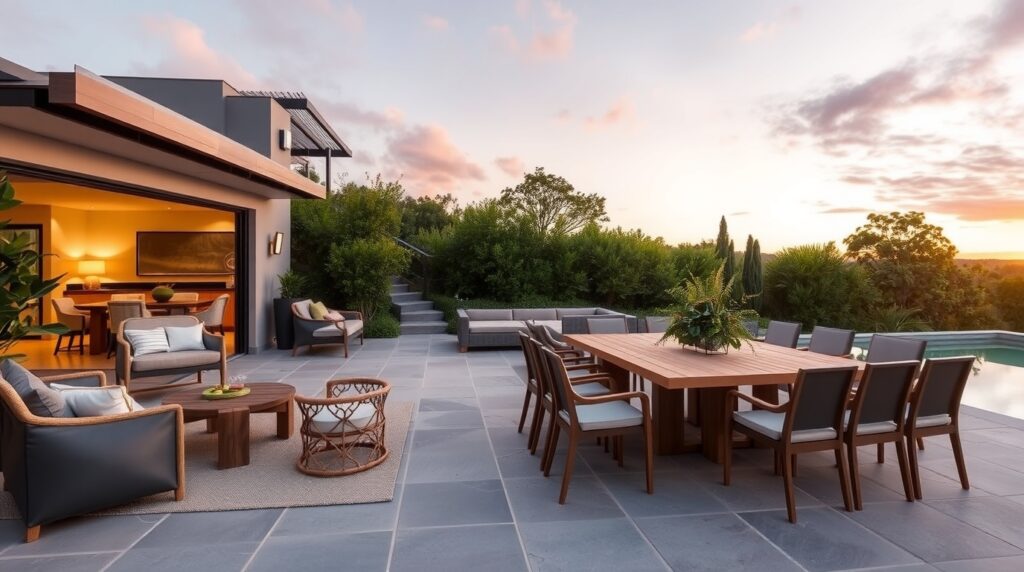
For decades, the Australian outdoor meal meant barbecues and portable seating. Today, discerning homeowners seek more: experiences that equal the poise of their interiors. The evolution began with architecture. Expansive glass walls, continuous flooring and covered terraces have dissolved the boundary between inside and out. The dining table moved naturally into this new zone, demanding the same attention once reserved for formal rooms. Designers responded by crafting furniture that fuses resilience with refinement, allowing homeowners to entertain outdoors without aesthetic compromise.
From Function to Theatre
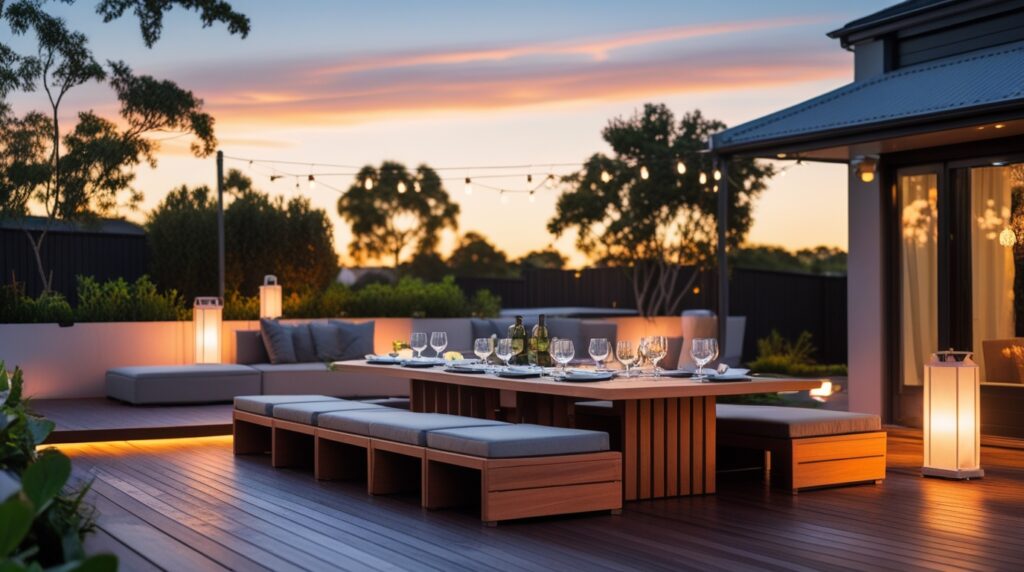
Dining al fresco is no longer a casual afterthought. It is theatre—an orchestration of light, texture and proportion. Guests notice how the timber grain of a table echoes the decking beneath it, how a linen cushion softens the geometry of an aluminium chair, how pendant lighting pools gently over glassware as dusk falls. Every detail contributes to an atmosphere that feels effortless yet unmistakably considered. This is the heart of couture outdoor design: the art of making comfort look inevitable.
The Architectural Backbone of Elevated Dining
The foundation of great outdoor dining lies in the plan. A table should relate to the architecture as precisely as a dining suite does indoors. Proportion, scale and alignment govern harmony. A narrow balcony demands a slender table with sculpted legs that maintain visual space; a broad courtyard benefits from heavier timber pieces that anchor the view. Designers often work from the home’s axial lines—aligning furniture to sliding-door frames or landscape features—so that movement feels fluid and natural. The result is a sense of belonging: furniture that appears designed with the house, not merely added to it.
Craftsmanship That Endures and Adorns
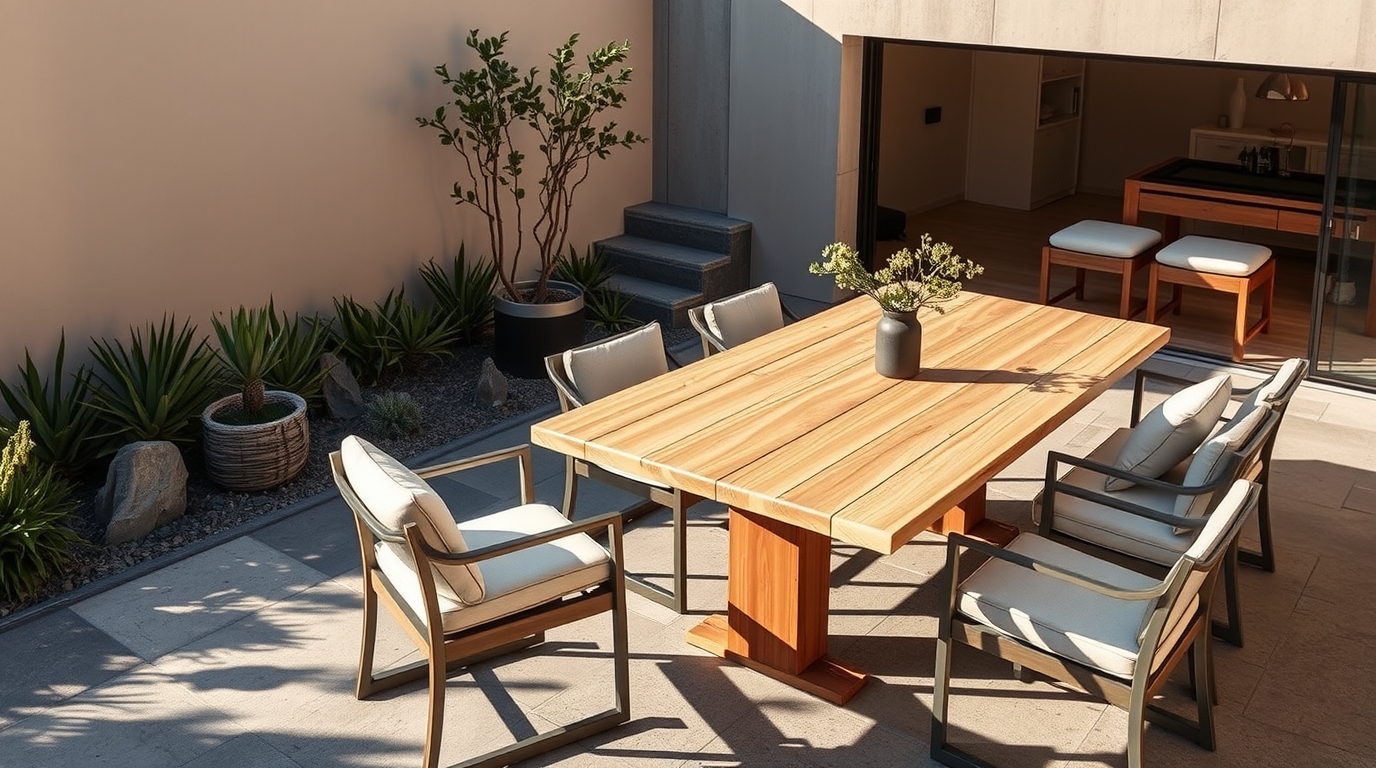
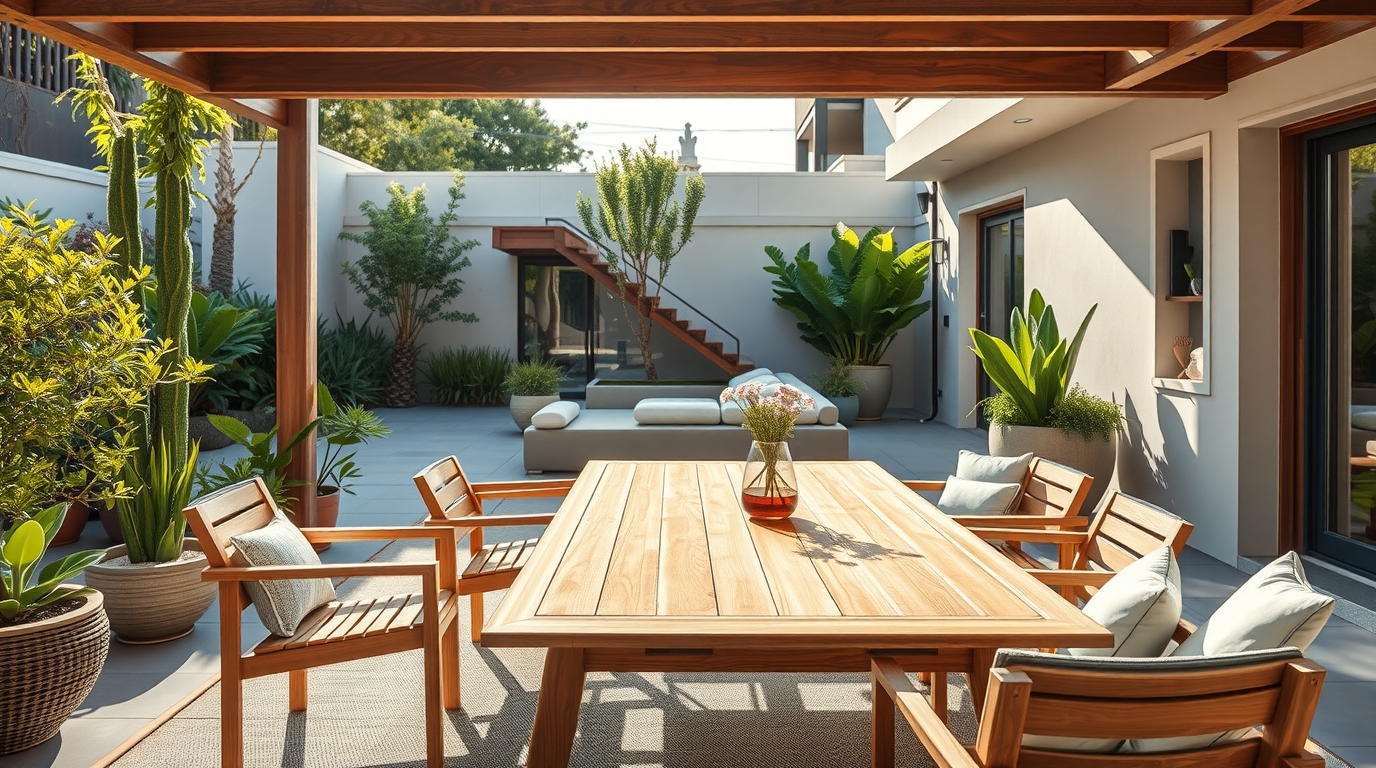
True luxury performs as beautifully as it looks. In a country defined by salt air, UV and sudden weather change, materials matter more than ever. Marine-grade aluminium, kiln-dried teak and stainless fittings form the structural trinity of couture dining settings. Each is selected not just for strength but for patina—the way it ages, mellows and gains character. The brushed sheen of aluminium, the silvering of teak, the subtle softening of fabric after a summer’s use: these are the hallmarks of authenticity. Furniture of this calibre is not replaced; it’s lived with and admired over decades.
The Tailor’s Eye: Proportion and Fit
Couture fashion and fine furniture share a discipline: cut and proportion. In outdoor dining, comfort emerges from millimetres. Chair height to table top, armrest width to elbow reach, the angle of a backrest—these govern how long a guest lingers and how relaxed conversation feels. When proportion is perfect, design disappears and experience takes over. This precision is invisible to the casual eye but profoundly felt; it’s the difference between sitting and settling in.
Textures that Speak Luxury
Visual harmony is only half the story. The tactile dimension defines emotional response. Hand-finished teak edges invite touch; tightly woven performance fabrics mimic indoor upholstery; powder-coated frames feel smooth yet substantial. Mixing textures creates rhythm: the rough grain of timber beside the sleek coolness of aluminium, the softness of cushions offset by stone or ceramic tabletops. In couture design, texture replaces ornament—it’s what gives restraint its richness.
The Palette of Modern Refinement
Colour trends in luxury outdoor elevated dining draw directly from nature’s composure. Sandstone, cloud, oyster and pewter form neutral foundations that soothe the eye. Into this calm field, accents of marine blue, eucalyptus or slate add character. Metallic hints—bronze, champagne or brushed steel—introduce light play without glare. These are not shouty hues but whispers of tone that shift through the day’s changing light. Cohesion with architecture is paramount: the furniture must echo the home’s cladding, paving or joinery to feel integrated, not imposed.
Lighting: The Invisible Luxury
Nothing transforms an outdoor dining setting more completely than light. Daytime celebrates texture and proportion; evening reveals atmosphere. Concealed LEDs wash across timber decks; pendant lanterns define the dining plane; small table lamps create intimacy while preserving sightlines to garden silhouettes. The rule is subtlety: illumination should flatter, never dominate. Warm colour temperatures around 2700 K replicate candlelight, softening skin tones and turning every meal into an event. Great lighting extends dining hours and elevates mood—it’s as essential as the table itself.
The Importance of Customisation
Luxury is personal. A truly elevated dining suite allows homeowners to choose every variable: frame finish, tabletop material, fabric texture and colour. The Exclusive Home philosophy of open customisation—hundreds of fabrics, multiple powder-coat hues, options in teak or stone—ensures that individuality is not an upgrade but a standard feature. This level of control lets each client echo their home’s architecture or landscape precisely. A pale aluminium frame with linen-tone cushions might suit a coastal veranda; matte-black and charcoal velvet may complement a city terrace. The beauty is freedom.
Seamless Entertaining: Designing for Flow
Beyond aesthetics lies usability. Elevated outdoor dining requires choreography. There must be enough circulation for servers or guests, clear sightlines between seating zones, and proximity to outdoor kitchens or bars. The best designs anticipate how people move: wide table spacing prevents crowding, integrated sideboards conceal storage, and benches invite casual overflow seating. Thoughtful planning turns gatherings from logistical effort into graceful ritual.
Accessories and Ambience
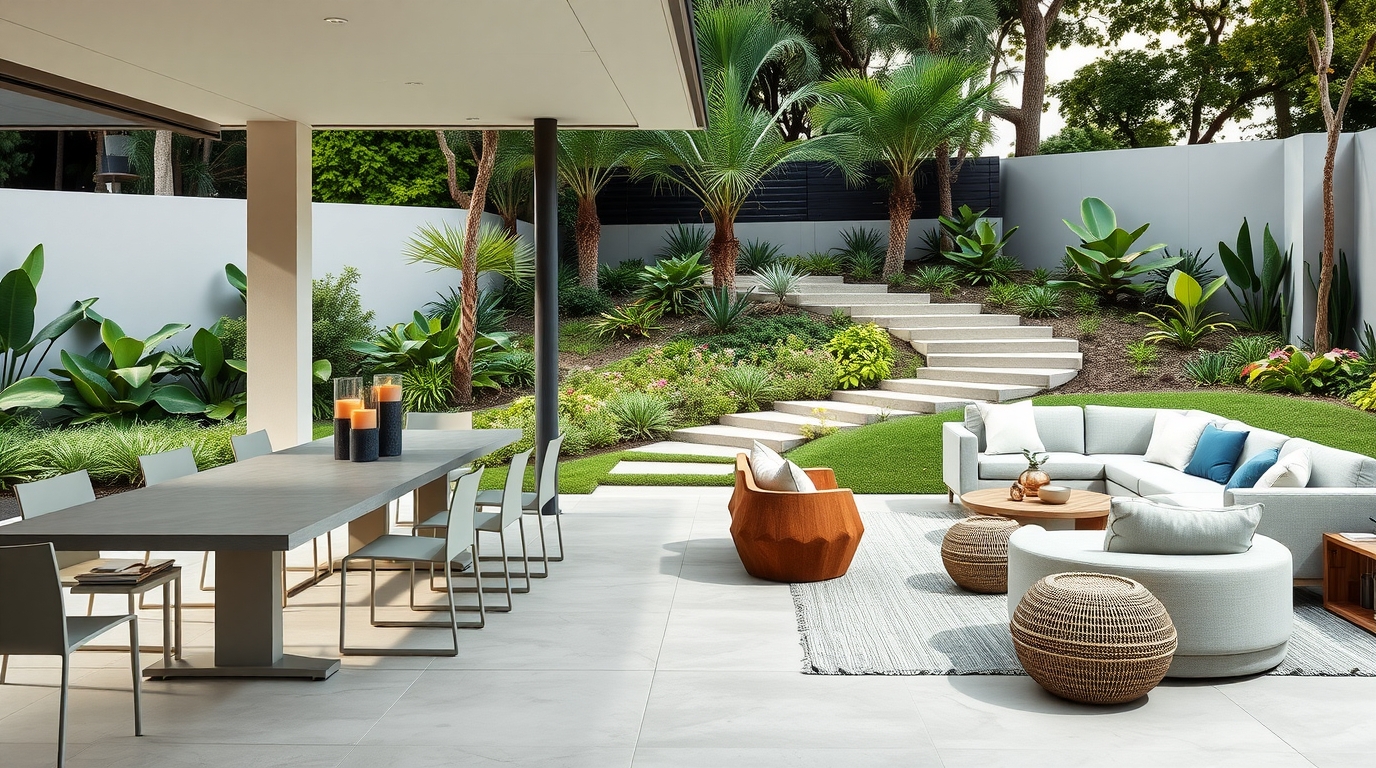
The modern alfresco table is never alone. Surrounding pieces—planters, rugs, umbrellas, lanterns—complete the composition. Outdoor rugs define space underfoot, softening acoustics while framing the table visually. Planters at the perimeter provide privacy and greenery; candles or hurricane lamps introduce motion through flicker. Every accessory should earn its place, contributing to harmony rather than clutter. The aim is sensory layering, not decoration for its own sake.
Dining as Emotional Architecture
Great outdoor spaces do more than look beautiful—they feel right. The combination of proportion, colour, texture and light creates emotional architecture: a setting that encourages conversation, laughter and pause. Guests sense the care in every join, the balance in every layout. In this context, furniture becomes a medium of hospitality. It tells visitors, you were thought of when this was made.
Technology Quietly Supporting Luxury
Behind the romance lies engineering. Modern high-end furniture incorporates quick-dry foams, hidden water-drain channels, corrosion-proof fittings and UV-stable coatings that guarantee longevity. Tables may conceal charging ports or dimmable LEDs; fabrics resist staining and mildew while feeling like cotton or linen. The innovation is invisible because true luxury never flaunts its technology—it simply performs flawlessly, season after season.
Sustainability: The Modern Measure of Quality
Couture design now carries ethical responsibility. The discerning buyer wants assurance that teak is plantation-grown, aluminium is recyclable, and finishes are low-VOC. Sustainable manufacturing doesn’t diminish luxury; it enhances it by aligning beauty with conscience. The Exclusive Home’s commitment to responsible sourcing reflects the understanding that enduring style must also endure ethically.
Seasonality and Versatility
Australia’s climate varies widely—from humid tropics to cool southern states—so versatility matters. Modular tables with extension leaves adapt to guest numbers; chairs stack or slide easily for storage; fabrics breathe in heat yet insulate on cooler nights. Portable heaters, pergolas and retractable awnings extend usability through the year. A couture outdoor setting should serve both January brunch and July dinner with equal grace.
The Role of Sound and Scent
While rarely discussed, sensory design completes the experience. The subtle sound of water or the scent of nearby jasmine deepens relaxation. Designers sometimes integrate fountains or plan aromatic borders around dining terraces. These soft cues transform an area from functional to poetic, reminding guests that outdoor dining is about immersion in nature as much as design.
Maintenance as a Ritual, Not a Chore
Luxury ownership includes care. High-end materials are engineered for ease: removable covers, oiled-teak finishes that require only seasonal attention, powder coatings that clean with mild detergent. Treating maintenance as ritual—an autumn afternoon spent oiling timber or refreshing fabric—strengthens emotional connection with the pieces and ensures longevity. Great design rewards stewardship.
Cultural Influences and Global Aesthetics
Australian outdoor dining draws on global currents while keeping its distinct informality. The Mediterranean love of shaded courtyards, the Asian tradition of indoor-outdoor continuity, the Californian fascination with modular decks—all influence local design. What makes the Australian version unique is its blend of openness and understatement: an easy sophistication rooted in climate and temperament.
Investment and Legacy
A couture dining setting is not a short-term purchase; it’s an architectural investment. Like quality flooring or joinery, it increases both enjoyment and value of the home. Its durability reduces replacement cycles, its timeless design avoids dating, and its emotional presence enhances daily life. It is functional art—used, loved and remembered.
Defining the Couture Standard
So what distinguishes a truly elevated dining experience from the ordinary?
- Integrity of materials: genuine teak, marine aluminium, certified fabrics.
- Precision of proportion: every angle refined for comfort.
- Freedom of choice: hundreds of fabrics and finishes without surcharge.
- Sustainability: beauty with conscience.
- Longevity: pieces built to weather decades, not seasons.
This combination forms the couture benchmark that few suppliers meet consistently.
The Future of Outdoor Dining
Looking ahead, outdoor dining will continue blending architecture, technology and artisan skill. Expect integrated lighting systems controlled by app, temperature-responsive fabrics, and tables designed to conceal sound systems or induction elements. Yet even as innovation advances, the soul of the experience will remain human: people sharing food, stories and laughter under the open sky.
Conclusion: Where Casual Meets Couture
Elevated outdoor dining is not about extravagance; it’s about alignment—between people and place, design and nature, comfort and craftsmanship. It honours the Australian instinct for openness while embracing international standards of refinement. The table becomes a stage for living beautifully, proof that true luxury isn’t found in excess but in harmony.
Redefine your outdoor lifestyle with pieces that balance innovation, craftsmanship and comfort. Explore the couture standard in outdoor elevated dining settings at The Exclusive Home.