Crafting a beautiful home has always been about more than appearances. Today, more Australians are looking for furnishings that respect the environment, honour craftsmanship, and stand the test of time. The shift toward sustainable living has reshaped what luxury truly means. It is no longer about volume, trends or disposability, but thoughtful choices grounded in integrity, longevity and respect for materials.
Custom-made furniture sits at the forefront of this movement. While mass-produced pieces flood the market with low prices and an endless stream of stock, custom craftsmanship delivers clear environmental benefits that align with modern Australian values.
A traditional, quality-driven approach ensures every piece is made with intention. Instead of being churned out in the thousands, custom furniture is handcrafted one piece at a time, reducing waste, cutting emissions and celebrating responsible use of resources. For households wanting a cohesive, high-end aesthetic without compromising sustainability, the advantages are compelling.
This article explores the environmental benefits of custom-made furniture compared with mass-produced alternatives, focusing on resource use, waste reduction, lifespan, craftsmanship, transport efficiencies, responsible sourcing and the broader cultural impact of choosing quality over quantity.
Thoughtful Material Use Reduces Environmental Strain
Mass-produced furniture is built around efficiency and speed. Manufacturers tend to rely on cheaper composite materials, veneers, or engineered alternatives designed for large-scale production. These materials can involve energy-intensive processes, harmful adhesives, synthetic finishes and shorter life spans.
Custom furniture, by contrast, is designed with intention. Craftspeople select timbers and materials individually, ensuring only what is needed is used. There is no requirement to purchase or stockpile enormous quantities of raw materials. This more deliberate approach immediately reduces resource demand and limits unnecessary waste.
High-quality hardwoods, eco-certified timbers, recycled metals, premium fabrics and low-VOC finishes are often chosen—not because they are trendy, but because they embody longevity and environmental care. With custom craftsmanship, offcuts are minimal, defects are identified before fabrication begins, and resources are used with respect. It is an old-fashioned value in its best sense: using well, wasting little.
Longer Lifespans Reduce Landfill
Mass-produced furniture is frequently built with planned obsolescence in mind. Lower-cost frames, synthetic materials, thin veneers and weaker joints often mean pieces last only a few years before looking worn or breaking. This “fast-furniture” cycle contributes significantly to Australia’s annual landfill waste.
Custom-made furniture is the opposite. Built with stronger joinery, better materials and traditional craftsmanship, custom pieces endure. They are made to be kept, valued and handed on—not replaced. This longer lifespan directly reduces the environmental burden associated with disposing of cheap, short-term alternatives.
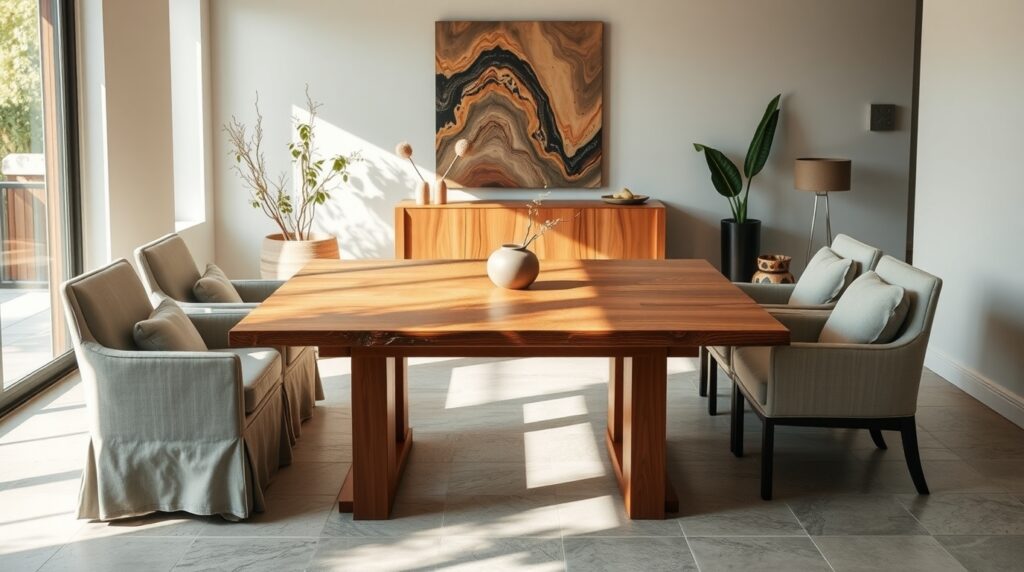
When a household invests in a custom dining table, bespoke sideboard, or individually crafted lounge, they are purchasing something with inherent longevity. It is built for daily life yet strong enough to remain functional and attractive for decades. A well-crafted piece naturally becomes part of the home’s story, eliminating the churn and landfill impact associated with constant replacement.
Reduced Carbon Footprint from Localised Production
Mass-produced items are often fabricated in overseas megafactories, transported thousands of kilometres, warehoused, handled, and redistributed before they reach Australian homes. Every stage of this chain increases the carbon footprint of the product.
Custom furniture, on the other hand, is generally built to order, closer to the end user, and without long periods of storage or unnecessary handling. Even if high-end custom furniture involves overseas fabrication in specialist workshops, it is still made in low-volume, high-integrity conditions with reduced waste, direct supply lines and more efficient freight planning.
A made-to-order model also means fewer return trips, fewer unsold items being transported repeatedly between warehouses, and far less fuel burned overall. Customisation encourages efficiency at every step: design, fabrication, shipping and delivery.
Avoiding Mass-Produced Chemicals and High-VOC Finishes
Large production runs often rely on quick-drying, industrial-grade finishes and adhesives containing volatile organic compounds (VOCs). These chemicals can evaporate into the air, contributing to indoor pollution and broader environmental harm.
Custom furniture workshops typically use:
- low-VOC or zero-VOC finishes
- natural oil-based or water-based sealants
- environmentally conscious adhesives
- non-toxic timber treatments
- sustainably sourced coatings
This is especially advantageous for Australians with allergies, children, or sensitivities. High-end custom furniture often feels “cleaner,” fresher and more natural because it truly is.
Craftsmanship Encourages Waste Reduction
Traditional craftsmanship respects materials. Timber is cut to maximise yield, joints are created with strength rather than shortcuts, and components are repaired—not simply discarded.
Mass-production factories often discard entire batches if a run does not meet commercial standards or if production errors occur. Minor defects can lead to major waste simply because there is no time to restore or repurpose materials. The fast-production model prioritises output over resource mindfulness.
Custom fabrication, by contrast, carefully measures materials before cutting, repurposes offcuts into smaller components, repairs rather than discards, and builds each piece with precision, not speed. When craftspeople value the materials they work with, the end result is minimal waste.
Custom Builds Avoid Overstock and Excess Inventory
One of the biggest hidden contributors to environmental harm in the furniture industry is unsold stock. Mass manufacturers produce vast quantities in anticipation of demand. When trends shift—as they frequently do—countless items become obsolete, marked down, or eventually binned.
Custom-made furniture is only produced when a customer orders it. There is no surplus sitting in warehouses, no trend-driven overstock, and no unused inventory destined for landfill. This buy-what-you-need model is not only financially efficient; it is inherently sustainable.
Repairable, Refinishable, Restorable
Mass furniture is often designed to be replaced, not restored. Thin veneer surfaces cannot be sanded. Hollow components cannot be reinforced. Once a piece shows wear, it becomes disposable.
Custom-made furniture is built with longevity in mind. Solid woods, premium fabrics, strong frames and high-quality joinery ensure pieces can be repaired, re-stained, re-upholstered or refinished, extending their lifespan significantly. This repair-friendly quality dramatically reduces long-term environmental impact.
Designed to Suit Homes—Not Mass Trends
Mass-produced furniture encourages trend-driven purchasing. Designs are often created for short commercial cycles, pushing homeowners to replace styles frequently to stay on-trend.
Custom-made furniture is personal. It is built around a home’s architecture, lifestyle and taste. Pieces complement the environment instead of competing with fleeting fashion trends. Classic silhouettes, timeless textures, and natural materials maintain value far beyond seasonal styles, reducing demand for constant replacement.
Better for Outdoor Sustainability
Outdoor furniture has a unique environmental impact. Cheap mass-produced outdoor pieces often rely on inferior timbers, untreated metal frames or synthetic fabrics that degrade rapidly under Australian UV and coastal conditions. When they break down, they produce microplastics, rust, and landfill waste.
High-end custom outdoor furniture often uses:
- sustainably harvested teak
- marine-grade aluminium
- Olefin fabrics
- UV-stabilised coatings
- long-life foams
A custom outdoor dining suite or lounge setting built with these materials can last 10–20 years, dramatically reducing waste compared with mass-market alternatives.
Ethical Supply Chains are Easier to Trace
Mass production relies on complex, multi-layered supply chains. Raw materials may move through numerous intermediaries before reaching the assembly line, making ethical transparency difficult. Custom makers typically work with a smaller network of trusted suppliers. This makes it easier to ensure that timbers are responsibly sourced, working conditions meet ethical standards, and environmental practices are followed.
Economic Sustainability Through Local Craftsmanship
Supporting custom-made furniture producers strengthens local industries, helping artisans, small workshops and specialist manufacturers thrive. This fosters long-term economic sustainability, reducing reliance on overseas mass production and keeping traditional skills alive. It also means money stays within Australian communities, supporting jobs that value craftsmanship over automation.
A Cultural Shift Back to Quality
Australia’s appetite for sustainable living has created a cultural revival around quality. Homeowners are turning away from disposable furniture and choosing pieces with integrity. Custom-made furniture aligns with this shift, representing less waste, fewer emissions, stronger materials, and longer life. Environmental sustainability and luxury are no longer separate ideas; they are deeply intertwined.
Conclusion
The environmental benefits of custom-made furniture over mass-produced alternatives are unmistakable. Customisation offers a future-focused model built on quality, responsible resource use, durability and tradition. It allows homeowners to create beautiful, cohesive spaces without compromising on environmental values. In a world increasingly shaped by sustainability, custom-made furniture stands as a testament to enduring craftsmanship and respect for materials.
Explore our commitment to quality at: www.theexclusivehome.com.au