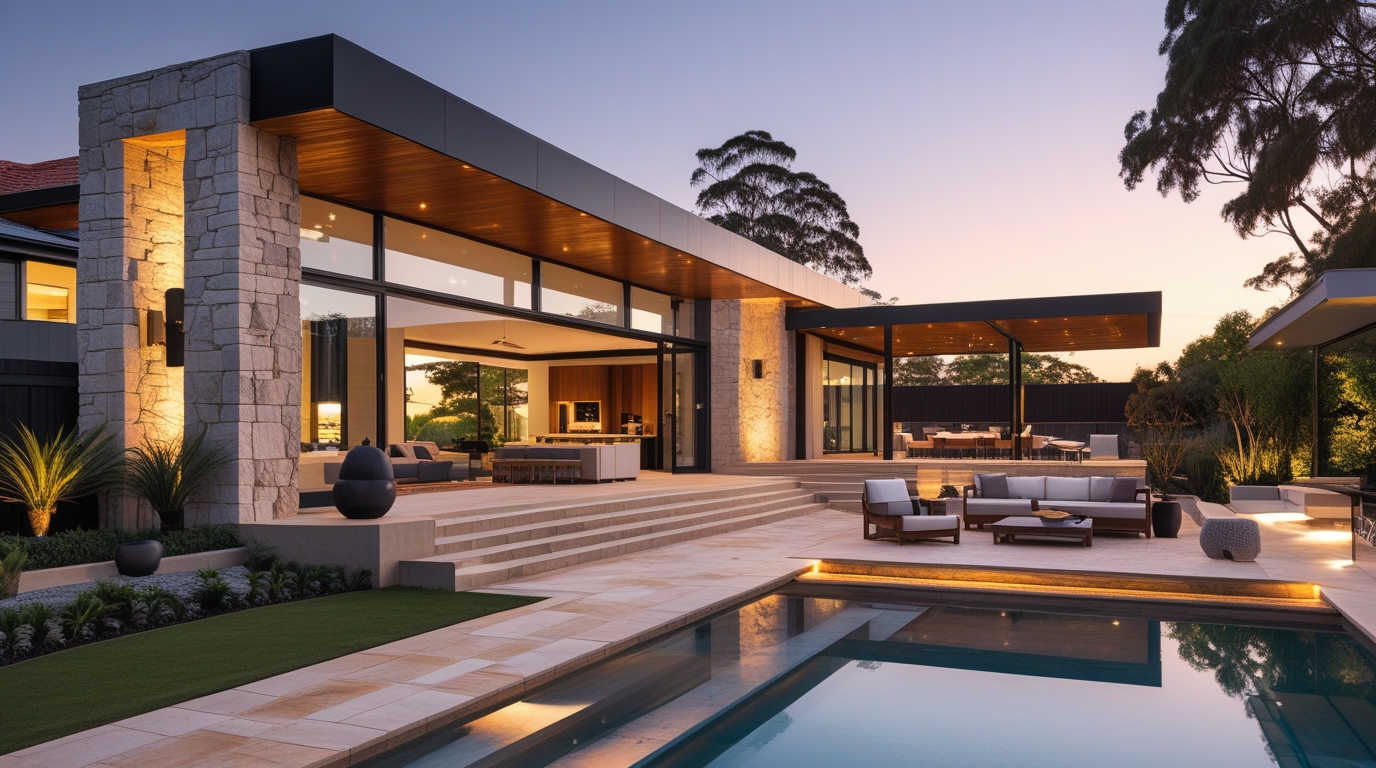
Australian outdoor living has always been special. Our climate, our light and our love of entertaining outdoors are the envy of many countries. But in recent years, there has been a noticeable shift in how design-savvy Australians are furnishing their balconies, terraces, courtyards and pool decks. Rather than importing the same old “suburban patio” look, homeowners and designers are increasingly drawing inspiration from Europe – particularly from Mediterranean coastal towns, Spanish courtyards and contemporary Italian rooftop bars.
The Art of Layered Outdoor Zoning
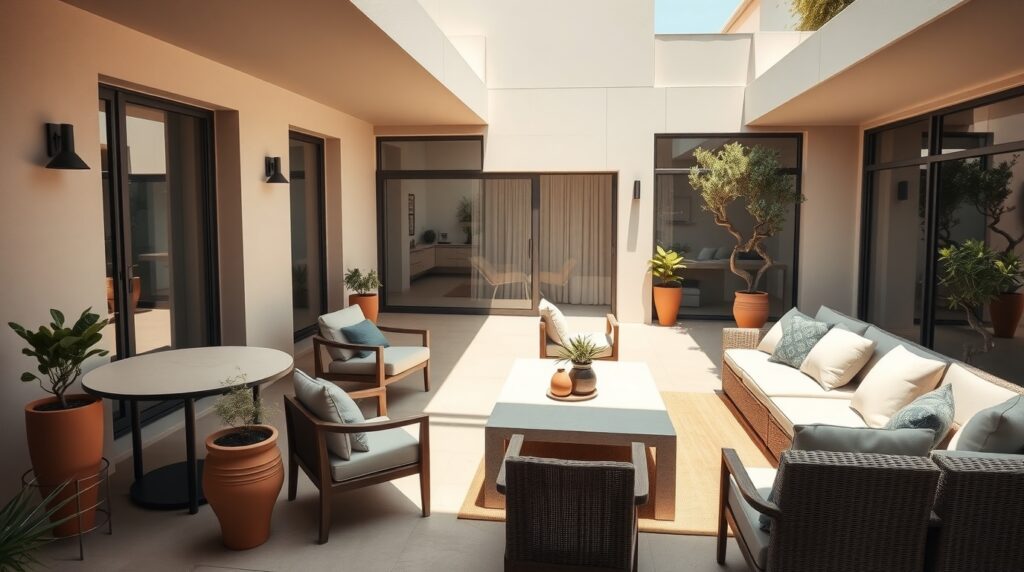
One of the most visible European influences is the move towards deliberately “layered” outdoor spaces. In traditional Australian backyards, the outdoor area often consisted of a single paved or decked zone with a table, a barbecue and a few chairs. European outdoor spaces, by contrast, are usually composed of multiple smaller zones:
- A breakfast nook in a sunny corner
- A shaded reading chair beneath a tree
- A conversation area around a low table
- A dining setting that comes alive in the evening
This approach is now being translated into Australian homes, where even relatively compact spaces are being divided into purposeful outdoor “rooms”.
Evolving Colour Palettes and Textural Depth
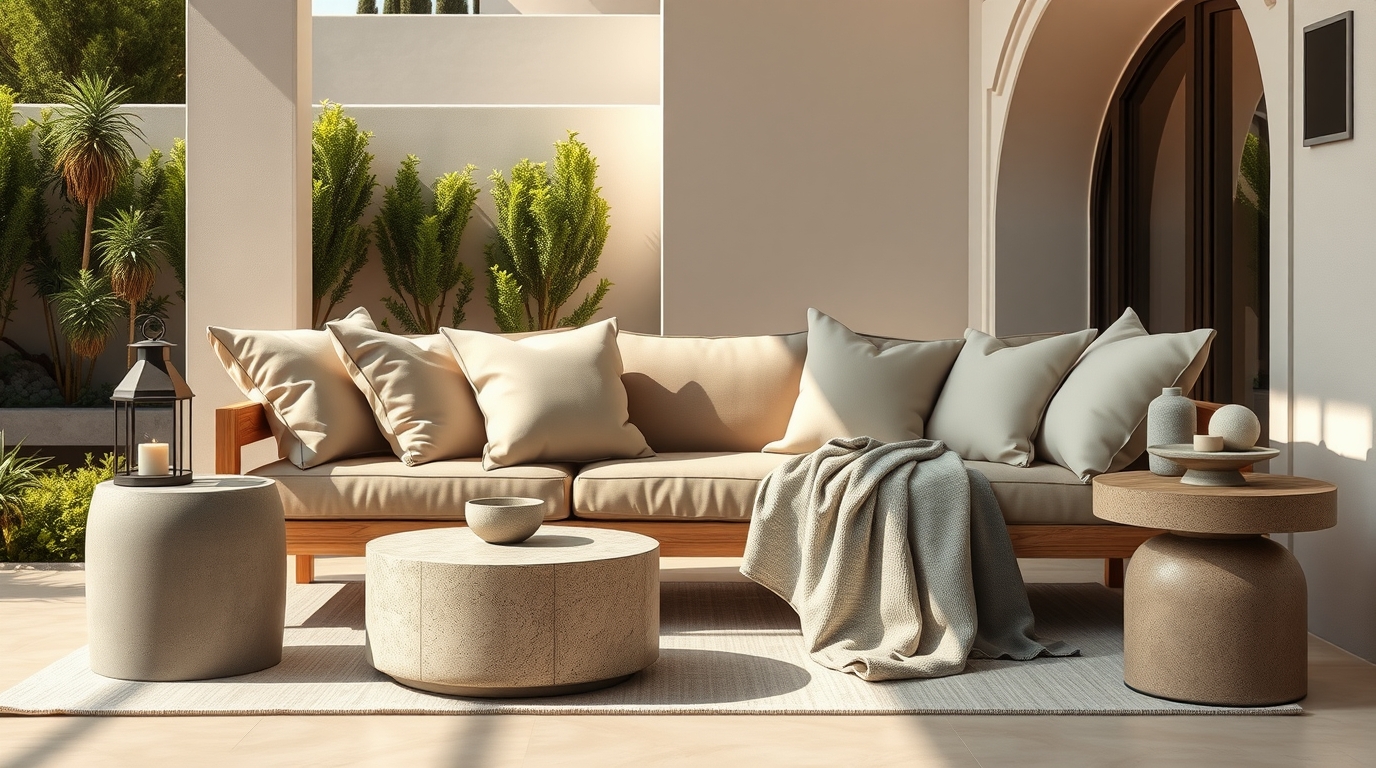
Colour palettes are evolving too. For decades, Australian outdoor furniture leaned heavily on dark greens, heavy wood stains and “outdoor canvas” stripes. European influence has brought a fresher, more refined palette into play. Think warm whites, soft greys, natural linens and sandy beiges punctuated with terracotta, olive and muted blues. These colours echo the stone, plaster and sea tones of coastal Europe and work beautifully with both contemporary render-and-glass architecture and more traditional brick homes.
Texture is another area where European sensibility is making a mark. Mediterranean courtyards and Italian loggias often balance sleek, hard surfaces with textured fabrics, woven elements and handcrafted details. In Australian spaces, we’re now seeing this in the combination of:
- Smooth aluminium frames with softly textured outdoor fabrics
- Woven side chairs and ribbed glass elements
- Stone-topped tables and handmade-style planters
The end result is a more tactile, inviting outdoor room that feels like somewhere to linger, not just pass through.
Architectural Silhouettes and the Bistro Revival
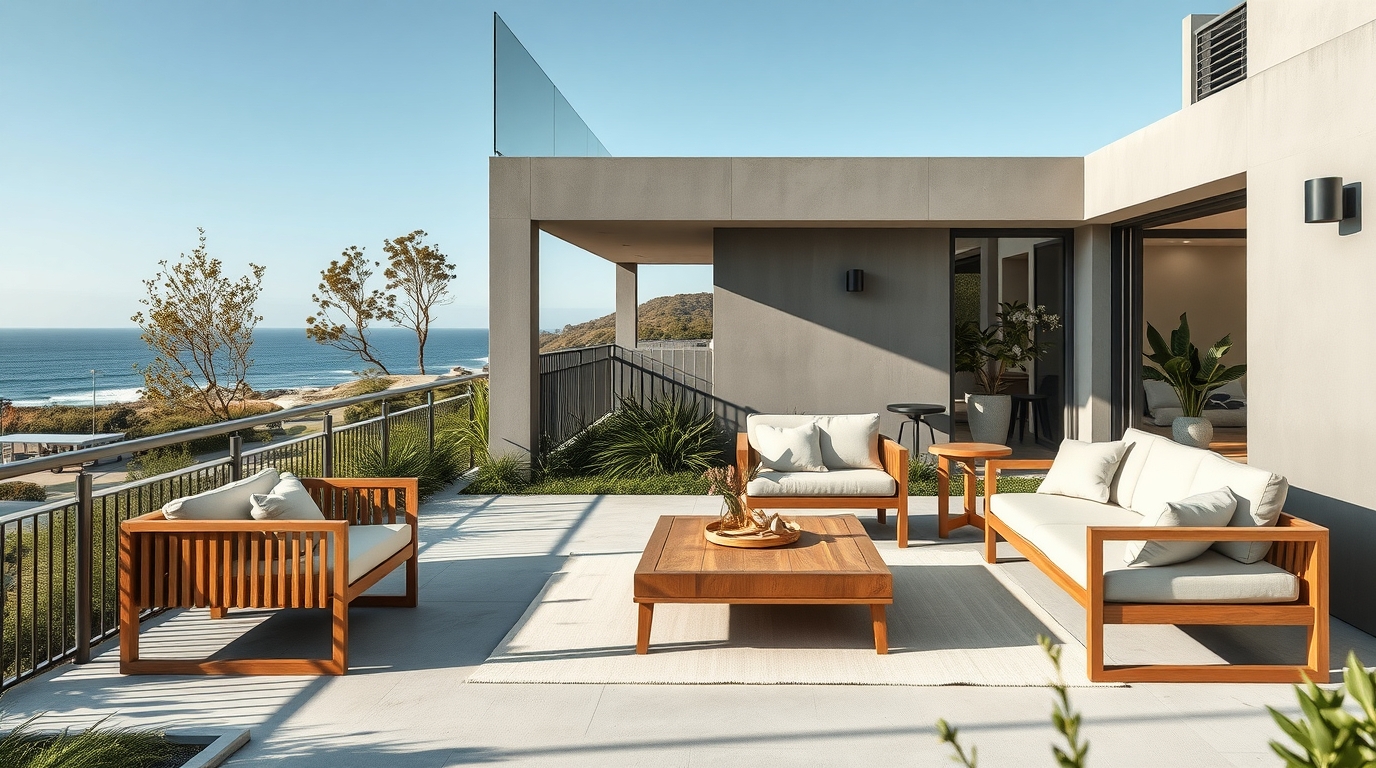
Furniture silhouettes are becoming slimmer and more architectural under European influence. Where chunky timber settings and big, overstuffed outdoor lounges once dominated, we’re now seeing more slender, tailored profiles. Low, linear modular sofas, finely framed armchairs and elegantly proportioned dining tables help maintain a sense of spaciousness, even on smaller decks and balconies. These pieces often have a subtle mid-century or contemporary Italian flavour – slim legs, clean lines, minimal ornament – which suits many modern Australian homes.
There’s also a resurgence of love for the classic European bistro setting. Small, round café tables paired with light, comfortable armchairs or even modern interpretations of traditional wrought-iron chairs are perfect for breakfast on the balcony or an evening drink. These pieces not only work in tight spaces; they also instantly give an alfresco area that “holiday in Europe” atmosphere that many Australians now crave at home.
Dynamic Shade and Structured Greenery
Shade solutions are another area where European thinking is influencing local choices. Instead of defaulting to a single, large, centre-pole umbrella or a fixed pergola, homeowners are embracing more flexible options – cantilever umbrellas that can be rotated and tilted to follow the sun, retractable awnings, and lightweight, sail-like shade structures inspired by Mediterranean terraces. These allow for a more dynamic relationship with light and shade, so different zones of the outdoor space can be enjoyed comfortably throughout the day.
Planting style is changing alongside the furniture. European-influenced outdoor schemes often feature structured greenery – clipped hedges, potted olives or citrus trees, aromatic herbs and drought-tolerant shrubs in generous terracotta or stone pots. In Australian homes, this translates into more considered planting that supports the furniture and architecture instead of fighting it. Repeating plant types, using matching pots and aligning planters with furniture groupings are all hallmarks of this more “designed” approach.
The Outdoor Space as a Genuine Interior Extension
Perhaps the most profound European influence, however, is the idea of the outdoor space as a true extension of the interior – a place for everyday living, not just barbecues. In many European apartments and townhouses, the balcony or terrace effectively becomes another room because internal floor area is limited. That mindset is now shaping higher-end Australian homes, where owners are investing in quality outdoor sofas, armchairs, coffee tables and sideboards in the same way they invest in indoor rooms. Throws, outdoor rugs, cushions and decorative objects complete the picture, blurring the line between inside and out.
Materials Tailored for the Australian Environment
Material choice is crucial in translating European aesthetics into Australian conditions. While some European pieces rely on materials that don’t love our intense UV or coastal environments, the design cues can still be adopted using locally appropriate materials. Powder-coated aluminium, high-grade outdoor fabrics and weatherproof tabletops can be configured in European-inspired forms and palettes, giving you the best of both worlds – the look you want and the durability you need.
Customisation plays a big role in getting this right. The ability to choose frame colours that echo European ironwork or stone, fabrics that pick up on muted Mediterranean tones, and configurations that suit your specific balcony or courtyard dimensions means you can create a personal interpretation of European style rather than a generic “theme”. This is where working with a specialist supplier who offers a broad palette of frame finishes and fabric options (without charging more for that choice) becomes extremely valuable.
Designing for the Temporal Journey
Another important aspect borrowed from Europe is the idea of designing for different times of day. A terrace in Barcelona looks and feels different at breakfast than it does at midnight, yet it works beautifully in both. In Australian homes, this translates into considering:
- Morning sun positioning for coffee
- Midday shade strategies for reading or working
- Warm, intimate lighting and comfortable seating for evening entertaining
Furniture placement, shade strategy and lighting all need to be planned with these changing uses in mind.
Curated Luxury and Local Interpretation
European influence has also encouraged a more relaxed, “lived-in” luxury outdoors. Perfectly matched sets are giving way to curated combinations. A sleek modular sofa might share a space with woven armchairs, a stone-topped table and metal-framed loungers, just as you’d see in a boutique hotel courtyard in Italy or France. The key is a cohesive palette and repeated materials so the space still feels harmonious.
For Australian homeowners, the real opportunity lies in taking the best of these European ideas and interpreting them with a local lens. That means respecting our harsher climate, our particular architectural styles and the way Australians actually use their outdoor spaces. It’s not about re-creating a Tuscan villa by the surf; it’s about borrowing the sense of considered luxury, layered zones and relaxed elegance that Europe does so well, and weaving it into a distinctly Australian setting.
If you’re planning to re-design your outdoor spaces and want to draw on European inspiration while still using materials and configurations suited to Australian conditions – with the flexibility to customise colours, fabrics and finishes at no extra cost – you can explore a wide range of options at www.theexclusivehome.com.au.