The quiet rise of minimalism in luxury outdoor design
Minimalism has become the language of modern luxury. Its influence reaches from fashion and architecture to furniture and landscape design, yet nowhere does it find more honest expression than in the Australian outdoor setting. Here, where light, space and nature define lifestyle, minimalistic outdoor furniture speaks with calm authority. It celebrates balance over excess, purpose over display, and refined proportion over decoration. In a world increasingly drawn to simplicity and authenticity, this aesthetic has evolved from a design trend into a philosophy of living beautifully and deliberately.
The Essence of Refined Proportion
Minimalistic outdoor furniture is not about absence—it is about precision. Every angle, curve and joint is purposeful. When proportion is right, furniture becomes architectural sculpture: quietly confident, perfectly scaled, and emotionally resonant. Designers now treat proportion as the soul of their work. The height of a lounge seat relative to its armrest, the distance between table legs, the width of a cushion seam—all these details govern comfort and harmony.
Refined proportion ensures that the furniture sits naturally within its environment. It doesn’t shout for attention; it belongs. The most luxurious minimalism is not stark but balanced—pieces that appear simple yet reveal extraordinary craftsmanship the closer you look. Each line has intent. Each surface feels deliberate.
How Minimalism Found Its Place Outdoors
The roots of this aesthetic lie in mid-century modernism, where architects like Mies van der Rohe and Le Corbusier championed purity of line and functional beauty. Their influence found fertile ground in Australia’s climate and culture. Our architecture already blurs the boundary between interior and exterior, and our preference for uncluttered living made the transition natural. Outdoor furniture followed suit, trading ornate forms for clarity and restraint.
Over the last decade, as sustainability and longevity became hallmarks of luxury, minimalistic design gained momentum. Pieces with fewer components not only appear timeless but also age gracefully. The simplicity becomes an investment in permanence rather than trend. As the visual noise of everyday life increases, minimalism offers the calm we crave.
Craftsmanship in its Purest Form
When design is stripped of excess, craftsmanship must carry the conversation. With nothing to hide behind, the quality of joinery, welds and finishes defines success. Minimalistic outdoor furniture demands accuracy measured in millimetres. Aluminium frames must be perfectly welded and powder-coated to a satin smoothness; teak planks must align seamlessly with consistent grain and tone. The result is a product that rewards touch as much as sight.
Luxury in this context is tactile and truthful. You can feel the integrity of the material—the coolness of metal, the warmth of timber, the resilience of high-performance fabric. When done correctly, minimalistic furniture is sensual in its simplicity. It invites rather than impresses.
Material Integrity and Honest Design
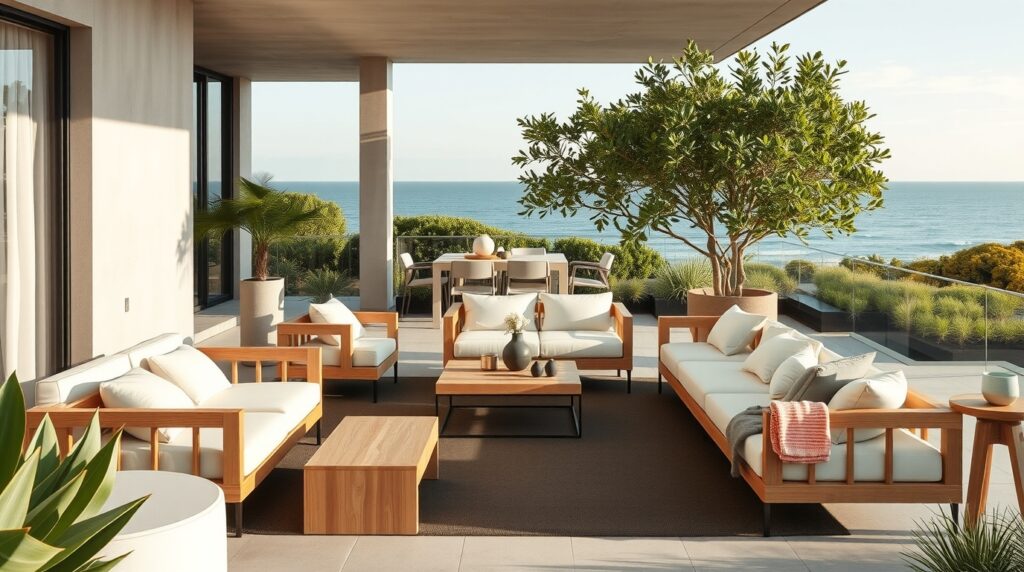
Minimalism prizes authenticity. Materials must be genuine, not imitated. Marine-grade aluminium, responsibly sourced teak, and solution-dyed fabrics such as Olefin or Sunbrella embody the principle of honest design. These elements not only deliver clean visual lines but also ensure endurance under Australia’s demanding conditions. The textures—matte, brushed, slatted—provide subtle contrast without the need for embellishment.
Designers now pair cool metals with warm woods, or combine powder-coated frames with soft woven seats. Each material plays a role in proportion: metal for structure, timber for warmth, fabric for comfort. The goal is equilibrium, where no element overwhelms another.
Colour: The Palette of Restraint
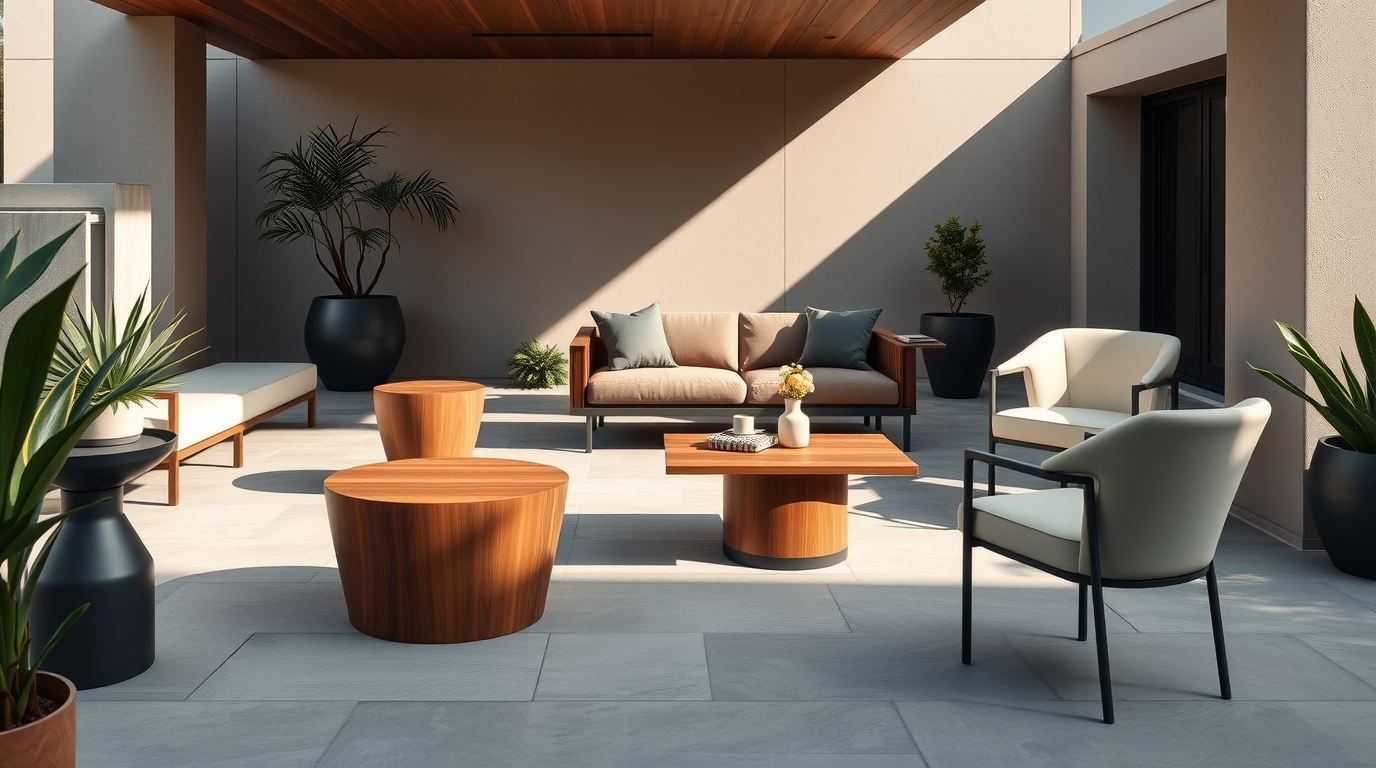
Colour in minimalistic outdoor design acts as a whisper, not a shout. Sandstone, bone, oyster, and dove grey form the foundation, complemented by muted greens, taupes, and smoky charcoals. These hues mirror the tones of Australian landscapes—coastal dunes, river stone, eucalyptus bark. In this restrained palette, light becomes the real artist, revealing texture and shadow throughout the day.
Accent colours are used sparingly, perhaps in a single cushion or an understated ceramic vase. The sophistication lies in nuance. A minimalistic scheme thrives on tone-on-tone layering rather than contrast. It’s quiet, contemplative and endlessly versatile.
The Geometry of Comfort
A misconception persists that minimalism sacrifices comfort for style. The truth is quite the opposite. Refined proportion enhances comfort because every dimension has been studied for human form. The tilt of a seat, the slope of an armrest, the depth of a cushion—each measured to invite relaxation without slump. The secret is ergonomic design executed with restraint. Nothing is overstuffed or exaggerated. Every element supports posture while maintaining the purity of line.
Comfort is also visual. Clean geometry clears the mind, creating a sense of spaciousness. The eye rests easily on balanced forms, translating to a psychological feeling of calm. In this way, minimalism contributes to wellbeing as much as to beauty.
Balancing Light and Space
In Australia’s intense sunlight, heavy ornamentation can feel oppressive. Minimalism thrives because it allows light to move freely, reflecting off pale finishes and open structures. Slender profiles cast elegant shadows, while the absence of clutter amplifies views. This breathing space defines luxury—it allows nature to share the spotlight.
Designers often use negative space as actively as they use form. The gaps between elements—between chair slats, under tables, along pathways—create rhythm and flow. Outdoor settings built on these principles feel larger and more harmonious than their physical dimensions suggest.
Sustainability Through Simplicity
Sustainability aligns naturally with minimalism. Fewer materials, cleaner lines, and timeless aesthetics reduce waste and encourage long-term ownership. Choosing furniture that endures style cycles prevents the constant replacement that drives environmental strain. Many luxury suppliers now employ recycled aluminium, FSC-certified timber, and water-based finishes without compromising beauty.
The minimalistic approach—designing for decades, not seasons—reflects the highest form of environmental respect. It is sustainability made elegant.
Customisation: Precision Made Personal
Minimalism may appear universal, but it thrives on individuality. The most refined designs allow personal customisation—subtle adjustments to size, colour, or finish that make each setting unique. The Exclusive Home leads this movement by offering an extraordinary range of frame colours and hundreds of fabric options, ensuring no two outdoor lounges or dining sets are identical.
Clients can tailor dimensions to architecture, select cushion densities for climate, and coordinate tones to surrounding materials. This ability to personalise while maintaining purity of form defines modern couture furniture. It demonstrates that simplicity need never mean limitation.
Harmony Between Architecture and Furniture
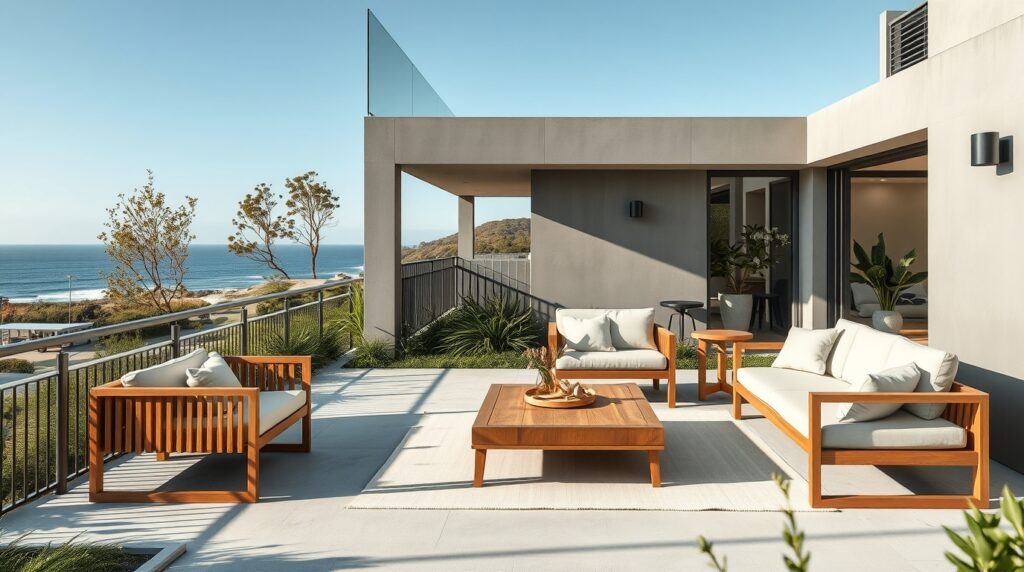
Minimalistic outdoor furniture succeeds when it complements the home’s structure. On a contemporary coastal property with glass balustrades and pale stone, slimline aluminium frames maintain visual lightness. In a rural retreat with timber cladding and shadowed verandas, teak and linen neutrals bring warmth without clutter. The key is integration—furniture that appears designed alongside the building, not purchased after completion.
Proportion again guides this harmony. A wide terrace demands long, low silhouettes that anchor the space; compact courtyards benefit from raised profiles that maintain openness. The dialogue between structure and setting forms the signature of refined design.
Lighting and Atmosphere
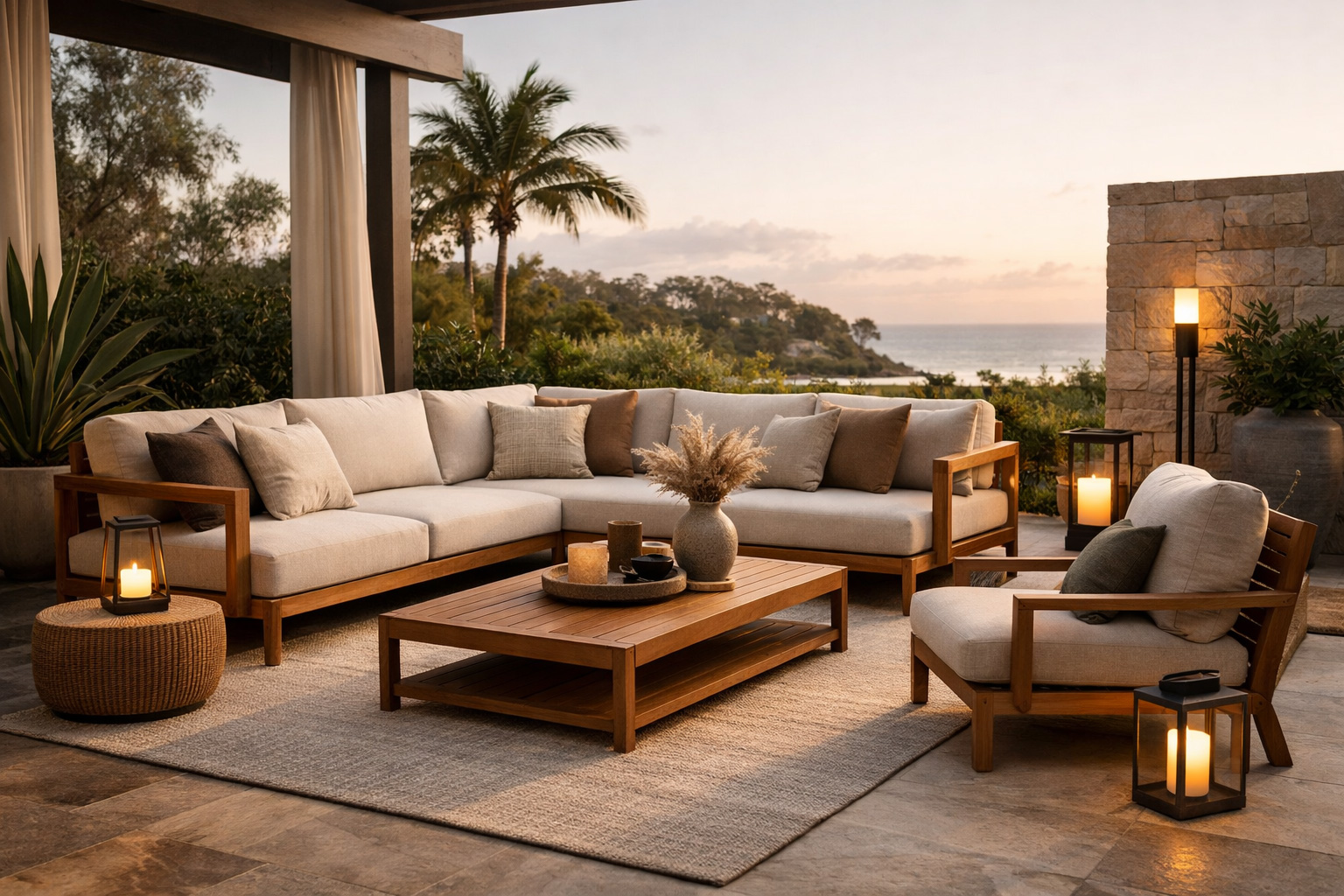
Minimalistic outdoor settings reveal their true power at dusk. Soft, indirect lighting accentuates the sculptural quality of simple forms. Linear LEDs under benches, lanterns placed low to the ground, and wall washers that graze texture—all emphasise shadow and silhouette. The lighting plan becomes part of the furniture composition, highlighting proportion and material rather than competing with them.
Candles and low-voltage lamps introduce movement through flicker, enriching minimalism with emotion. Light reveals honesty: there’s nowhere to hide in a minimal setting, and that’s precisely what makes it compelling.
The Emotional Language of Simplicity
Minimalism appeals not only to the eye but to the psyche. In a world overloaded with information and imagery, simplicity feels like relief. An uncluttered terrace or courtyard becomes a refuge for thought and conversation. The measured repetition of lines and tones quiets the mind, much like music built on rhythm rather than melody.
Luxury, at its core, is emotional wellbeing. Minimalistic outdoor furniture provides that through restraint. It tells the user: here is everything you need, nothing you don’t.
Maintenance Made Beautifully Simple
Ease of maintenance is part of minimalism’s allure. Clean lines and open structures mean fewer surfaces to trap dirt and moisture. Removable covers, drain channels in seat bases, and fade-resistant finishes keep pieces pristine with minimal effort. In contrast to high-maintenance ornate furniture, minimalistic pieces reward care with enduring beauty. Maintenance becomes a gesture of respect, not a burden.
The Economics of Longevity
Luxury design carries cost, but minimalism multiplies value through lifespan. Its timeless aesthetic ensures relevance for decades; its superior materials minimise replacement. The true return on investment lies in enduring satisfaction. A well-designed minimal setting won’t look “last season” next year—it will look right, always.
Discerning homeowners understand that longevity equals savings, both financial and environmental. The fewer times you need to buy, the more sustainable your luxury becomes.
Design Psychology: Why We Respond to Minimalism
Humans naturally seek order and rhythm. Balanced proportions and uncluttered surfaces lower cognitive load, making us feel at ease. Outdoor environments designed with restraint echo the serenity of nature’s geometry—tree trunks in alignment, waves in rhythm, horizons in symmetry. When furniture follows similar logic, it feels instinctively right. This is why minimalistic design, though quiet, commands such deep emotional loyalty among those who experience it.
Global Influence and Australian Identity
While minimalism is international, Australia has made it its own. Our light is clearer, our colours warmer, our sense of luxury more relaxed. We interpret minimalism through lifestyle rather than strict philosophy—functional simplicity infused with hospitality. A minimal outdoor setting here still invites barefoot gatherings and laughter under the stars. It’s approachable, never austere. This blend of global sophistication and local ease defines modern Australian chic.
The Future of Minimalistic Outdoor Design
The next evolution will see technology hidden even more discreetly within minimal forms—self-drying cushions, solar-integrated frames, and modular designs that adapt to changing needs. Yet the principles will remain: honesty, proportion, calm. As urban density increases, outdoor spaces will shrink, making refinement essential. Minimalism’s ability to make small areas feel spacious ensures its relevance for decades to come.
Bringing it All Together
To design a minimalistic outdoor setting is to compose silence—balancing line, texture and space until the result feels inevitable. The furniture should appear as though it grew there, shaped by light and time. Every element, from a table’s edge to the hue of a cushion, contributes to a feeling of serenity and sophistication.
When executed with care, minimalism delivers a form of luxury beyond display. It becomes a daily companion to living well, proof that less can indeed express more—depth, confidence and grace.
Conclusion
Minimalistic chic in outdoor furniture represents the pinnacle of modern refinement. It’s a celebration of proportion, precision and permanence—values that define true luxury. The beauty lies not in complexity but in control; not in quantity but in quality. By focusing on line, material and emotion, designers have created a language of calm that perfectly suits the Australian lifestyle.
For homeowners who value enduring elegance, The Exclusive Home offers collections that embody this philosophy: crafted proportions, superior materials, and full customisation in over three hundred fabric colours and eight frame finishes—all at a sing